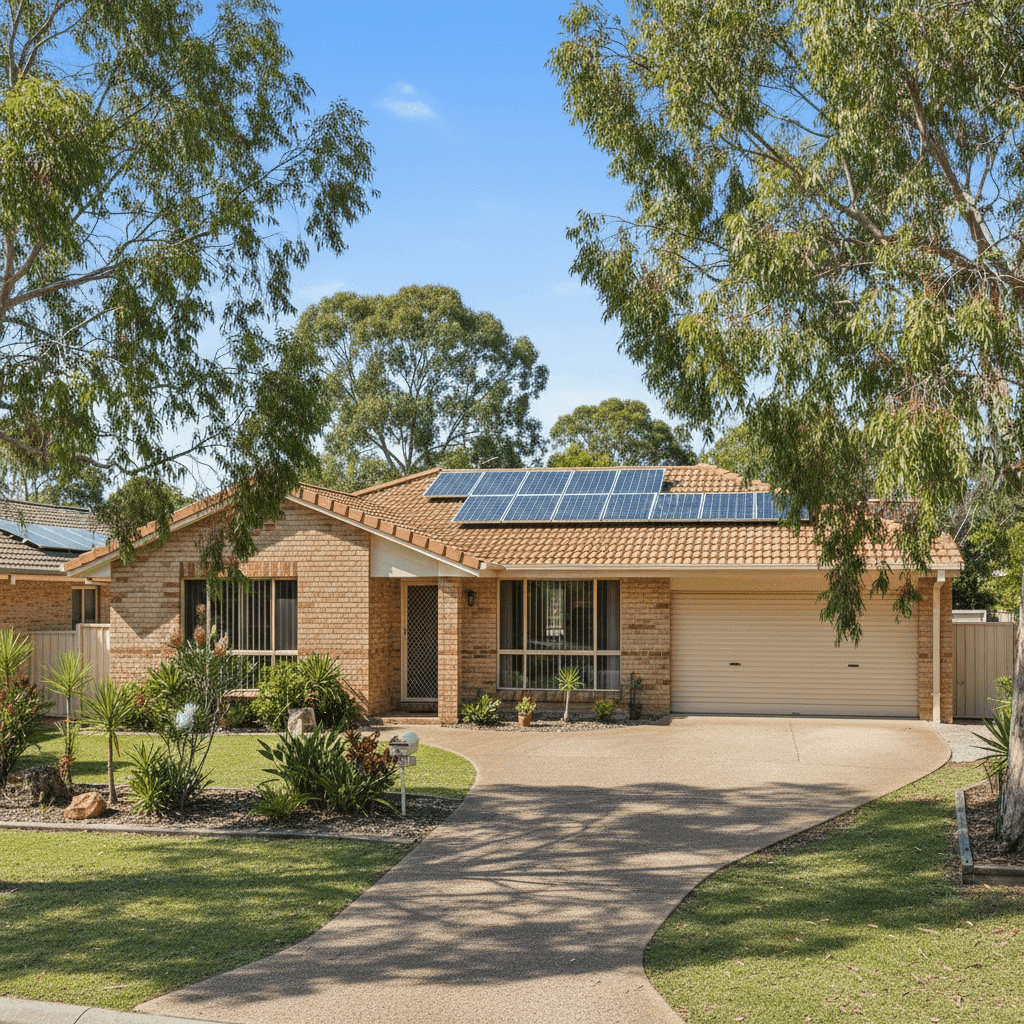
Helensvale is one of the Gold Coast's most sought-after family suburbs — a well-established community with good schools, easy motorway access, and a mix of brick homes built from the late 1980s through to the 2000s. If you own a free standing home here, you've likely noticed that home insurance premiums on the Gold Coast aren't always cheap. This article breaks down a real home and contents insurance quote for a 3-bedroom, 2-bathroom brick veneer home in Helensvale, and puts it in context against local, state, and national benchmarks.
---
Is This Quote Fair?
The quote in question comes in at $4,354 per year (or roughly $427/month) for combined home and contents cover, with a building sum insured of $457,000 and contents valued at $50,000. The building excess is $3,000 and the contents excess $1,000.
Our price rating for this quote is FAIR — Around Average, which is a reasonable result for a property of this type in this location. It's not the cheapest quote you'll find in the suburb, but it's well below what many Helensvale homeowners are paying. Given the Gold Coast's exposure to severe weather events and the relatively high cost of construction in South East Queensland, landing near the middle of the market is a solid outcome.
That said, "fair" doesn't mean you shouldn't shop around. Even a modest saving of a few hundred dollars a year adds up significantly over time — and the wide spread of premiums in this suburb (more on that below) suggests there's genuine variation between insurers.
---
How Helensvale Compares
To understand whether this quote represents good value, it helps to look at the broader market. Based on data from 360 quotes collected for postcode 4212, here's how premiums stack up:
| Benchmark | Annual Premium |
|---|---|
| This Quote | $4,354 |
| Suburb Average (Helensvale) | $7,785 |
| Suburb Median (Helensvale) | $4,981 |
| Suburb 25th Percentile | $2,587 |
| Suburb 75th Percentile | $10,166 |
| LGA Average (Gold Coast) | $5,494 |
| QLD State Average | $4,547 |
| QLD State Median | $3,931 |
| National Average | $2,965 |
| National Median | $2,716 |
A few things stand out immediately. First, the suburb average of $7,785 is dramatically higher than this quote — meaning the typical Helensvale homeowner is paying nearly $3,500 more per year than this policyholder. The suburb average is also being pulled upward by a long tail of expensive policies; the 75th percentile sits at over $10,000, which is eye-watering for a suburban family home.
Second, this quote sits below both the suburb median ($4,981) and the Gold Coast LGA average ($5,494), which reinforces the "fair" rating. It's tracking closely to the Queensland state average of $4,547, and is comfortably above the national average — though that gap largely reflects the higher risk environment in Queensland compared to states like Victoria or South Australia.
The national figures serve as a useful reference point, but it's important not to chase national-average pricing if you're in a higher-risk region. Queensland's climate, storm frequency, and building costs all contribute to structurally higher premiums compared to the rest of the country.
---
Property Features That Affect Your Premium
Several characteristics of this property influence how insurers price the risk. Here's what's most relevant:
Brick Veneer Construction Brick veneer is generally viewed favourably by insurers. It offers solid fire resistance and durability, and is one of the most common wall types in Queensland suburbs built during the 1980s and 1990s. It's not as robust as full double-brick, but it performs well in most weather events and tends to attract more competitive premiums than timber-framed homes.
Tiled Roof A concrete or terracotta tile roof is considered a standard, mid-risk roofing material. Tiles are durable and fire-resistant, though they can be vulnerable to cracking in severe hail events. Compared to metal roofing (which is increasingly common in cyclone-prone areas), tiles are generally acceptable to insurers in non-cyclone zones.
Slab Foundation A concrete slab foundation is the norm for homes built in South East Queensland from the 1980s onwards. It's considered low-risk from an insurer's perspective — there's no underfloor space to flood or rot, and slabs tend to be structurally stable in the region's soil conditions.
Solar Panels The presence of solar panels adds a small amount to the insurable value of the home. Insurers typically cover solar panels as part of the building sum insured, so it's worth confirming they're included in your policy schedule and that the $457,000 building sum adequately accounts for their replacement cost.
Ducted Climate Control Ducted air conditioning is a fixed building fixture, which means it's covered under the building sum insured rather than contents. Like solar panels, it contributes to the overall replacement cost of the home and is factored into the building sum insured figure.
Construction Year: 1990 A home built in 1990 is now over 35 years old. While well-maintained brick veneer homes age gracefully, some insurers apply age-related loading to older properties, particularly around roofing, plumbing, and electrical systems. Keeping maintenance records and ensuring the home is in good condition can help when it comes time to renew or switch policies.
No Pool, No Cyclone Zone The absence of a pool removes a common liability risk factor, and the property falling outside a designated cyclone risk area means it avoids the significant premium loadings that apply to homes in Far North Queensland. This is a meaningful advantage for Gold Coast homeowners compared to their counterparts further north.
---
Tips for Homeowners in Helensvale
1. Review your building sum insured regularly Construction costs in South East Queensland have risen sharply in recent years. If your building sum insured hasn't been updated to reflect current rebuild costs — including solar panels, ducted air conditioning, and any renovations — you could be underinsured. Use a quantity surveyor estimate or your insurer's rebuild cost calculator to check the figure annually.
2. Consider raising your excess to reduce your premium This quote carries a $3,000 building excess, which is on the higher side. If you're comfortable self-funding smaller claims, a higher excess can meaningfully reduce your annual premium. Conversely, if the current excess feels too high for your budget, it's worth modelling the cost of stepping it down.
3. Compare quotes at renewal — not just when you first take out cover The wide spread of premiums in Helensvale (from $2,587 at the 25th percentile to over $10,000 at the 75th) shows that insurers price this suburb very differently. Loyalty doesn't always pay in home insurance; comparing at each renewal is one of the most effective ways to avoid drift into the expensive end of the market.
4. Keep your home well-maintained Older homes can attract premium loadings or claim exclusions if maintenance is neglected. Ensuring your roof tiles, gutters, plumbing, and electrical systems are in good order not only protects your home — it also puts you in a stronger position when making a claim.
---
Ready to See How Your Quote Stacks Up?
Whether you're renewing your existing policy or shopping for cover on a new purchase, it pays to understand where your premium sits relative to the market. Get a home insurance quote at CoverClub and instantly see how your price compares to other homeowners in Helensvale and across Queensland. With data from hundreds of local quotes, CoverClub gives you the context you need to make a confident decision.