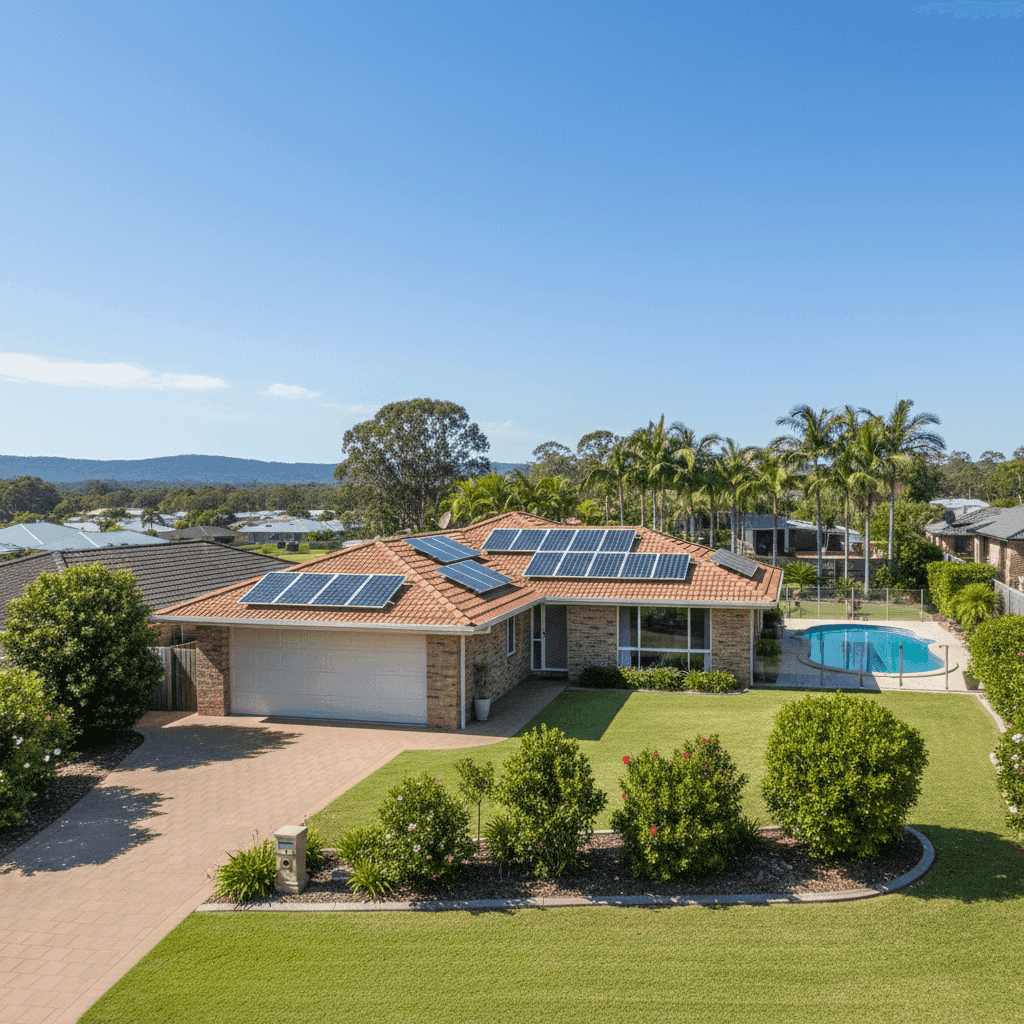
Helensvale is one of the Gold Coast's most sought-after residential suburbs — a family-friendly pocket of Queensland known for its leafy streets, theme park proximity, and well-established housing stock. If you own a free standing home here, understanding what you should be paying for home and contents insurance is an important part of protecting one of your biggest assets. In this article, we break down a real insurance quote for a 4-bedroom, 4-bathroom brick veneer home in Helensvale (postcode 4212) and put it in context against local, state, and national benchmarks.
---
Is This Quote Fair?
The quote in question comes in at $3,080 per year (or $288 per month) for combined home and contents cover, with a building sum insured of $980,000 and contents valued at $100,000. Both the building and contents excess are set at $2,000.
Our price rating for this quote is FAIR — Around Average, which is actually a solid outcome for a Helensvale property of this size and specification. Here's why that matters: the Gold Coast insurance market can be notoriously variable, and premiums across the suburb range enormously depending on property characteristics, insurer appetite, and individual risk factors.
At $3,080, this homeowner is paying meaningfully below the suburb median of $4,981 per year and well below the suburb average of $7,785 per year. The suburb average is heavily skewed by high-end properties and elevated-risk homes, so the median is often a more useful benchmark — and this quote sits comfortably beneath it. Compared to the Queensland state average of $4,547 and the state median of $3,931, this quote is also competitive. Against the national average of $2,965 and national median of $2,716, it's slightly above average — but that's entirely expected for a Queensland coastal suburb where weather-related risks push premiums higher than in many other parts of the country.
In short: for a property of this scale in this location, $3,080 is a reasonable outcome. It's not the cheapest quote you'll find in the suburb, but it's far from the most expensive — and it reflects a genuine market rate for this type of home.
---
How Helensvale Compares
To put this quote in proper perspective, it helps to look at the full picture of insurance pricing in Helensvale, based on 360 quotes collected for the suburb:
| Benchmark | Premium |
|---|---|
| Helensvale 25th percentile | $2,587/yr |
| This quote | $3,080/yr |
| Helensvale median | $4,981/yr |
| Helensvale average | $7,785/yr |
| Helensvale 75th percentile | $10,166/yr |
| Gold Coast LGA average | $5,494/yr |
| QLD state average | $4,547/yr |
| National average | $2,965/yr |
This quote sits between the 25th and 50th percentile for the suburb — meaning it's cheaper than at least half of all quotes collected in Helensvale. That's a meaningful result. The wide spread between the 25th percentile ($2,587) and the 75th percentile ($10,166) illustrates just how much premiums can vary within a single suburb based on individual property and coverage differences.
Queensland insurance data shows that the state consistently attracts higher premiums than the national average, largely due to the elevated frequency of severe weather events including storms, flooding, and hail. The Gold Coast LGA average of $5,494 reinforces this — even within QLD, the Gold Coast sits above the state norm.
---
Property Features That Affect Your Premium
Several characteristics of this property play a direct role in shaping the premium:
Brick veneer construction and tiled roof are generally viewed favourably by insurers. Brick veneer offers solid fire resistance and structural durability, while a tiled roof is considered more resilient than corrugated iron in many weather scenarios. Both features typically contribute to more competitive premiums compared to lightweight or older construction types.
Slab foundation is standard for Queensland homes built around this era and doesn't introduce any significant risk loading. It also means there's no elevated subfloor space that could be vulnerable to flooding or pest ingress.
Timber and laminate flooring is worth noting from a contents and building perspective. Timber floors can be costly to repair or replace if damaged by water or impact, so ensuring your building sum insured adequately accounts for this is important.
Swimming pool adds both value and liability to the property. Pools are factored into building replacement cost calculations and can also influence liability components of your policy. It's worth confirming your policy covers pool infrastructure — including pumps, filtration systems, and fencing — under the building definition.
Solar panels are an increasingly common feature on Queensland homes, and their insurance treatment varies between policies. Some insurers include solar panels automatically under the building sum insured; others treat them as an optional extra. Given the cost of a quality solar system, homeowners should verify their coverage explicitly.
Ducted climate control is another high-value fixed asset that forms part of the building. Like solar panels, it should be factored into your building sum insured to avoid underinsurance.
No cyclone risk is a notable positive for this property. Parts of Queensland attract cyclone risk loadings that can significantly inflate premiums — Helensvale's classification as outside the cyclone risk zone is a meaningful factor keeping this quote more competitive than it might otherwise be.
The building sum insured of $980,000 for a 105 sqm home is on the higher end per square metre, but may reflect high-quality finishes, the pool, solar, and ducted systems, as well as the cost of demolition and professional fees that must be included in any rebuild estimate. Underinsurance remains one of the most common and costly mistakes Australian homeowners make — if your sum insured doesn't cover the full cost of rebuilding, you may face a significant shortfall at claim time.
---
Tips for Homeowners in Helensvale
1. Review your building sum insured annually Construction costs in South East Queensland have risen sharply in recent years. A sum insured that was adequate two or three years ago may no longer reflect current rebuild costs. Use an independent building calculator or speak with a quantity surveyor to validate your figure each year.
2. Check how your insurer treats solar panels and pools Don't assume these are automatically covered to their full value. Read your Product Disclosure Statement (PDS) carefully and, if necessary, request a policy endorsement that explicitly covers these assets. A solar system and pool together can represent $30,000–$60,000 in value.
3. Compare quotes — even if you're happy with your current premium The wide spread of premiums in Helensvale (from $2,587 to over $10,000) shows that insurers price this suburb very differently. Even if your current quote seems reasonable, you could be paying significantly more than necessary. Get a quote at CoverClub to see what multiple insurers would charge for your specific property.
4. Consider your excess carefully This policy carries a $2,000 excess on both building and contents. A higher excess typically lowers your annual premium, but it means you'll need to cover more out of pocket at claim time. Think about what excess level you could comfortably afford in the event of a significant loss — and make sure your choice reflects your financial position, not just the desire to reduce your premium.
---
Compare Your Home Insurance Today
Whether you're renewing your policy or shopping for the first time, CoverClub makes it easy to see how your quote stacks up. We aggregate real insurance data from across Australia so you can make an informed decision — not just take the first price you're offered. Start comparing home insurance quotes now and find out if you're getting a fair deal on your Helensvale home.