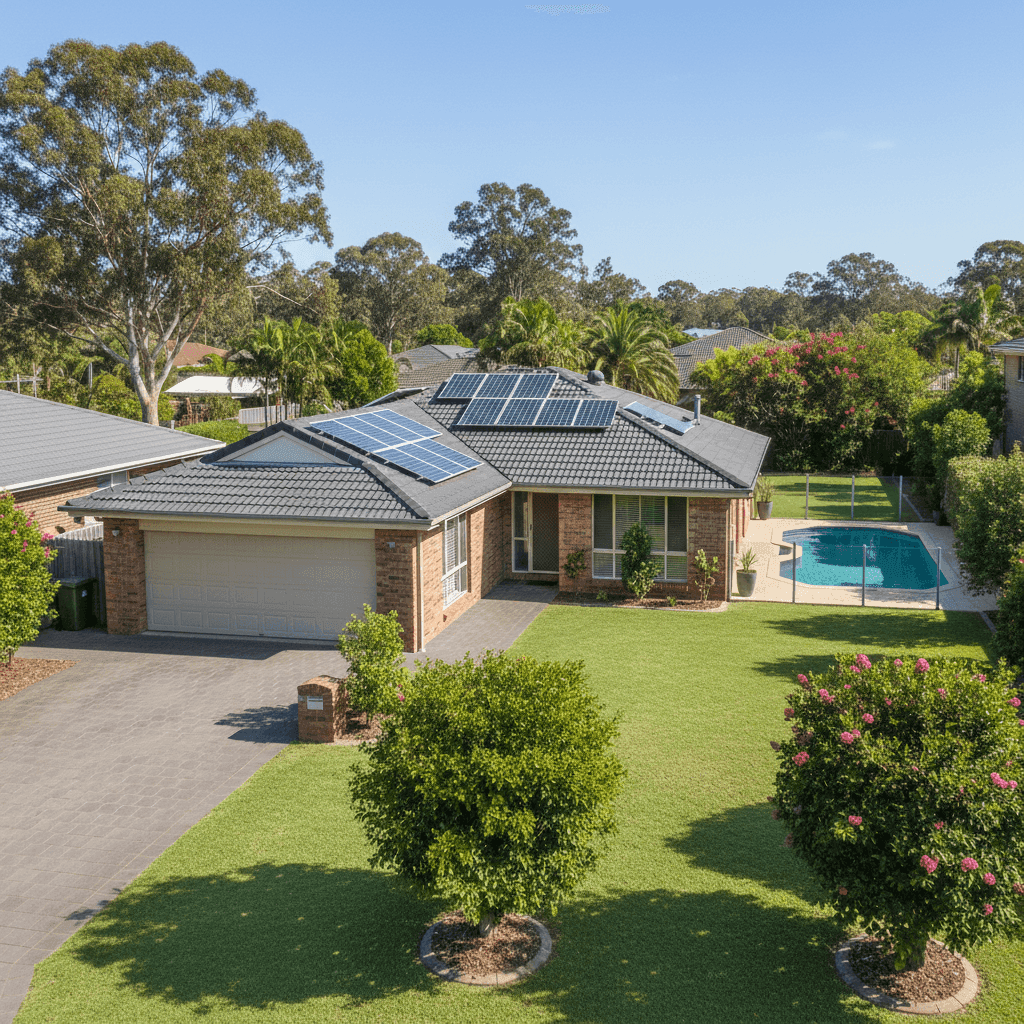
Helensvale is one of the Gold Coast's most established family-friendly suburbs — a mix of leafy streets, canal-front properties, and solid brick homes that have stood since the late 1980s. If you own a free standing home here, understanding what you should be paying for building insurance is just as important as choosing the right policy. This article breaks down a recent building-only insurance quote for a 4-bedroom, 2-bathroom brick veneer home in Helensvale (QLD 4212), and puts it into context against local, state, and national benchmarks.
---
Is This Quote Fair?
The quote in question comes in at $3,088 per year (or $296/month) for building-only cover, with a $1,000 excess and a sum insured of $832,000. Our price rating for this quote is FAIR — Around Average.
So what does "fair" actually mean in practice? It means this premium sits comfortably within the middle band of what homeowners in this suburb are paying. It's not a bargain-basement price, but it's also well clear of the eye-watering premiums that some Gold Coast homeowners are being asked to absorb.
To put it in numbers: the suburb median premium in Helensvale is $4,102/year, meaning this quote is actually $1,014 below the local median — a meaningful saving. The suburb's 25th percentile sits at $2,967/year, so this quote is only slightly above the cheapest quarter of policies in the area. That's a solid position to be in.
The suburb average, however, is a striking $14,169/year — a figure heavily skewed by high-value and high-risk properties in the postcode. Averages in insurance data are notoriously unreliable as a benchmark for individual properties, which is why the median is a far more useful reference point. Based on 150 quotes collected for this area, the data paints a clear picture: this homeowner is getting reasonable value.
---
How Helensvale Compares
Zooming out to the broader picture, this quote compares favourably at every level of geography.
| Benchmark | Average Premium | Median Premium |
|---|---|---|
| Helensvale (4212) | $14,169/yr | $4,102/yr |
| Gold Coast LGA | $8,161/yr | — |
| Queensland | $9,129/yr | $3,903/yr |
| National | $5,347/yr | $2,764/yr |
Queensland is one of Australia's most expensive states for home insurance, driven by flood risk, storm exposure, and the ongoing impact of extreme weather events across the state. The QLD state average of $9,129/year is nearly double the national average of $5,347/year, reflecting the elevated risk profile of insuring property in this part of the country.
At $3,088/year, this quote sits below the Queensland median of $3,903 and well below the Gold Coast LGA average of $8,161. That's a genuinely competitive outcome for a well-built brick home in a non-cyclone zone. You can explore the full breakdown of Helensvale insurance data here.
---
Property Features That Affect Your Premium
Every home is different, and insurers price risk based on a detailed combination of construction materials, location, and features. Here's how the specific characteristics of this property influence what it costs to insure.
Brick Veneer Walls & Tiled Roof
Brick veneer construction is generally viewed favourably by insurers. It's durable, fire-resistant, and has a long track record in Australian conditions. Combined with a tiled roof — another robust, fire-resistant material — this home presents a relatively low construction risk. Had the home been clad in weatherboard or topped with a Colorbond roof, the premium profile might look quite different.
Built in 1988
Homes from the late 1980s sit in an interesting zone for insurers. They're old enough that some wear and tear is expected, but they predate the era of lightweight construction methods that can attract higher premiums. A 1988 build on a concrete slab is generally considered structurally sound, though insurers may factor in the age of plumbing, electrical systems, and roofing materials when assessing risk.
Concrete Slab Foundation
Slab foundations are the standard for Queensland homes of this era and are well-suited to the local soil conditions. They offer stability and reduce the risk of subsidence-related claims — a plus for insurers.
Swimming Pool
A pool adds to the replacement cost of the property, which flows through to the sum insured and, by extension, the premium. At $832,000 sum insured, the pool is likely already factored into the building valuation. Pools can also introduce liability considerations, though these are more relevant to home and contents or landlord policies.
Solar Panels
Solar panels are increasingly common on Queensland rooftops, and most insurers now include them as part of the building structure. However, they do add to the rebuild cost and can be a target for storm and hail damage — both relevant risks in South East Queensland. It's worth confirming with your insurer that your panels are explicitly covered under your building policy.
Ducted Climate Control
Ducted air conditioning systems are expensive to replace and are typically covered under building insurance as a fixed installation. Their inclusion contributes to the overall sum insured and is a legitimate reason for a higher premium compared to homes without this feature.
---
Tips for Homeowners in Helensvale
1. Review your sum insured annually Building costs have risen significantly in recent years. A sum insured of $832,000 for a 214 sqm brick home in Helensvale is substantial, but construction costs in South East Queensland continue to climb. Use a building cost calculator each year to make sure you're not underinsured — rebuilding after a total loss is not the time to discover a shortfall.
2. Confirm your solar panels are covered Not all policies automatically include solar panels or specify how they're covered in the event of storm, hail, or fire damage. Ask your insurer directly, and check whether the inverter (often located inside the home) is covered under building or contents.
3. Shop around at renewal time Even if your current premium feels reasonable, the insurance market shifts constantly. Loyalty doesn't always pay — in fact, many insurers offer better rates to new customers. Use a comparison platform like CoverClub to benchmark your renewal quote before accepting it.
4. Consider your excess strategically A $1,000 excess is a common choice, but if you have a good claims history and want to reduce your annual premium, increasing your excess to $2,000 or more can deliver meaningful savings. Conversely, if cash flow is a concern, a lower excess may be worth the slightly higher premium.
---
Compare Your Home Insurance Today
Whether you're renewing an existing policy or insuring a new property, getting a second opinion on your premium is always worthwhile. CoverClub makes it easy to compare building insurance quotes for homes across Helensvale and the broader Gold Coast region. Enter your address to get started and see how your current cover stacks up.