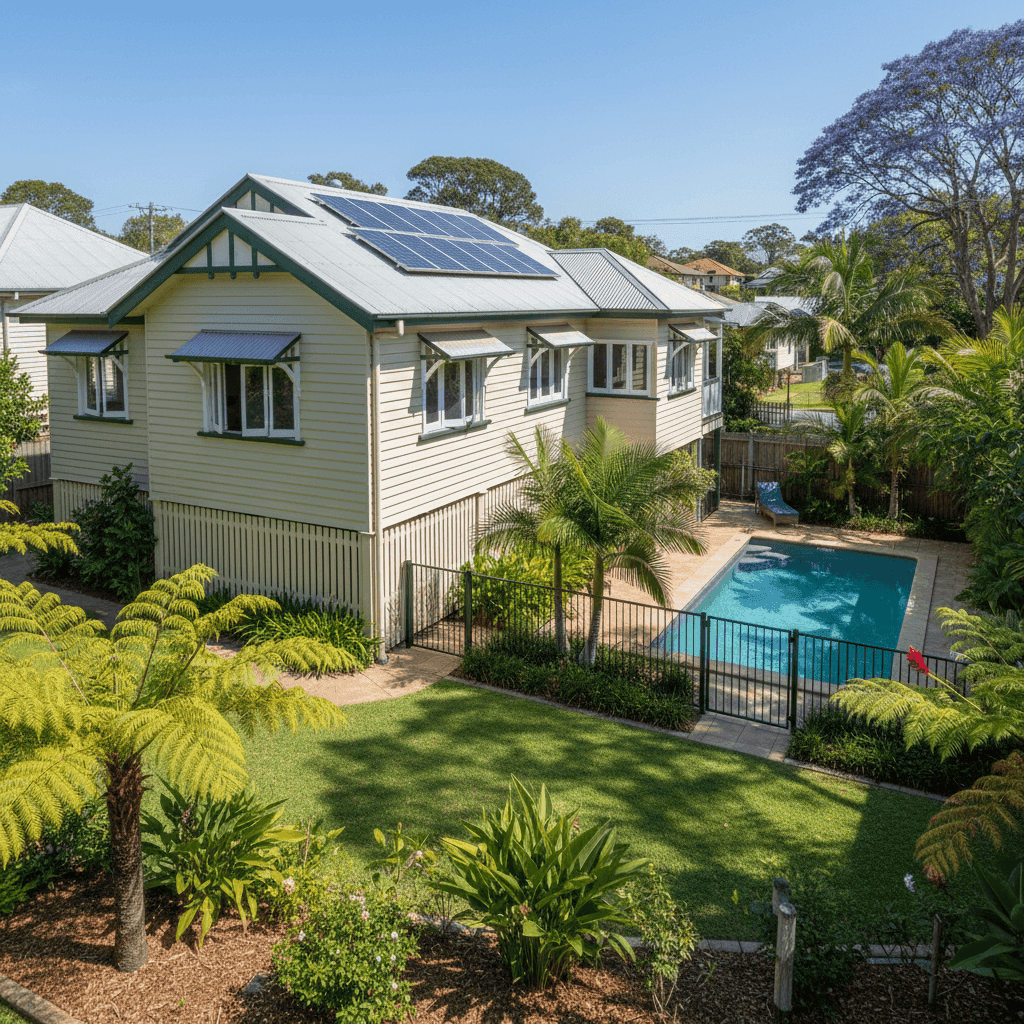
Hendra is one of Brisbane's more sought-after inner-north suburbs — a leafy, established pocket of Queensland known for its character homes, proximity to the CBD, and strong property values. If you own a free-standing home here, you're likely sitting on a significant asset, and making sure it's properly protected is well worth the attention. This article breaks down a real home and contents insurance quote for a four-bedroom, three-bathroom property in Hendra (postcode 4011), and puts the numbers into context so you can judge whether you're paying a fair price.
---
Is This Quote Fair?
The quote in question comes in at $3,732 per year (or $389/month) for combined home and contents cover, with a building sum insured of $1,019,000 and contents valued at $50,000. The building excess is set at $3,000, and the contents excess at $1,000.
CoverClub's pricing engine has rated this quote as FAIR — Around Average, and the data backs that up. Based on 70 quotes collected for Hendra (4011), the suburb average sits at $3,899 per year and the median at $3,336. This quote lands comfortably between those two figures — slightly below the average, and modestly above the median. In practical terms, that means roughly half of comparable Hendra properties are paying less, and half are paying more. You're not getting a bargain, but you're not being stung either.
It's also worth noting that the suburb's 25th percentile is $2,590/yr and the 75th percentile is $4,489/yr, which means this quote falls solidly within the middle band of what Hendra homeowners are paying. There's room to potentially reduce the premium with some targeted adjustments (more on that below), but there's no glaring red flag suggesting this insurer is overcharging.
---
How Hendra Compares
To truly appreciate what this quote means, it helps to zoom out and look at the broader picture.
| Benchmark | Average Premium | Median Premium |
|---|---|---|
| Hendra (4011) | $3,899/yr | $3,336/yr |
| Queensland | $9,129/yr | $3,903/yr |
| National | $5,347/yr | $2,764/yr |
| Brisbane LGA | $16,277/yr | — |
The Queensland state average of $9,129/yr might look alarming at first glance, but it's heavily skewed by high-risk regional areas — particularly far north Queensland, where cyclone exposure sends premiums soaring. The state median of $3,903 is far more representative of what most Queenslanders in metropolitan areas are actually paying, and this quote sits just below that mark.
Nationally, the average premium across Australia is $5,347/yr, again dragged upward by disaster-prone regions. The national median of $2,764 is lower than Hendra's, which reflects the suburb's elevated property values and the corresponding higher sum insured.
Perhaps the most striking figure is the Brisbane LGA average of $16,277/yr — a number that underscores just how much variance exists within a single city. Flood-affected suburbs in Brisbane's west and south can attract eye-watering premiums, making Hendra's comparatively modest figures a genuine advantage of the location.
---
Property Features That Affect Your Premium
This particular property has a number of characteristics that insurers weigh carefully when calculating risk. Here's how the key features likely influence the premium:
Weatherboard timber walls are one of the more significant factors. Timber-clad homes are generally considered higher risk than brick or rendered masonry, as they're more susceptible to fire spread and storm damage. Insurers typically price this in, which can push premiums above what you'd see for a comparable brick veneer home.
Steel/Colorbond roofing is viewed favourably by most insurers. It's durable, low-maintenance, and performs well in storm conditions — a meaningful consideration in south-east Queensland, where severe thunderstorms are a seasonal reality.
Elevated construction (at least 1 metre) is another positive signal. Raised homes — a hallmark of Queensland architecture — offer natural protection against localised flooding and storm water ingress. This elevation can meaningfully reduce flood risk ratings compared to slab-on-ground homes in the same street.
Concrete slab foundation provides structural stability, which insurers generally appreciate, even in an elevated home context.
The pool, solar panels, and ducted climate control all add to the insured value of the property and its contents, and can incrementally increase the premium. Solar panels in particular are worth checking — some policies cover them as part of the building, others treat them separately, so it pays to confirm your policy wording.
No cyclone risk is a notable advantage for Hendra. Properties in cyclone-designated zones face significant premium loadings. Being outside that zone keeps costs considerably more manageable.
The $1,019,000 building sum insured is substantial, and appropriately so for a four-bedroom, three-bathroom home built in 2010 with quality fittings. Underinsurance is a real risk in today's environment — construction costs have risen sharply in recent years, and many homeowners find their sum insured hasn't kept pace.
---
Tips for Homeowners in Hendra
1. Review your sum insured annually With construction costs continuing to rise across Queensland, the cost to rebuild your home may have increased significantly since your policy was last updated. Use an independent building cost calculator or speak to a quantity surveyor to make sure your $1,019,000 figure still reflects reality. Being underinsured can be just as costly as overpaying on premiums.
2. Consider raising your excess to reduce your premium The $3,000 building excess on this policy is already on the higher side, which likely contributes to keeping the annual premium in check. If your financial position allows, some insurers will offer further discounts for higher excess options. Just make sure the saving is worth the out-of-pocket exposure if you do need to claim.
3. Confirm how your solar panels and pool are covered These are two features that vary significantly between policies. Some insurers include pool equipment and solar panels automatically under building cover; others require specific endorsements or have sub-limits. Read the Product Disclosure Statement carefully, or ask your insurer directly, to avoid nasty surprises at claim time.
4. Shop around at renewal time A "fair" rating means you're not being overcharged — but it doesn't mean you couldn't do better. The spread between the 25th and 75th percentile in Hendra ($2,590 to $4,489) shows there's meaningful variation in what insurers will quote for similar properties. Comparing at least two or three quotes before renewing is one of the simplest ways to ensure you're getting genuine value.
---
Compare Your Own Quote
Whether you're renewing an existing policy or insuring a new purchase, CoverClub makes it easy to see how your premium stacks up. Get a home insurance quote and instantly compare it against real data from your suburb, your state, and across the country. Knowledge is the best tool you have when it comes to getting a fair deal on home insurance.