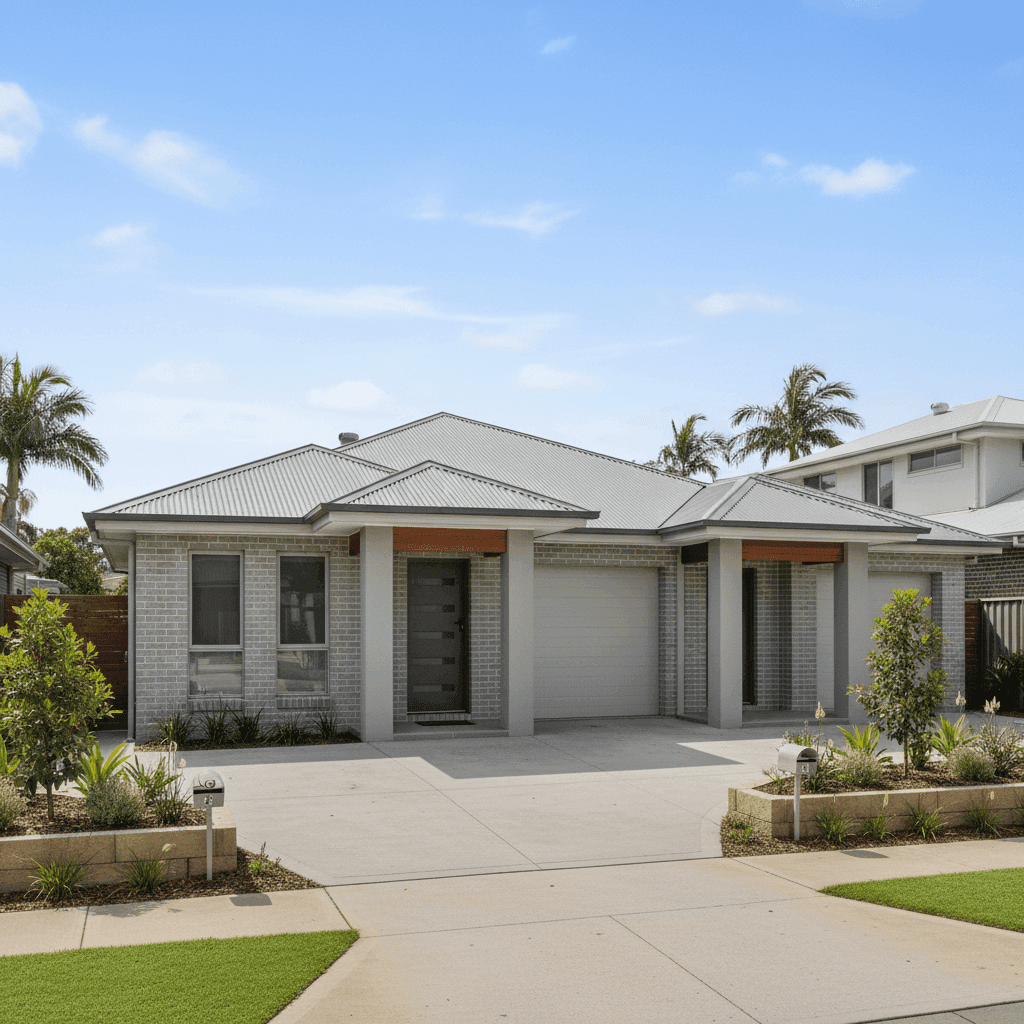
Hendra is a well-established inner-north suburb of Brisbane, known for its leafy streets, proximity to the CBD, and a strong mix of classic Queenslanders alongside newer medium-density developments. If you own a townhouse here — particularly a brick veneer build from the early 2000s — you're in good company. This article breaks down a real home and contents insurance quote for a 3-bedroom, 2-bathroom townhouse in Hendra (postcode 4011), and helps you understand whether the premium stacks up against what others are paying locally, across Queensland, and nationally.
---
Is This Quote Fair?
The quote in question comes in at $4,413 per year (or $423/month) for combined home and contents cover, with a building sum insured of $419,000 and contents valued at $175,000. Both the building and contents excess sit at $1,000.
Our price rating for this quote is FAIR — Around Average, and the data backs that up. Based on a sample of 70 quotes from the Hendra area, the suburb average premium is $3,899/year, while the median sits lower at $3,336/year. This quote lands above both figures, but comfortably within the suburb's 75th percentile of $4,489/year — meaning roughly three-quarters of comparable quotes in the area come in at or below that level.
In other words, this isn't a bargain, but it's not an outlier either. It reflects a premium that sits in the upper-mid range for the suburb, which is consistent with a property carrying a reasonably high building sum insured ($419,000) and a substantial contents value ($175,000). If your property and possessions are genuinely worth that much to replace, paying toward the higher end of the local range is not unreasonable.
---
How Hendra Compares
Context is everything when evaluating an insurance premium. Here's how Hendra sits within the broader landscape:
| Benchmark | Average | Median |
|---|---|---|
| Hendra (4011) | $3,899/yr | $3,336/yr |
| Queensland | $9,129/yr | $3,903/yr |
| National | $5,347/yr | $2,764/yr |
| Brisbane LGA | $16,277/yr | — |
The first thing that jumps out is the enormous gap between the Queensland average ($9,129) and median ($3,903). That divergence signals a highly skewed distribution — driven by extremely high premiums in flood-prone, cyclone-affected, or remote parts of the state pushing the average upward. Hendra, sitting in a relatively stable inner-Brisbane location without cyclone risk designation, benefits from more moderate pricing.
Nationally, the same pattern holds: the average ($5,347) is nearly double the median ($2,764), again reflecting the outsized influence of high-risk postcodes across Australia.
For Hendra specifically, the quote of $4,413 sits above the suburb median but below the Queensland median — a nuanced position that reflects both the suburb's relative safety and the higher-than-average sums insured on this particular property.
You can explore more local data on the Hendra suburb insurance stats page, compare it against the Queensland state overview, or see where it fits in the national picture.
---
Property Features That Affect Your Premium
Insurance underwriters assess risk property by property, and the characteristics of this Hendra townhouse play a meaningful role in determining the final premium. Here's what's most relevant:
Brick Veneer Construction Brick veneer walls are generally viewed favourably by insurers. They offer solid fire resistance and durability compared to timber-framed or weatherboard exteriors, which can translate to more competitive premiums. It's a common construction type for townhouses built in the late 1990s and early 2000s.
Steel / Colorbond Roof A Colorbond steel roof is another tick in the right column. It's lightweight, resistant to corrosion, and performs well in Queensland's subtropical conditions. Insurers typically regard it as lower risk than terracotta or older concrete tiles, which can crack or dislodge in severe weather.
Slab Foundation A concrete slab foundation is the standard for this era of construction in South East Queensland. It provides structural stability and is less susceptible to the subsidence or pest-related issues sometimes associated with raised timber stumps — a factor that can influence building replacement costs.
Body Corporate / Strata Property This is an important consideration. As a strata property, the body corporate typically holds a separate insurance policy covering the building's common areas and external structure. Depending on the strata scheme's policy, your individual building sum insured may relate to the internal fitout and fixtures rather than the full structural rebuild cost. It's worth confirming exactly what the body corporate policy covers before settling on your own building sum insured — there's a risk of both under-insuring and over-insuring if the boundaries aren't clearly defined.
Ducted Climate Control The presence of a ducted air conditioning system adds to the overall replacement value of the property and is factored into the building sum insured. Systems like these can be costly to replace, so it's important they're adequately captured in your coverage.
No Pool, No Solar Panels The absence of a pool removes one common source of liability claims, and no solar panels means fewer complications around electrical system coverage. Both simplify the risk profile slightly.
---
Tips for Homeowners in Hendra
1. Clarify Your Strata Coverage Boundaries Before renewing or switching policies, get a copy of the body corporate's Certificate of Currency. Understand exactly what the strata policy covers — particularly whether it includes internal fixtures, carpet, and kitchen fittings — so you can set your own building sum insured appropriately and avoid paying for duplicate coverage.
2. Review Your Contents Value Annually $175,000 in contents cover is a substantial figure. Take the time each year to do a rough stocktake of your belongings — electronics, furniture, clothing, appliances, jewellery. It's easy to either underestimate (leaving yourself exposed) or overestimate (paying more than necessary). Many insurers offer contents calculators to help.
3. Consider a Higher Excess to Lower Your Premium With both excesses currently set at $1,000, there may be room to increase one or both in exchange for a lower annual premium. If you have an emergency fund and are unlikely to make small claims, a higher excess (say, $1,500 or $2,000) can meaningfully reduce what you pay each year.
4. Shop Around at Renewal Time Insurance loyalty rarely pays off. Insurers frequently offer better rates to new customers than to existing ones. Even if you're happy with your current provider, getting a comparison quote before your renewal date takes only a few minutes and could save you hundreds of dollars — especially given this quote sits above the suburb median.
---
Compare Your Options with CoverClub
Whether you're reviewing an existing policy or shopping for cover on a new property, CoverClub makes it straightforward to see what the market looks like for your specific address. Our data is drawn from real quotes across Australia, so you're comparing apples with apples. Get a home insurance quote today and find out whether you're paying a fair price — or whether there's a better deal waiting for you.