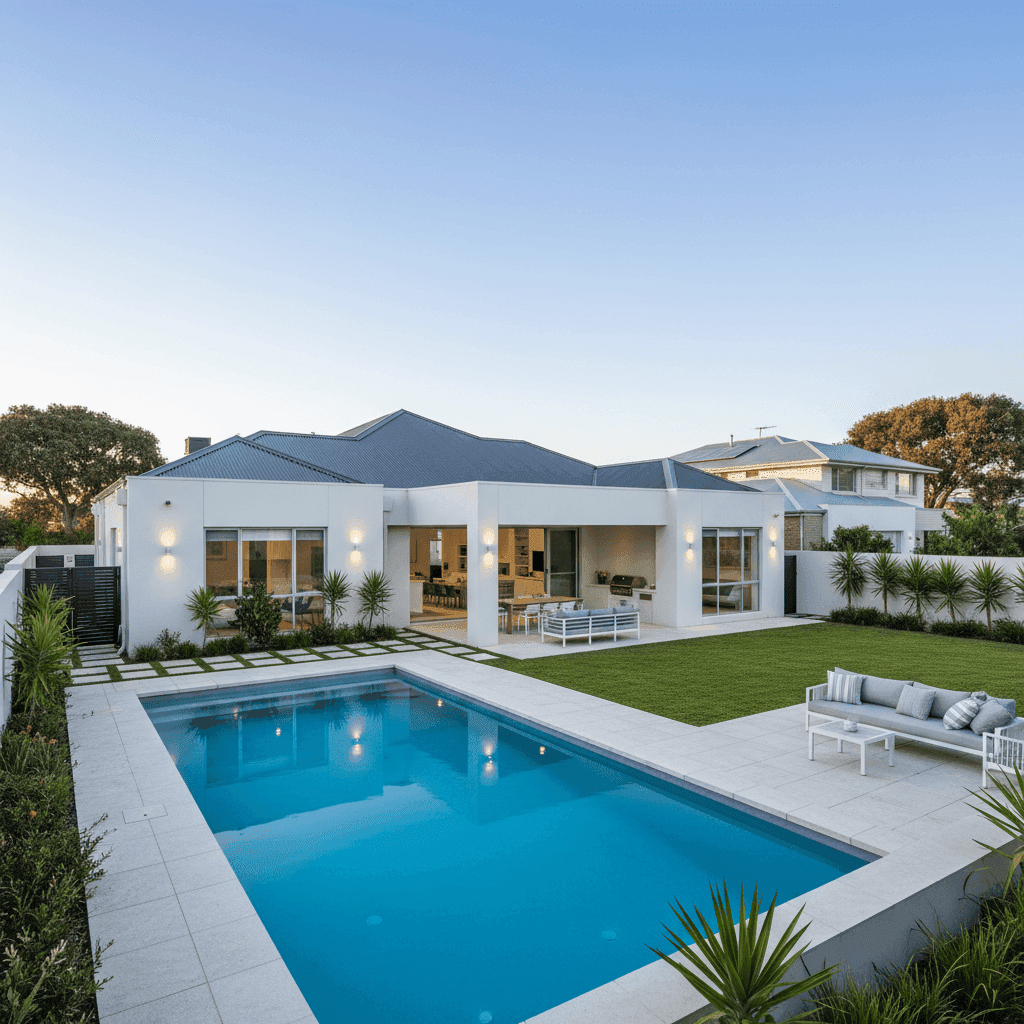
Henley Beach is one of Adelaide's most desirable coastal suburbs — a relaxed seaside community with strong property values, excellent amenities, and easy access to the city. But living close to the ocean comes with its own insurance considerations, and for owners of larger, well-appointed homes, premiums can climb significantly. This article breaks down a real home and contents insurance quote for a five-bedroom free standing home in Henley Beach (SA 5022), examines how it stacks up against local and national benchmarks, and offers practical advice for homeowners looking to get better value on their cover.
---
Is This Quote Fair?
The quote in question sits at $8,700 per year (or $834/month) for combined home and contents insurance — covering a building sum insured of $1,323,000 and contents valued at $125,000, each with a $1,000 excess.
Our price rating for this quote is Expensive (Above Average), and the data backs that up clearly.
The suburb average premium for Henley Beach is just $2,225/year, with a median of $1,661/year. This quote is roughly 3.9× the suburb average — a substantial gap that warrants a closer look. Even against the national average of $5,347/year and the national median of $2,764/year, this premium stands out as elevated.
That said, context matters enormously here. The building sum insured of $1,323,000 is a significant figure, reflecting the size, quality, and coastal location of the property. Larger homes with above-average fittings and features like a swimming pool will always attract higher premiums than a standard three-bedroom suburban dwelling. The comparison pool of 20 quotes in the Henley Beach area likely includes a wide range of property sizes and values, which pulls the suburb average down considerably.
So while the premium is genuinely high in absolute terms, it's not entirely surprising given the property profile. The key question for the homeowner is whether this specific figure is competitive for a property of this calibre — and that's where shopping around becomes essential.
---
How Henley Beach Compares
To put this quote in perspective, here's how Henley Beach premiums sit relative to broader benchmarks:
| Benchmark | Average Premium | Median Premium |
|---|---|---|
| Henley Beach (SA 5022) | $2,225/yr | $1,661/yr |
| LGA (Charles Sturt) | $1,695/yr | — |
| South Australia | $2,433/yr | $1,679/yr |
| National | $5,347/yr | $2,764/yr |
You can explore the full breakdown of Henley Beach insurance statistics, South Australia averages, and national home insurance data on CoverClub.
A few observations stand out. Henley Beach premiums are broadly in line with the South Australian state average, suggesting the suburb doesn't carry a dramatic coastal loading compared to other SA locations — at least for typical properties. The Charles Sturt LGA average of $1,695/year is actually below the suburb average, suggesting some variation within the broader council area.
Nationally, the average premium of $5,347/year reflects the outsized influence of high-risk regions — particularly cyclone-prone areas in Queensland and Western Australia — which tend to push averages up significantly. Henley Beach is not a designated cyclone risk area, which is a meaningful factor in keeping baseline premiums more manageable for most residents.
The 25th–75th percentile range for Henley Beach runs from $1,283/year to $2,097/year, confirming that the vast majority of local quotes sit well below the $8,700 figure in this analysis. Again, this reflects the difference in property scale rather than a pricing anomaly.
---
Property Features That Affect Your Premium
Several characteristics of this property have a direct bearing on the premium:
Building Size & Sum Insured At 235 sqm with a building sum insured of $1,323,000, this is a large, high-value home. Rebuild costs in coastal South Australia have risen sharply in recent years, and insurers price accordingly. A higher sum insured means a larger potential payout — and a higher premium to match.
Hebel External Walls Hebel (autoclaved aerated concrete) is a popular modern building material prized for its thermal performance and fire resistance. From an insurance perspective, it's generally viewed favourably — it's durable and non-combustible — though some insurers price it differently to standard brick or weatherboard due to specialised repair requirements.
Steel/Colorbond Roof Colorbond roofing is widely regarded as one of the most insurer-friendly roof types in Australia. It's durable, low-maintenance, and performs well in high-wind conditions. This is unlikely to be adding any loading to the premium.
Slab Foundation A concrete slab foundation is a standard, low-risk construction type that generally attracts no additional premium loading.
Timber/Laminate Flooring & Above-Average Fittings Above-average fittings — think quality joinery, stone benchtops, premium appliances — increase the rebuild cost and can push the required sum insured higher. Combined with timber and laminate flooring (which adds to replacement costs), this contributes meaningfully to the overall premium.
Swimming Pool Pools add liability exposure and increase the overall replacement value of the property, both of which can nudge premiums upward. They also require specific cover considerations, particularly around accidental damage and public liability.
Ducted Climate Control A full ducted system is a significant fixed asset within the home. Damage or replacement can be costly, and insurers factor this into their building valuations.
---
Tips for Homeowners in Henley Beach
1. Get Multiple Quotes — Especially at This Premium Level At $8,700/year, even a 15–20% saving represents over $1,000 annually. Insurers price large, high-value coastal properties very differently, so the spread between quotes can be dramatic. Compare quotes at CoverClub to see what multiple insurers would charge for the same cover.
2. Review Your Sum Insured Carefully Underinsurance is a genuine risk, but so is over-insurance. Make sure your $1,323,000 building sum insured reflects a current, accurate rebuild cost estimate — not just the market value of the property. Tools like the Cordell Sum Sure calculator (often embedded in insurer quote flows) can help validate this figure.
3. Consider a Higher Excess With a $1,000 excess on both building and contents, there may be room to increase this in exchange for a lower annual premium. If you're unlikely to claim for smaller incidents, a $2,000 or $2,500 excess could generate meaningful savings over time.
4. Bundle Smartly, But Don't Assume It's Cheaper Many insurers offer discounts for bundling home and contents cover, which this policy already does. However, it's worth checking whether separate policies from specialist providers might actually come in cheaper — particularly for high-value homes where specialist insurers may be more competitive.
---
Compare Your Options with CoverClub
Whether you're renewing your existing policy or shopping for the first time, CoverClub makes it easy to see how your premium compares to others in your area. Start a quote today and find out if you're getting fair value — or paying more than you need to.