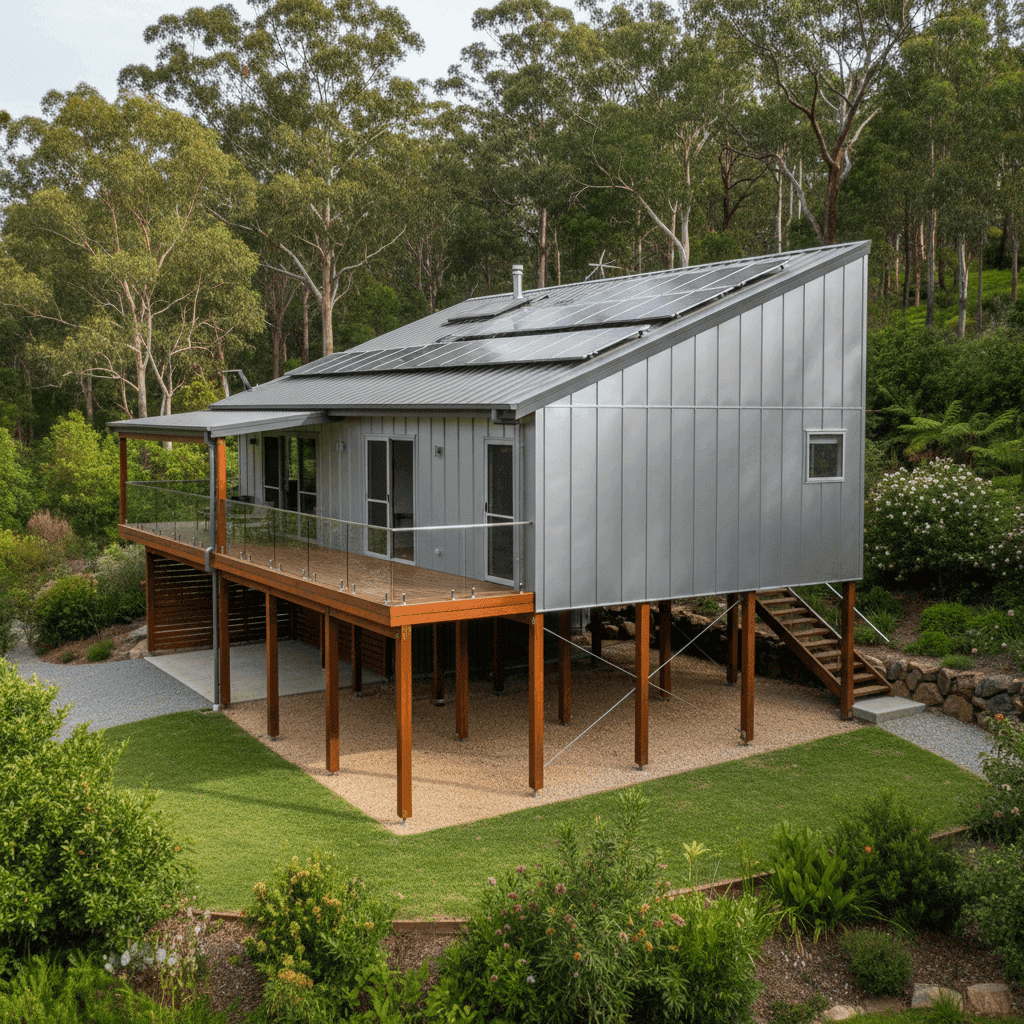
Nestled in the mineral springs country of Central Victoria, Hepburn Springs is a charming township known for its heritage architecture, lush bushland, and relaxed lifestyle. It's also a suburb where home insurance premiums carry some nuance — influenced by the region's bushfire exposure, property styles, and building characteristics. This article breaks down a real home and contents insurance quote for a three-bedroom free standing home in Hepburn Springs (VIC 3461), rated Fair (Around Average), and explores what's driving the price.
---
Is This Quote Fair?
The quoted annual premium of $2,551 (or $245/month) covers both building (insured at $670,000) and contents ($57,000), with a $1,000 excess applying to each. Our pricing engine has rated this quote as Fair — Around Average, which is a solid outcome for a property of this type in this location.
To put that in perspective:
- The suburb average for Hepburn Springs sits at $2,616/yr, meaning this quote comes in slightly below the local average.
- The suburb median is $2,641/yr — again, this quote undercuts it modestly.
- The middle 50% of quotes in the area range from $1,983/yr to $3,279/yr, and at $2,551, this quote sits comfortably within that band — closer to the lower half.
So while it's not a bargain-basement price, it's genuinely competitive for Hepburn Springs. Homeowners paying closer to the $3,279 upper quartile should take note — there may be room to save.
---
How Hepburn Springs Compares
Understanding how your suburb stacks up against broader benchmarks helps contextualise what you're paying. Here's how Hepburn Springs sits in the wider picture:
| Benchmark | Average Premium | Median Premium |
|---|---|---|
| Hepburn Springs (3461) | $2,616/yr | $2,641/yr |
| Victoria (VIC) | $3,000/yr | $2,718/yr |
| National | $5,347/yr | $2,764/yr |
| Macedon Ranges LGA | $2,890/yr | — |
A few things stand out here. The VIC state average of $3,000/yr is notably higher than the Hepburn Springs suburb average, suggesting that many Victorian properties — particularly those in flood-prone or higher-risk metropolitan areas — are pulling that figure up. Hepburn Springs, by comparison, is relatively affordable within the state context.
The national average of $5,347/yr looks alarming at first glance, but this is heavily skewed by high-premium regions like Far North Queensland, coastal flood zones, and cyclone-affected areas. The national median of $2,764/yr is a far more useful comparison point, and Hepburn Springs sits just below it — a reassuring sign.
Within the Macedon Ranges LGA, the average of $2,890/yr is higher than the Hepburn Springs suburb average, suggesting that other parts of the LGA (such as areas with greater bushfire or flood exposure) are pushing that figure upward. This quote, at $2,551, beats the LGA average by a meaningful margin.
Based on a sample of 62 quotes in the suburb, these figures are statistically meaningful and give a reliable picture of the local insurance landscape.
---
Property Features That Affect Your Premium
Every property has a unique risk profile, and insurers price accordingly. Here's how the specific features of this home likely influence the premium:
Aluminium cladding and Colorbond roof — Both are considered low-maintenance, durable materials that perform well in Australian conditions. Aluminium cladding is non-combustible, which is a meaningful advantage in bushfire-adjacent areas like Hepburn Springs. Colorbond steel roofing is similarly resilient and widely accepted by insurers without loading.
Elevated on stumps (at least 1m) — A stump foundation with significant elevation is a double-edged sword. On the positive side, it reduces flood and moisture risk to the structure. However, elevated homes can be more expensive to repair after storm or wind events, and some insurers apply a modest loading for this style. It's worth confirming your policy covers the subfloor space and any services running beneath the home.
Timber and laminate flooring — These materials are popular but can be more susceptible to water damage than tiles. If a burst pipe or storm event causes water ingress, flooring replacement can be a significant cost driver in claims. Ensuring your contents and building cover adequately accounts for floor coverings is important.
Above-average fittings — Kitchens and bathrooms with premium fixtures, stone benchtops, or high-end appliances push up the cost to rebuild and replace. This is reflected in the $670,000 building sum insured, which is appropriate for a 169 sqm home with quality finishes.
Solar panels — Solar systems are increasingly common, but they're not always automatically covered under standard home insurance. Check your policy to confirm whether the panels, inverter, and associated wiring are included in the building sum insured — and whether accidental damage is covered.
Ducted climate control — Ducted systems are expensive to repair or replace and are typically covered under building insurance. Confirming this is included in your policy schedule is a simple but worthwhile step.
No pool, no cyclone risk — The absence of a pool removes a common liability and maintenance risk factor. And being outside a designated cyclone risk zone means no cyclone-specific loadings apply to this premium — a notable saving compared to properties in Northern Australia.
---
Tips for Homeowners in Hepburn Springs
1. Review your building sum insured annually Construction costs in regional Victoria have risen significantly in recent years. A 169 sqm home with above-average fittings and a stump foundation can be costly to rebuild — make sure your $670,000 sum insured keeps pace with current building rates. Under-insurance is one of the most common and costly mistakes homeowners make.
2. Confirm solar panel coverage explicitly Don't assume your solar system is covered. Ask your insurer directly whether the panels, inverter, mounting hardware, and related electrical components are included — and whether accidental breakage is covered, not just fire or storm damage.
3. Get a bushfire risk assessment Hepburn Springs is surrounded by bushland, and while this property doesn't sit in a cyclone zone, bushfire remains a relevant risk in the Macedon Ranges. Some insurers offer discounts or better terms if you can demonstrate ember-proofing measures, cleared gutters, or other bushfire preparedness steps. Check your BAL (Bushfire Attack Level) rating and discuss it with your insurer.
4. Compare quotes at renewal — not just when you first buy The insurance market shifts constantly. The fact that this quote is priced below the suburb average is a good sign, but it doesn't mean it will remain competitive at renewal. Shopping around annually — even if you stay with the same insurer — is one of the simplest ways to avoid paying more than you need to.
---
Find a Better Deal with CoverClub
Whether you're renewing your policy or buying cover for the first time, comparing quotes is the fastest way to make sure you're not overpaying. CoverClub makes it easy to see how your premium stacks up against your neighbours — and to find a better deal if one exists. Get a quote today at CoverClub and take the guesswork out of home insurance.