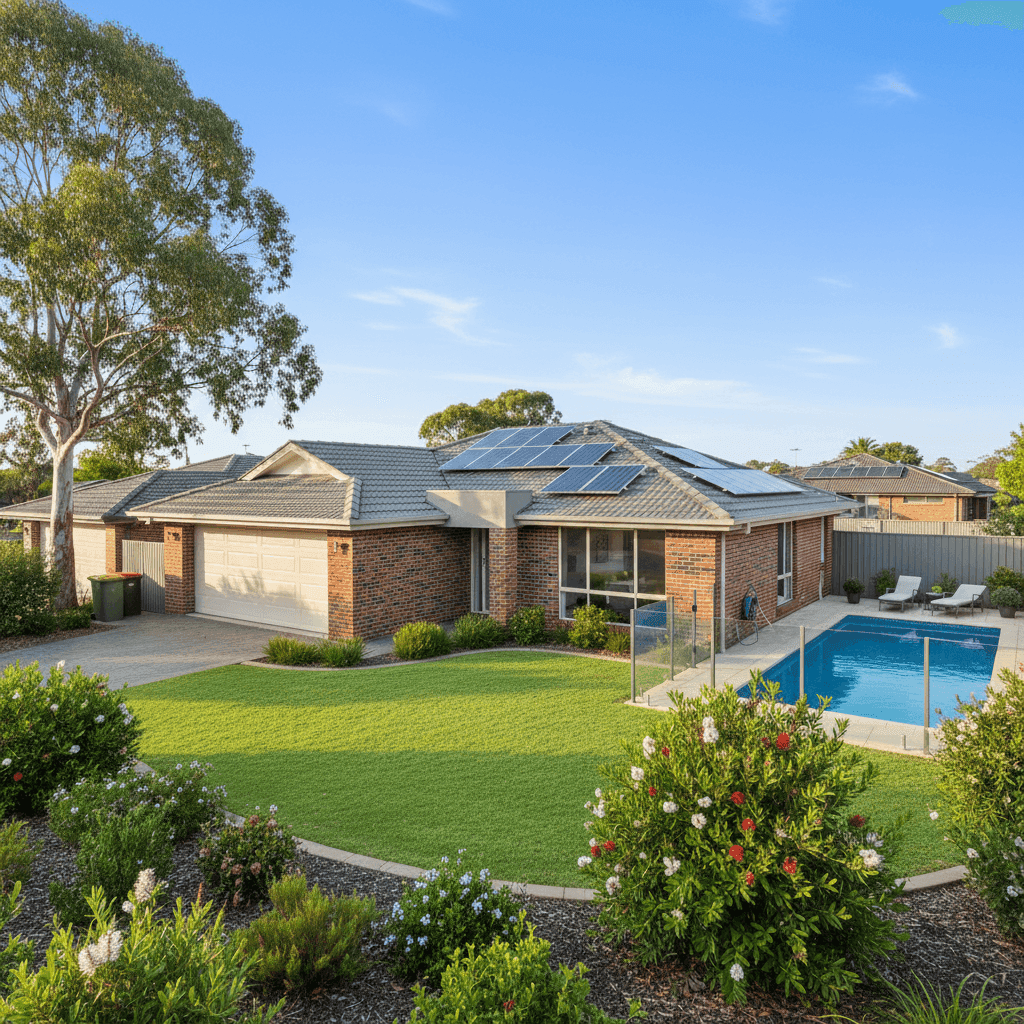
If you own a free standing home in Heritage Park, QLD 4118, you've probably wondered whether your home insurance premium is competitive — or whether you're paying more than you should be. Heritage Park is a well-established suburb in Logan City, south of Brisbane, popular with families thanks to its quiet streets, local schools, and relatively affordable housing. But "affordable housing" doesn't always mean affordable insurance.
This article breaks down a real home and contents insurance quote for a 3-bedroom, 2-bathroom brick veneer home in Heritage Park, and benchmarks it against suburb, state, and national data so you can make a genuinely informed decision.
---
Is This Quote Fair?
The quote in question comes in at $2,089 per year (or $205/month) for combined home and contents cover, with a building sum insured of $476,000 and contents valued at $100,000. Both the building and contents excess are set at $1,000.
Our price rating for this quote is FAIR — Around Average, and the data backs that up. The suburb average premium for Heritage Park sits at $2,088/yr, meaning this quote is almost exactly on par with what most comparable properties in the area are paying. It also falls comfortably below the suburb median of $2,184/yr, which means more than half of Heritage Park homeowners are actually paying more than this quote.
For a property with above-average features — including a swimming pool, solar panels, ducted climate control, and top-of-the-range fittings — landing at the suburb average is a genuinely solid result. These features typically push premiums upward, so sitting at the mean rather than toward the 75th percentile ($2,916/yr) suggests the insurer has priced this risk reasonably.
That said, "fair" doesn't mean "the best available." It means this quote is a reasonable starting point — not a reason to stop shopping.
---
How Heritage Park Compares
To put this quote in proper context, it helps to zoom out and look at the broader insurance landscape. You can explore the full data on the Heritage Park suburb stats page, the QLD state stats page, and national insurance stats.
| Benchmark | Average Premium | Median Premium |
|---|---|---|
| Heritage Park (suburb) | $2,088/yr | $2,184/yr |
| Logan LGA | $4,617/yr | — |
| Queensland (state) | $9,129/yr | $3,903/yr |
| National | $5,347/yr | $2,764/yr |
A few things stand out here. First, Heritage Park premiums are dramatically lower than the Queensland state average of $9,129/yr. That figure is heavily skewed by high-risk coastal and far-north Queensland postcodes — areas exposed to cyclones, storm surge, and flooding — which can push individual premiums into the tens of thousands. Heritage Park, sitting inland in the Logan corridor, doesn't carry that kind of catastrophic weather exposure.
Second, the Logan LGA average of $4,617/yr is notably higher than the Heritage Park suburb average of $2,088/yr. This suggests that while Heritage Park is relatively well-priced within the Logan City council area, other parts of the LGA — potentially areas with greater flood risk or higher storm frequency — are pulling that LGA average up significantly.
Finally, this quote also comes in below the national median of $2,764/yr, which is a meaningful benchmark given that national figures include many lower-risk, lower-cost states like Victoria and South Australia. Sitting below the national median while holding a well-featured property is a positive sign.
---
Property Features That Affect Your Premium
Not all homes are priced the same, and several characteristics of this particular property will have influenced the quote.
Brick veneer construction and concrete roof are generally viewed favourably by insurers. Brick veneer walls offer solid fire resistance and structural durability, while concrete tile roofing is considered more resilient than metal or fibreglass alternatives. Together, these materials typically attract lower premiums compared to timber-framed or clad homes.
Slab foundation is standard for Queensland homes built in the 2000s and is considered low-risk by most insurers — no subfloor space means fewer concerns about moisture, termites, or subsidence.
Timber and laminate flooring can be a minor premium factor. Timber floors, particularly solid hardwood, can be expensive to replace or repair after water damage, which some insurers factor into their pricing.
Top-of-the-range fittings are a significant driver of the $476,000 building sum insured. High-end kitchens, bathrooms, and finishes cost considerably more to rebuild, and the sum insured should reflect that replacement cost — not the market value of the property.
Swimming pool adds liability exposure and increases the replacement cost component of the building sum insured. Pools also introduce additional risk around accidental damage and public liability.
Solar panels are increasingly common in Queensland and most insurers now include them under building cover, though it's worth confirming this explicitly with your insurer. A system on a concrete tile roof is generally considered well-secured.
Ducted climate control adds to the building's replacement value and is a feature that's costly to repair or replace — another reason the building sum insured should be carefully calculated.
Importantly, this property is not in a cyclone risk area, which is a significant premium advantage in Queensland. Cyclone-rated premiums in far north QLD can be several times higher than what Heritage Park homeowners pay.
---
Tips for Homeowners in Heritage Park
1. Review your building sum insured regularly With top-of-the-range fittings, a pool, solar system, and ducted air conditioning, the cost to fully rebuild this home could change meaningfully over time as construction costs rise. Underinsurance is one of the most common — and costly — mistakes homeowners make. Use a building calculator or speak to a quantity surveyor to validate your sum insured each year.
2. Check what's included for your pool and solar panels Not all policies treat pools and solar panels the same way. Some insurers include them automatically under building cover; others require specific endorsements or have sub-limits. Read your Product Disclosure Statement carefully, or ask your insurer directly.
3. Consider your excess strategically Both the building and contents excess on this quote are set at $1,000. Increasing your excess — say, to $2,500 or $5,000 — can reduce your annual premium meaningfully. If you have a strong emergency fund and are unlikely to make small claims, a higher excess can be a smart way to lower your ongoing costs.
4. Compare quotes at renewal, not just at inception Insurers often offer their best pricing to new customers. If you've held the same policy for several years without comparing, there's a reasonable chance you could find equivalent or better cover at a lower price. The Heritage Park suburb data shows a wide spread between the 25th percentile ($996/yr) and the 75th percentile ($2,916/yr), which means pricing varies enormously across insurers for similar properties.
---
Ready to Compare?
Whether you're reviewing your current policy or shopping for cover on a new property, comparing quotes is the single most effective way to make sure you're not overpaying. Get a home insurance quote at CoverClub and see how your premium stacks up against real data from your suburb, your LGA, and across Australia.