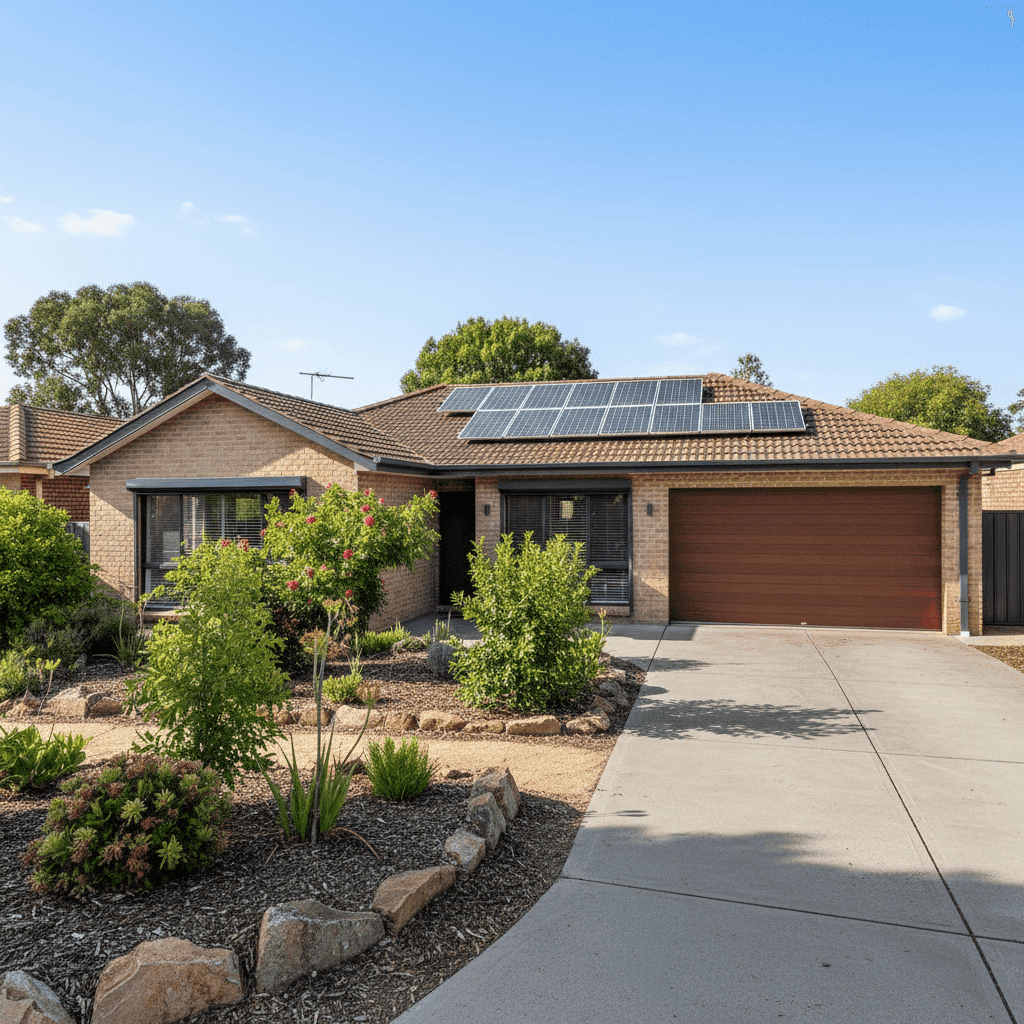
Highbury is a quiet, established suburb nestled in the foothills of Adelaide's north-east, sitting within the City of Tea Tree Gully. It's a popular choice for families drawn to its leafy streets, proximity to the Torrens Linear Park, and solid housing stock — much of it built during the post-war and mid-century boom. This article takes a close look at a real home and contents insurance quote for a three-bedroom, double brick free standing home in Highbury (SA 5089), breaking down whether the premium represents fair value and what factors are shaping the cost.
---
Is This Quote Fair?
The quote in question comes in at $2,030 per year (or $195/month) for combined home and contents cover, with a building sum insured of $826,000 and contents valued at $249,000. Both the building and contents excess are set at $1,000.
Our pricing analysis rates this quote as FAIR — Around Average, and the data backs that up. The suburb average for Highbury sits at $2,022 per year, meaning this premium is almost exactly in line with what most homeowners in the area are paying. It falls comfortably within the interquartile range of $1,447 to $2,322, which tells us it's neither a bargain nor an outlier — it's a solidly mid-market result.
That said, "fair" doesn't necessarily mean "the best available." There's a meaningful spread of premiums across the suburb, with some homeowners securing cover for as little as $1,447 (25th percentile). Depending on the insurer, the level of cover, and the specific policy terms, there may be room to do better — which is always worth exploring.
---
How Highbury Compares
One of the most useful things you can do with a home insurance quote is benchmark it against broader market data. Here's how this premium stacks up:
| Benchmark | Premium |
|---|---|
| This Quote | $2,030/yr |
| Highbury Suburb Average | $2,022/yr |
| Highbury Suburb Median | $1,972/yr |
| Tea Tree Gully LGA Average | $1,440/yr |
| SA State Average | $2,433/yr |
| SA State Median | $1,679/yr |
| National Average | $5,347/yr |
| National Median | $2,764/yr |
A few things stand out here. First, this quote is well below the South Australian state average of $2,433/yr and dramatically lower than the national average of $5,347/yr. That national figure is heavily skewed by high-risk regions — particularly cyclone-prone areas in Queensland and Western Australia — so it's not a perfect apples-to-apples comparison. Still, it's a useful reminder of how relatively affordable Adelaide's foothills can be for home insurance.
Interestingly, the Tea Tree Gully LGA average of $1,440/yr is notably lower than the Highbury suburb average of $2,022/yr. This likely reflects the diversity of property types and values across the broader LGA, which includes more modest homes in other pockets. Highbury's above-average property values and rebuild costs naturally push premiums higher within the LGA context.
You can explore more local data on the Highbury suburb insurance stats page, or compare it against SA-wide insurance trends and national benchmarks.
---
Property Features That Affect Your Premium
Every home tells a story, and insurers read it carefully when calculating your premium. Here's how the specific features of this Highbury property influence the cost of cover:
Double Brick Construction Built in 1975, this home features double brick external walls — a construction type that insurers generally view favourably. Double brick offers excellent structural integrity, strong fire resistance, and solid thermal performance. It tends to attract more competitive premiums compared to lightweight timber or clad construction, all else being equal.
Tiled Roof A tiled roof is another positive signal for underwriters. Tiles are durable, fire-resistant, and have a long lifespan when maintained properly. They're far less susceptible to storm damage than some corrugated iron or Colorbond alternatives, which can help keep premiums in check.
Slab Foundation A concrete slab foundation is standard for many Adelaide homes of this era and is generally considered low-risk from an insurance perspective. It eliminates the concerns associated with subfloor spaces (such as moisture, termites, or subsidence) that can complicate claims on stumped or suspended floor homes.
Timber and Laminate Flooring While aesthetically appealing and common in above-average quality homes, timber and laminate flooring carries a moderate replacement cost. In the event of water damage or flooding, these floor types can be expensive to repair or replace — something insurers factor into the contents and building valuation.
Above-Average Fittings Quality This property is noted as having above-average fittings — think quality kitchen appliances, bathroom fixtures, and finishes. Higher-spec interiors increase the cost to rebuild or repair, which is reflected in both the building sum insured and the premium.
Solar Panels The presence of solar panels adds a layer of complexity to home insurance. Panels are typically covered under the building policy, but their replacement cost can be significant. Homeowners should confirm with their insurer that solar panels are explicitly included in the building sum insured and that the $826,000 figure adequately accounts for them.
Ducted Climate Control A ducted heating and cooling system is a valuable fixed asset that forms part of the building sum insured. These systems can cost $10,000–$20,000+ to replace, so it's worth ensuring your building sum insured reflects this.
No Pool, No Cyclone Risk The absence of a pool removes a common liability exposure, and Highbury's location outside cyclone risk zones means the property avoids the significant premium loadings that apply in northern Australia.
---
Tips for Homeowners in Highbury
1. Review Your Building Sum Insured Carefully At $826,000, the building sum insured needs to cover full demolition, debris removal, and rebuild costs — not just the market value of the home. With above-average fittings, solar panels, and ducted climate control, it's easy to underestimate true rebuild costs. Consider an independent building valuation every few years to stay on top of this.
2. Don't Overlook the Excess Trade-Off Both excesses are set at $1,000 here, which is a common mid-point. Opting for a higher excess (say $2,000) can reduce your annual premium meaningfully — but only makes sense if you're financially comfortable covering that amount out-of-pocket in a claim. Run the numbers before making changes.
3. Shop Around at Renewal Time Even a "fair" premium can often be improved. Insurers regularly reprice their books, and loyalty doesn't always pay. Use renewal time as a prompt to compare at least two or three quotes. The CoverClub quote comparison tool makes it easy to see what's available for your specific property.
4. Confirm Solar Panel Coverage Explicitly Not all standard home insurance policies cover solar panels as a matter of course — or they may apply sub-limits. Ask your insurer directly whether your panels are covered under the building policy, what the replacement limit is, and whether accidental damage (such as hail) is included.
---
Compare Your Home Insurance Today
Whether you're renewing an existing policy or shopping for the first time, comparing quotes is one of the simplest ways to make sure you're not overpaying. CoverClub aggregates real quote data from across Australia, so you can see exactly how your premium stacks up against your neighbours and the broader market.
Get a home insurance quote for your Highbury property and find out if you could be paying less — without sacrificing cover.