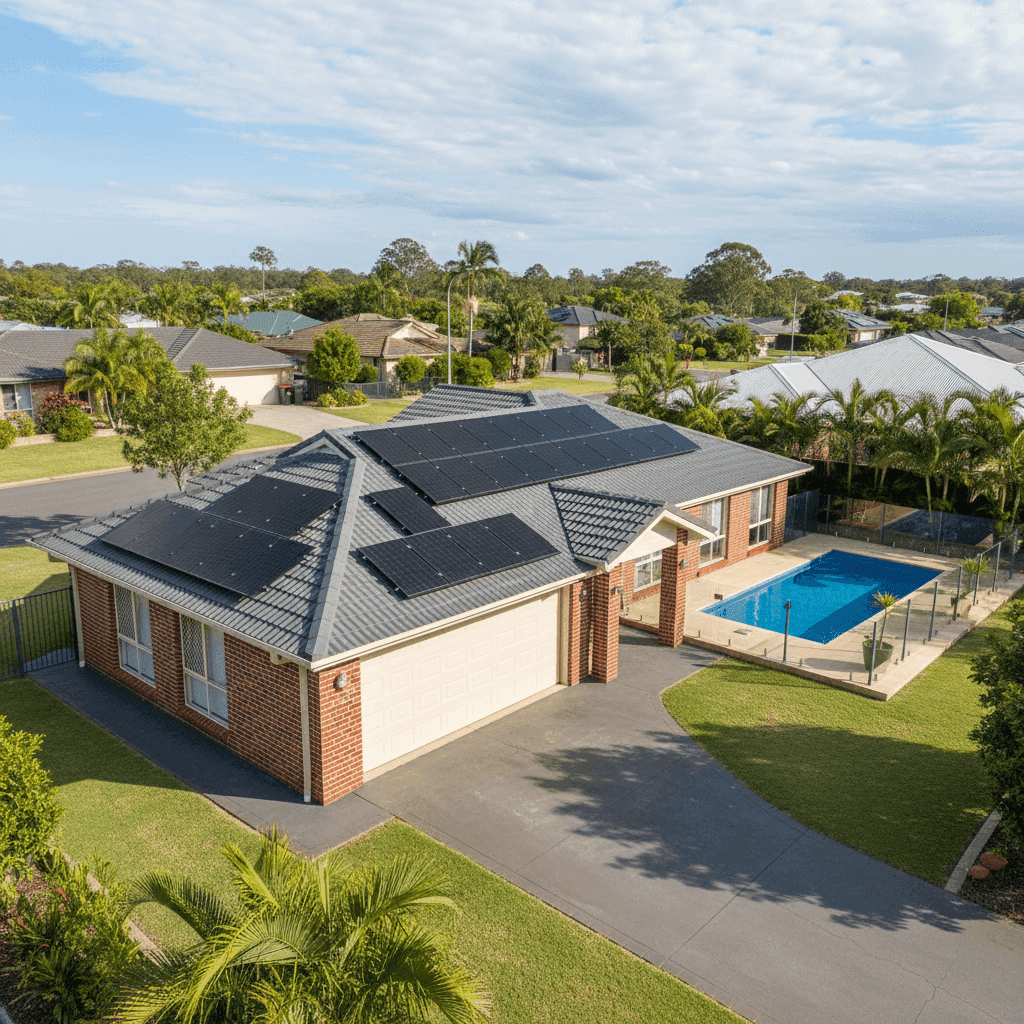
If you own a free standing home in Highland Park, QLD 4211, you've probably wondered whether your home insurance premium is competitive — or whether you're quietly overpaying year after year. This article breaks down a real home and contents insurance quote for a four-bedroom property in the suburb, benchmarks it against local, state, and national data, and offers practical guidance for homeowners looking to get the best value from their cover.
---
Is This Quote Fair?
The quote in question sits at $2,754 per year (or $286/month) for combined home and contents insurance, covering a building sum insured of $866,300 and contents valued at $80,000. The building excess is $3,000 and the contents excess is $1,000.
Our pricing engine has rated this quote as FAIR — Around Average.
What does that actually mean? It means the premium lands comfortably within the typical range for the area — not a bargain, but not an outlier either. For context, the 25th percentile of quotes in Highland Park sits at $2,387/yr, and the 75th percentile reaches $4,809/yr. At $2,754, this quote falls in the lower half of that range, which is a reasonably solid position to be in.
It's worth noting that "fair" doesn't mean you can't do better. Insurance pricing is highly individualised, and even modest changes to your policy structure — such as adjusting your excess or reviewing your sum insured — can shift your premium meaningfully.
---
How Highland Park Compares
To put this quote into proper perspective, it helps to look at how Highland Park stacks up against broader benchmarks. Here's a snapshot:
| Benchmark | Premium |
|---|---|
| This quote | $2,754/yr |
| Highland Park suburb average | $3,537/yr |
| Highland Park suburb median | $3,420/yr |
| QLD state average | $9,129/yr |
| QLD state median | $3,903/yr |
| National average | $5,347/yr |
| National median | $2,764/yr |
| Scenic Rim LGA average | $8,744/yr |
A few things stand out here. First, the QLD state average of $9,129/yr is dramatically higher than both the suburb average and this individual quote. That gap is largely driven by high-risk areas in Queensland — particularly cyclone-prone coastal and far-north regions — which pull the average up considerably. The state median of $3,903/yr is a more representative figure for most Queensland homeowners, and even that is noticeably higher than what Highland Park residents typically pay.
The Scenic Rim LGA average of $8,744/yr is also striking. Highland Park falls within the City of Gold Coast local government area, so this LGA figure isn't directly applicable — but it does illustrate how dramatically premiums can vary even within a relatively contained geographic region.
At the national level, the average of $5,347/yr again reflects the influence of high-risk zones across Australia. The national median of $2,764/yr is arguably the most useful comparison point, and this quote at $2,754 sits just fractionally below it — suggesting the homeowner is paying broadly in line with the typical Australian home insurance customer.
You can explore more local data on the Highland Park suburb stats page, dive into QLD-wide insurance trends, or review national home insurance benchmarks.
---
Property Features That Affect Your Premium
Insurance underwriters assess dozens of variables when pricing a policy. For this particular property, several features are worth understanding in the context of your premium.
Brick veneer construction and tiled roof Brick veneer walls paired with a tiled roof is one of the more favourable combinations from an insurer's perspective. Brick veneer offers solid fire resistance and structural durability, while tiles are generally considered more resilient than corrugated iron or Colorbond in many weather scenarios. This combination typically attracts more competitive pricing compared to lightweight or older construction types.
Slab foundation A concrete slab foundation is standard for homes of this era and is generally viewed neutrally by insurers. It eliminates the risk of subfloor damage or pest-related structural issues that can affect homes on stumps or piers.
Swimming pool A pool adds replacement value to the property and can also introduce liability considerations. It's important to ensure your building sum insured accounts for the full cost of pool reinstatement, including surrounds, fencing, and filtration systems — these costs can be surprisingly significant.
Solar panels Solar panels are increasingly common on Australian homes but are often overlooked when setting a building sum insured. A standard rooftop system can cost $8,000–$15,000 or more to replace. Confirm with your insurer that your panels are explicitly covered under your building policy, and that the sum insured reflects their value.
1995 construction At roughly 30 years old, this property is in a middle-ground zone for insurers. It's old enough that some components — roofing, plumbing, electrical — may be approaching end-of-life, but not so old as to attract the significant loading that pre-1970s homes can face. Keeping up with maintenance is key to both preserving your home's value and avoiding claim complications.
No cyclone risk Highland Park is not classified as a cyclone risk area, which is a meaningful premium advantage in Queensland. Cyclone cover can add substantially to premiums in northern and coastal parts of the state.
---
Tips for Homeowners in Highland Park
1. Review your building sum insured annually Construction costs have risen sharply in recent years. A sum insured set even two or three years ago may no longer reflect the true cost of rebuilding your home from scratch. Underinsurance is one of the most common — and costly — mistakes homeowners make. Use a building cost calculator or speak with a quantity surveyor if you're unsure.
2. Factor in your pool and solar panels As noted above, both features carry real replacement costs. Cross-check your policy wording to confirm they're covered, and ensure your sum insured captures their full value. It's also worth checking whether your pool fencing compliance is up to date, as non-compliant fencing could affect a liability claim.
3. Consider your excess strategy This policy carries a $3,000 building excess. A higher excess generally lowers your premium, but it also means a larger out-of-pocket cost at claim time. Think about what you could comfortably absorb in the event of storm damage or a significant claim, and set your excess accordingly.
4. Compare quotes at renewal Even if your current premium feels reasonable, the insurance market shifts regularly. Insurers re-price risks, introduce new products, and adjust their appetites for certain property types. Running a comparison at renewal — even if you ultimately stay with your current provider — is one of the simplest ways to ensure you're not leaving money on the table.
---
Find a Better Deal with CoverClub
Whether you're renewing your policy or shopping for cover on a new purchase, CoverClub makes it easy to compare home and contents insurance quotes across Australia's leading insurers. See how your premium stacks up and find a policy that fits your home and your budget. Get a quote today — it only takes a few minutes.