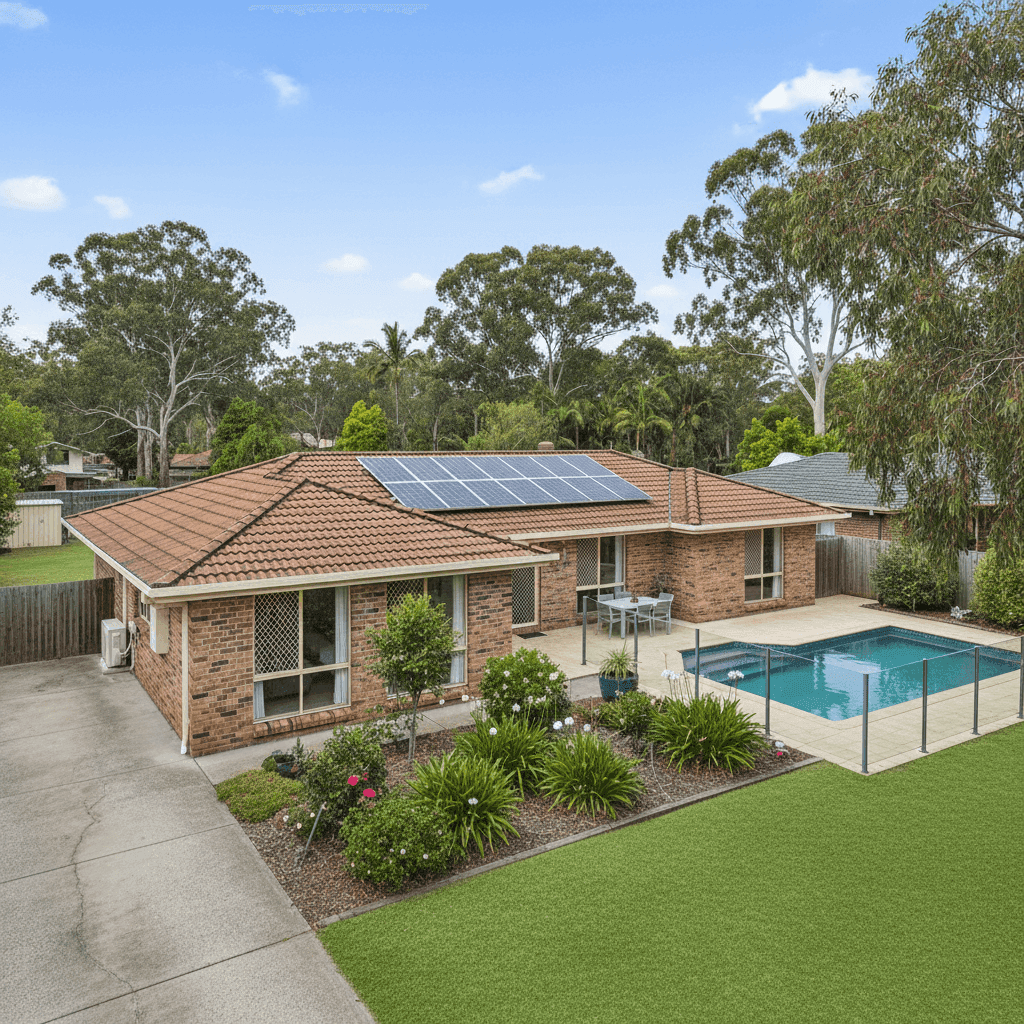
Highland Park is a quiet, leafy suburb nestled in the City of Gold Coast, sitting just inland from the coastal hustle and close to the natural beauty of the Scenic Rim region. For owners of free standing homes in this postcode, understanding what drives home insurance costs — and whether a given quote represents genuine value — can make a significant difference to the household budget. This article breaks down a recent home and contents insurance quote for a three-bedroom, brick veneer home in Highland Park (QLD 4211) and puts the numbers into context against suburb, state, and national benchmarks.
---
Is This Quote Fair?
The short answer: yes, and then some. The quote in question comes in at $888 per year (or roughly $83 per month) for combined home and contents cover, with a building sum insured of $500,000 and contents cover of $50,000. CoverClub's pricing engine rates this as CHEAP — below average for the area.
To put that in perspective, the suburb average premium for Highland Park sits at $4,101 per year, with a median of $4,080 across 75 quotes sampled in the area. That means this particular quote is coming in at roughly 78% below the local average — a remarkable result for a property with a pool and solar panels, both of which can sometimes push premiums higher.
Even against the broader Queensland state average of $4,547 per year, this quote looks exceptional. QLD homeowners are among the most heavily insured in the country, largely due to elevated exposure to severe weather events, flooding, and storm damage — so finding cover well under $1,000 annually in this state is genuinely noteworthy.
The building excess is set at $2,000 and the contents excess at $600, which are reasonably standard settings. A higher excess typically helps reduce the annual premium, so it's worth factoring that trade-off into your thinking when comparing policies.
---
How Highland Park Compares
Understanding the local insurance landscape helps homeowners make more informed decisions. Here's how Highland Park stacks up:
| Benchmark | Annual Premium |
|---|---|
| This Quote | $888 |
| Highland Park Suburb Average | $4,101 |
| Highland Park Suburb Median | $4,080 |
| Highland Park 25th Percentile | $2,729 |
| Highland Park 75th Percentile | $5,306 |
| QLD State Average | $4,547 |
| QLD State Median | $3,931 |
| Scenic Rim LGA Average | $4,020 |
| National Average | $2,965 |
| National Median | $2,716 |
Even the most competitive quarter of Highland Park quotes (the 25th percentile at $2,729) is still more than three times the cost of this quote. Nationally, the average home insurance premium sits at $2,965, and this quote undercuts that figure by more than 70%.
It's worth noting that QLD premiums tend to run higher than the national average, reflecting the state's elevated natural hazard profile — particularly for properties in flood-prone or storm-affected corridors. Highland Park itself is not classified as a cyclone risk area, which likely helps keep premiums lower than coastal or far-north Queensland properties.
---
Property Features That Affect Your Premium
Several characteristics of this property are worth examining through an insurance lens:
Brick Veneer Walls & Tiled Roof Brick veneer construction is generally viewed favourably by insurers. It offers solid fire resistance and durability, and combined with a tiled roof, this property sits in a construction category that tends to attract more competitive premiums than, say, timber-clad homes with metal roofing in high-wind zones.
Slab Foundation A concrete slab foundation is common in Queensland homes built from the 1980s onward and is generally considered low-risk from an insurance perspective. It offers stability and reduces the likelihood of subsidence-related claims.
Built in 1986 Homes from this era can sometimes attract scrutiny around ageing electrical systems, plumbing, and roofing. However, a well-maintained 1986 build on a slab with brick veneer walls is unlikely to be penalised heavily — particularly if renovations or upgrades have been carried out over the years.
Swimming Pool Pools add liability exposure and can nudge premiums upward, as they increase the risk of third-party injury claims. Ensuring your policy includes adequate liability cover is essential for pool-owning households.
Solar Panels Solar installations are increasingly common in Queensland and most insurers now include them under building cover as a fixed fixture. However, it's always worth confirming with your insurer that the panels and inverter are explicitly covered under the sum insured, and that the $500,000 building cover is sufficient to include their replacement value.
130 sqm Building Size & Standard Fittings A 130 sqm footprint with standard-grade fittings is a relatively modest profile, which helps keep the rebuild cost — and therefore the premium — manageable. Homes with high-end finishes, larger floor plates, or bespoke features typically command higher sums insured and premiums to match.
---
Tips for Homeowners in Highland Park
1. Review your sum insured regularly Construction costs have risen sharply in recent years. A $500,000 sum insured may be appropriate today, but it's worth revisiting annually to ensure it accurately reflects what it would cost to rebuild your home from scratch — including the pool and solar system.
2. Check your pool liability coverage If you have guests or young children visiting, confirm that your policy includes personal liability cover for pool-related incidents. Some policies cap this or require specific fencing compliance, so read the Product Disclosure Statement (PDS) carefully.
3. Don't over-insure contents, but don't under-insure either $50,000 in contents cover is a reasonable starting point for a three-bedroom home, but it's easy to underestimate the cumulative value of furniture, appliances, electronics, clothing, and jewellery. A quick home contents calculator can help you arrive at a more accurate figure.
4. Compare quotes at renewal time The insurance market shifts constantly, and loyalty doesn't always pay. Even if your current premium is competitive, it's good practice to run a fresh comparison at CoverClub at each renewal to ensure you're still getting the best available rate for your property profile.
---
Ready to See What You Could Pay?
Whether you're a first-time buyer or a long-time Highland Park resident, comparing home insurance quotes is one of the simplest ways to protect your finances. CoverClub aggregates quotes from a wide range of Australian insurers, making it easy to see how your premium stacks up — and whether there's a better deal waiting for you.
Get a home insurance quote today at CoverClub and find out what your Highland Park property should really be costing you to insure.