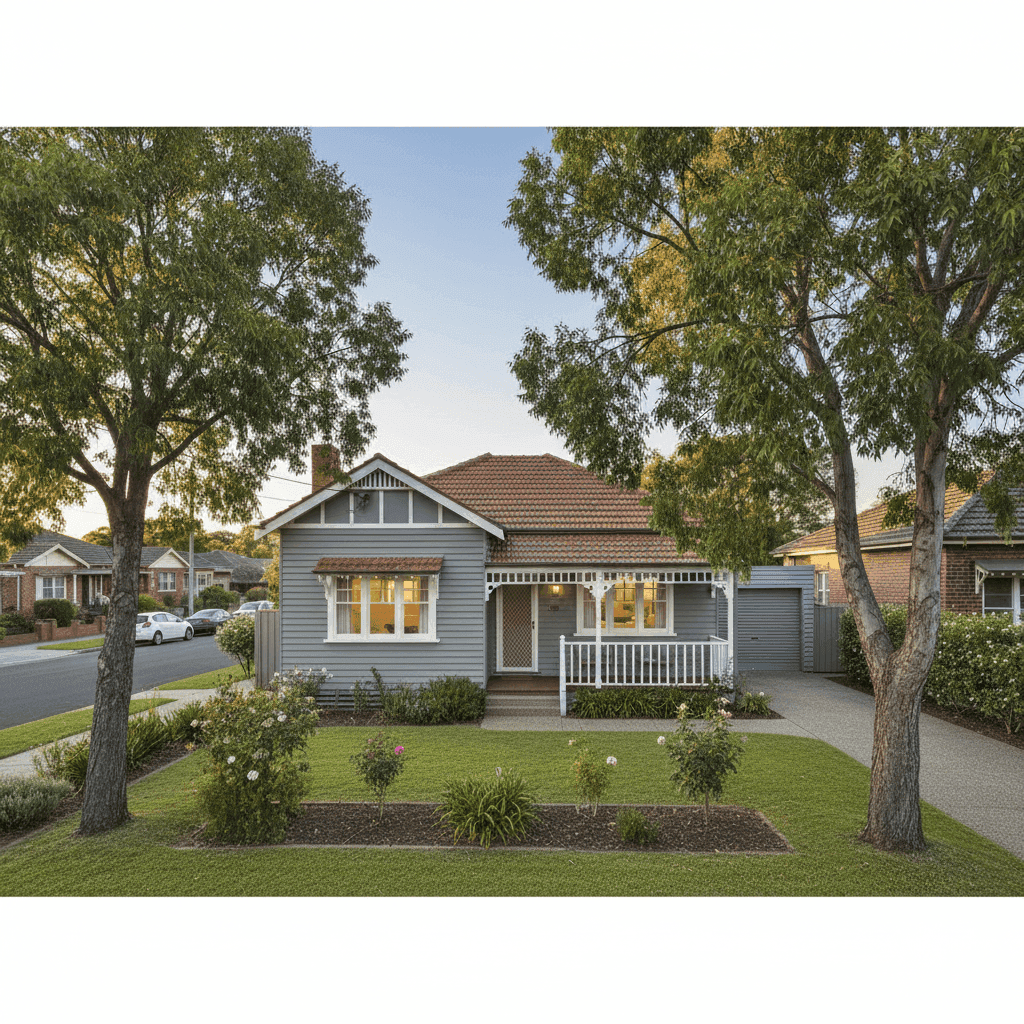
If you own a free standing home in Highton, VIC 3216, you've probably wondered whether you're paying a fair price for home insurance — or quietly overpaying year after year. This article breaks down a real home and contents insurance quote for a three-bedroom weatherboard property in Highton, comparing it against local, state, and national benchmarks so you can make a more informed decision at renewal time.
---
Is This Quote Fair?
The quote in question comes in at $2,159 per year (or roughly $207 per month) for combined home and contents cover, with a building sum insured of $545,000 and contents valued at $20,000. Both the building and contents excess are set at $1,000.
Our pricing engine rates this quote as Fair — Around Average.
That's a reasonable result. It sits above the suburb median of $1,831/yr and the suburb average of $1,949/yr, but it falls well within the middle of the market — comfortably below the 75th percentile of $2,316/yr for comparable Highton properties. In plain terms: most homeowners in this suburb are paying less, but a meaningful portion are paying more. You're not being gouged, but there's likely room to do better.
It's also worth noting that the building sum insured of $545,000 is a significant figure for a 130 sqm home built in 1965. Older homes often carry higher rebuild costs than you might expect, particularly when factoring in compliance upgrades, demolition, and the cost of working with heritage-era construction materials like weatherboard timber. So the coverage amount itself is reasonable — the question is whether the premium attached to it is competitive.
---
How Highton Compares
To put this quote in proper context, here's how Highton stacks up against broader benchmarks:
| Benchmark | Premium |
|---|---|
| This Quote | $2,159/yr |
| Highton Suburb Average | $1,949/yr |
| Highton Suburb Median | $1,831/yr |
| Highton 25th Percentile | $1,538/yr |
| Highton 75th Percentile | $2,316/yr |
| Greater Geelong LGA Average | $1,754/yr |
| VIC State Average | $3,000/yr |
| VIC State Median | $2,718/yr |
| National Average | $5,347/yr |
| National Median | $2,764/yr |
The numbers tell an encouraging story for Highton residents. The suburb average of $1,949/yr sits well below the Victorian state average of $3,000/yr and is dramatically lower than the national average of $5,347/yr — a figure heavily skewed by high-risk coastal, flood-prone, and cyclone-affected regions across Queensland and northern Australia.
Within the Greater Geelong LGA, Highton also performs favourably. The LGA average sits at $1,754/yr, which is lower than the suburb average, suggesting some pockets of Geelong carry slightly higher risk profiles than Highton specifically.
You can explore the full breakdown of local pricing trends on the Highton suburb stats page, which draws on a sample of 50 quotes from the area.
---
Property Features That Affect Your Premium
Understanding what drives your premium is just as important as knowing whether it's competitive. Several characteristics of this property have a direct bearing on what insurers charge.
Weatherboard Timber Walls
Weatherboard homes are among the most common dwelling types in established Victorian suburbs like Highton, but they do attract a degree of insurer caution. Timber is more susceptible to fire, rot, and pest damage than brick veneer or full brick construction, which can push premiums slightly higher. That said, well-maintained weatherboard homes are broadly insurable at reasonable rates, and Highton's relatively low-risk environment helps offset this factor.
Tiled Roof
A tiled roof is generally viewed favourably by insurers. Tiles are durable, fire-resistant, and widely understood in terms of repair and replacement costs. Compared to colorbond or corrugated iron, tiles tend to produce more predictable claims outcomes — which is reflected in more stable premiums.
Stump Foundation
The home sits on stumps, which is typical for properties of this era in Victoria. Stumped foundations can be a consideration for insurers, particularly where subsidence or movement is a concern. However, in a stable suburban area like Highton, this is unlikely to be a significant premium driver on its own.
Construction Year (1965)
Homes built in the 1960s are well past the 50-year mark, which means insurers factor in the age of electrical wiring, plumbing, and structural components. Older homes can be more expensive to repair or rebuild to current building codes, which is partly why the $545,000 building sum insured is appropriate here despite the modest floor area of 130 sqm.
No Pool, Solar, or Ducted Climate Control
The absence of a pool, solar panel system, and ducted heating/cooling simplifies the risk profile considerably. Each of these features adds complexity — and often cost — to a policy. Their absence here is one reason the premium remains in a manageable range.
---
Tips for Homeowners in Highton
Whether you're reviewing an existing policy or shopping around for the first time, here are some practical steps worth taking.
1. Check your building sum insured annually. Construction costs have risen sharply in recent years. A rebuild cost estimate that was accurate three years ago may no longer reflect current labour and materials pricing. Use an independent building cost calculator or ask your insurer to confirm that your sum insured keeps pace with current replacement costs — underinsurance is a common and costly mistake.
2. Consider your excess carefully. Both the building and contents excess on this quote are set at $1,000. Opting for a higher excess (say, $2,000) can meaningfully reduce your annual premium, but only makes sense if you could comfortably cover that amount out of pocket in the event of a claim. It's a straightforward lever worth exploring at renewal.
3. Review your contents value. A contents sum insured of $20,000 is on the lower end for a three-bedroom home. Take a few minutes to walk through each room and estimate the replacement cost of furniture, appliances, clothing, and valuables. Many homeowners discover they're underinsured on contents — particularly when factoring in items like laptops, whitegoods, and outdoor furniture.
4. Compare quotes before auto-renewing. Loyalty doesn't always pay in the insurance market. Insurers frequently offer better rates to new customers than to long-standing ones. Even if your current premium seems reasonable, running a comparison at renewal is a simple habit that can save you hundreds of dollars each year.
---
Ready to Compare?
Whether this quote is your current policy or one you're evaluating, it pays to see what else is available. CoverClub makes it easy to compare home and contents insurance options tailored to your property and location. Get a quote today at CoverClub and find out whether you could be getting better value — without compromising on cover.