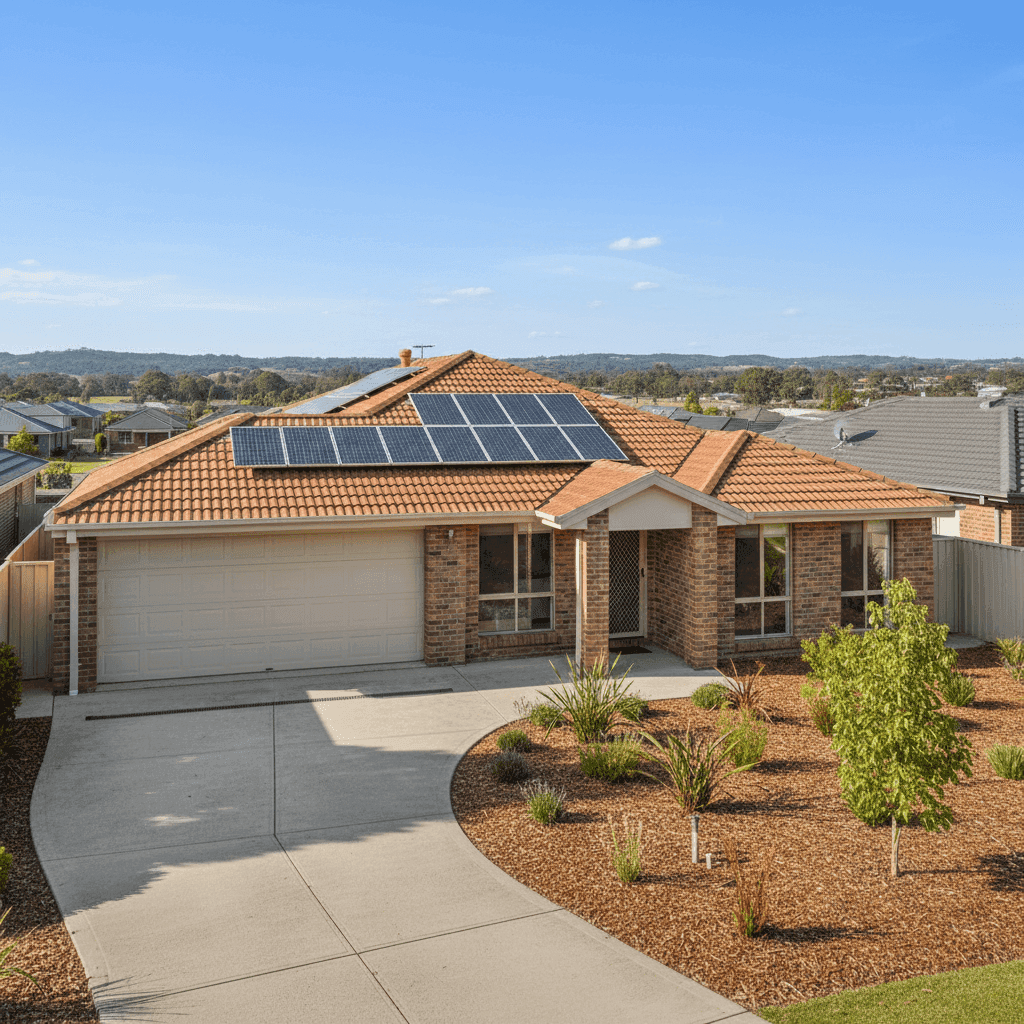
If you own a free standing home in Highton, VIC 3216, you've probably wondered whether your home insurance premium is reasonable — or whether you're paying more than you should. This article breaks down a real home and contents insurance quote for a four-bedroom brick veneer home in Highton, comparing it against suburb, state, and national benchmarks to help you make a more informed decision.
---
Is This Quote Fair?
The quote in question comes in at $1,951 per year (or $199/month) for combined home and contents cover, with a building sum insured of $800,000 and contents cover of $120,000. Both the building and contents excess are set at $1,000.
Our price rating for this quote is FAIR — Around Average, and the data backs that up. Based on 50 quotes collected for Highton (3216), the suburb average sits at $1,949/yr — meaning this quote is almost exactly in line with what most Highton homeowners are paying. It falls comfortably within the middle of the market, sitting between the 25th percentile ($1,538/yr) and the 75th percentile ($2,316/yr).
In other words, you're not being stung — but there's also room to do better. Roughly a quarter of comparable Highton properties are insured for under $1,538/yr, which suggests that with the right insurer and policy structure, meaningful savings could be on the table.
---
How Highton Compares to the Rest of Victoria and Australia
One of the most striking takeaways from this data is just how favourably Highton stacks up against broader benchmarks.
| Benchmark | Average Premium | Median Premium |
|---|---|---|
| Highton (3216) | $1,949/yr | $1,831/yr |
| Greater Geelong LGA | $1,754/yr | — |
| Victoria | $3,000/yr | $2,718/yr |
| National | $5,347/yr | $2,764/yr |
Homeowners in Highton are paying significantly less than the Victorian state average of $3,000/yr and dramatically less than the national average of $5,347/yr. Even compared to the broader Greater Geelong LGA average of $1,754/yr, Highton sits only slightly higher — a reasonable premium given the property's size and features.
The national average is heavily skewed by high-risk regions — particularly in Queensland and Western Australia, where cyclone, flood, and bushfire exposures push premiums up considerably. Highton, by contrast, is a relatively low-risk suburb in inland Victoria, which is reflected in these more modest figures.
---
Property Features That Affect Your Premium
Several characteristics of this particular property play a meaningful role in determining the premium:
Brick Veneer Construction & Tiled Roof Brick veneer walls and a tiled roof are among the most common and insurer-friendly combinations in Australian suburbia. They're considered durable and fire-resistant compared to timber or Colorbond alternatives, which typically translates to lower rebuild risk and, in turn, more competitive premiums.
Slab Foundation A concrete slab foundation is standard for homes built in the 2000s and is generally viewed favourably by insurers. It reduces the risk of subsidence-related claims that can be associated with older stumped or pier-and-beam foundations.
Built in 2007 At around 18 years old, this home sits in a sweet spot — modern enough to meet contemporary building codes (which improved significantly after the 2009 Black Saturday fires prompted regulatory reform), yet old enough to have a well-established claims history in the area.
Solar Panels The presence of solar panels adds a modest layer of complexity to the insurance picture. Panels represent a real replacement cost (often $5,000–$15,000 or more), and it's worth confirming with your insurer that they are explicitly covered under your building policy. Some policies include them automatically; others require a specific endorsement.
Ducted Climate Control Ducted heating and cooling systems are a fixed building feature and are typically covered under the building sum insured. Given the cost of replacing a ducted system can run into the tens of thousands, ensuring your $800,000 building sum insured adequately accounts for this is worthwhile.
No Pool, No Cyclone Risk The absence of a pool removes a liability and maintenance risk that can bump premiums up. And being outside any designated cyclone risk zone means this property avoids the significant loading that affects many northern Australian homes.
---
Tips for Homeowners in Highton
1. Check That Your Solar Panels Are Covered Don't assume your solar system is automatically included in your building cover. Contact your insurer directly and ask for written confirmation that rooftop solar panels — including inverters and mounting hardware — are covered for accidental damage, storm damage, and theft.
2. Review Your Building Sum Insured Annually Construction costs have risen sharply across Victoria in recent years. A sum insured of $800,000 for a 214 sqm home equates to roughly $3,738/sqm — which is reasonable, but worth cross-checking with a quantity surveyor or an online rebuild cost calculator to ensure you're not underinsured.
3. Consider Increasing Your Excess to Lower Your Premium With the current excess set at $1,000 for both building and contents, there may be scope to increase this if you're comfortable self-insuring smaller claims. Many insurers offer a meaningful premium reduction in exchange for a higher excess — sometimes saving $150–$300/yr.
4. Compare Quotes at Renewal Time Even if your current quote is rated as "fair," loyalty doesn't always pay in insurance. Premiums can vary by hundreds of dollars between insurers for essentially the same coverage. Using a comparison tool at renewal time takes just a few minutes and could put real money back in your pocket.
---
Ready to See What You Could Be Paying?
Whether you're reviewing your current policy or shopping for cover on a new property, CoverClub makes it easy to compare home and contents insurance quotes across Australia. Get a quote today and see how your premium stacks up — you might be surprised at what's available.
For more localised data on home insurance costs in Highton and surrounding areas, visit the Highton suburb stats page or explore the full Victorian insurance data.