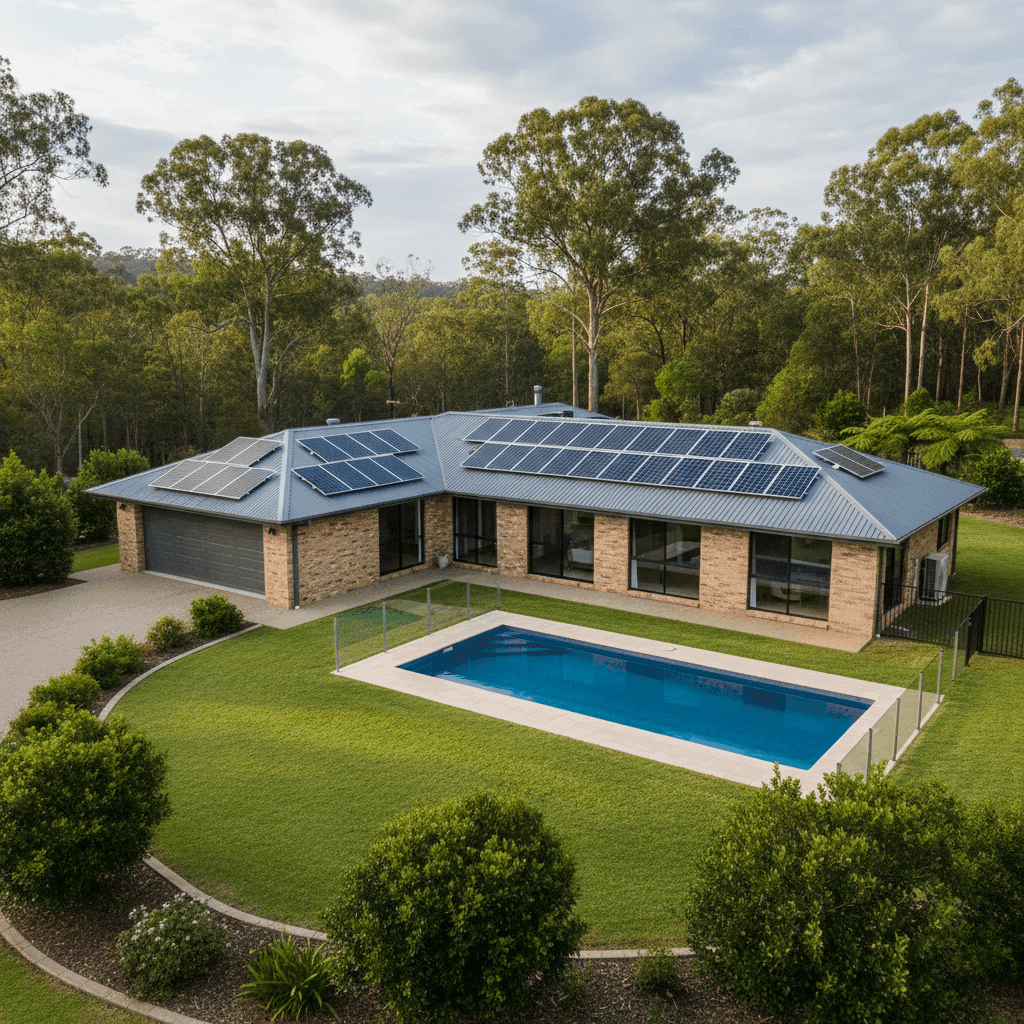
Nestled in the hilly greenery of the Samford Valley, Highvale is a sought-after semi-rural suburb in Queensland's Moreton Bay region. For owners of a free standing home here, getting the right home and contents insurance — at the right price — matters more than ever as premiums across Queensland continue to climb. This article breaks down a real insurance quote for a four-bedroom, three-bathroom home in Highvale (postcode 4520), examining what it costs, how it stacks up against local and national benchmarks, and what property features are likely driving the number.
---
Is This Quote Fair?
The annual premium for this property came in at $2,465 per year (or roughly $229 per month), covering both building (sum insured: $603,000) and contents ($50,000), each with a $500 excess. CoverClub's pricing engine rates this quote as CHEAP — below average for the area.
That rating is well-deserved. When you compare this figure against what other Highvale homeowners are paying, it stands out immediately:
- The suburb average sits at $5,058/yr — more than double this quote.
- The suburb median is $3,897/yr — still over 58% higher.
- Even the 25th percentile (the cheapest quarter of quotes in the suburb) comes in at $3,217/yr, meaning this quote is cheaper than virtually every other quote sampled in the area.
In other words, this homeowner is paying significantly less than their neighbours for comparable cover. Whether that's the result of a particularly competitive insurer, a favourable claims history, or smart shopping, it represents genuine value.
---
How Highvale Compares
To put this quote in broader context, here's how Highvale's insurance costs sit relative to Queensland as a whole and the national picture:
| Benchmark | Average Premium | Median Premium |
|---|---|---|
| Highvale (4520) | $5,058/yr | $3,897/yr |
| Queensland | $4,547/yr | $3,931/yr |
| National | $2,965/yr | $2,716/yr |
A few things jump out here. First, Highvale's average premium is notably higher than the Queensland state average, which itself is well above the national average. This reflects the elevated risk profile of many Queensland properties — bushfire exposure, storm events, and the general cost of building in hilly or semi-rural terrain all push premiums up.
Second, Brisbane LGA figures (where Highvale falls administratively) show an average of $16,277/yr — an extraordinarily high figure that's likely skewed by flood-prone riverside and inner-city properties with very high rebuild costs. Highvale's more modest averages suggest the suburb sits in a relatively lower-risk pocket within that broader LGA.
The quote analysed here — at $2,465/yr — comfortably undercuts even the national median of $2,716/yr, which is quite an achievement for a Queensland address.
---
Property Features That Affect Your Premium
Several characteristics of this property are likely influencing the premium, for better or worse.
Brick veneer construction is generally viewed favourably by insurers. While not as robust as full-brick, brick veneer walls offer solid fire resistance and durability compared to lightweight cladding or weatherboard, which can translate to lower premiums.
Steel/Colorbond roofing is another positive signal for insurers. Colorbond is highly regarded for its resilience against hail, wind, and fire — all common perils in Queensland. It's also less prone to the cracking and leaking issues associated with older tile roofs, reducing the likelihood of water damage claims.
Slab foundation is the standard for modern construction and poses fewer underwriting concerns than stumped or suspended floors, which can be more vulnerable to moisture ingress and movement.
Timber and laminate flooring can be a double-edged sword. While aesthetically desirable, timber floors are more susceptible to water damage than tiles, which may nudge contents and building claims slightly higher in the event of flooding or burst pipes.
The pool, solar panels, and ducted climate control all add to the insured value of the property. A pool introduces liability considerations (particularly relevant for families), while solar panels increase the replacement cost of the building. Ducted air conditioning is an expensive system to repair or replace and is typically captured within the building sum insured. It's worth confirming with your insurer that all three are explicitly covered under your policy.
The property's 2005 construction year also works in its favour — modern enough to comply with updated building codes (including improved cyclone and bushfire standards introduced in the early 2000s), but not so new that it commands a premium rebuild cost.
Notably, this property is not in a cyclone risk area, which removes one of the most significant premium drivers for Queensland homeowners in coastal and northern regions.
---
Tips for Homeowners in Highvale
1. Review your building sum insured regularly. At $603,000, the building cover here is substantial — but construction costs have risen sharply in recent years. Make sure your sum insured reflects current rebuild costs (not market value), ideally using a quantity surveyor's estimate or your insurer's calculator. Being underinsured at claim time can be a costly mistake.
2. Check your pool and solar panel cover explicitly. Not all standard home insurance policies automatically cover solar panel systems or swimming pools to their full replacement value. Read your Product Disclosure Statement carefully and ask your insurer to confirm these items are included — and at what limit.
3. Shop around at renewal time. The gap between this quote ($2,465) and the suburb average ($5,058) is enormous. If you're currently paying closer to the average, there may be significant savings available. Use a comparison tool like CoverClub to benchmark your current premium against the market before you auto-renew.
4. Consider bushfire preparedness to support your claim eligibility. Highvale and the broader Samford Valley are in a bushfire-prone area. Insurers may ask about your property's bushfire attack level (BAL) rating, and some policies include conditions around maintaining ember guards, clearing gutters, and keeping vegetation managed. Staying on top of these not only protects your home — it protects your ability to make a claim.
---
Get Your Own Quote
Curious how your own Highvale home insurance compares? CoverClub makes it easy to benchmark your premium against real data from your suburb and state. Start a quote today and see whether you're paying a fair price — or leaving money on the table.