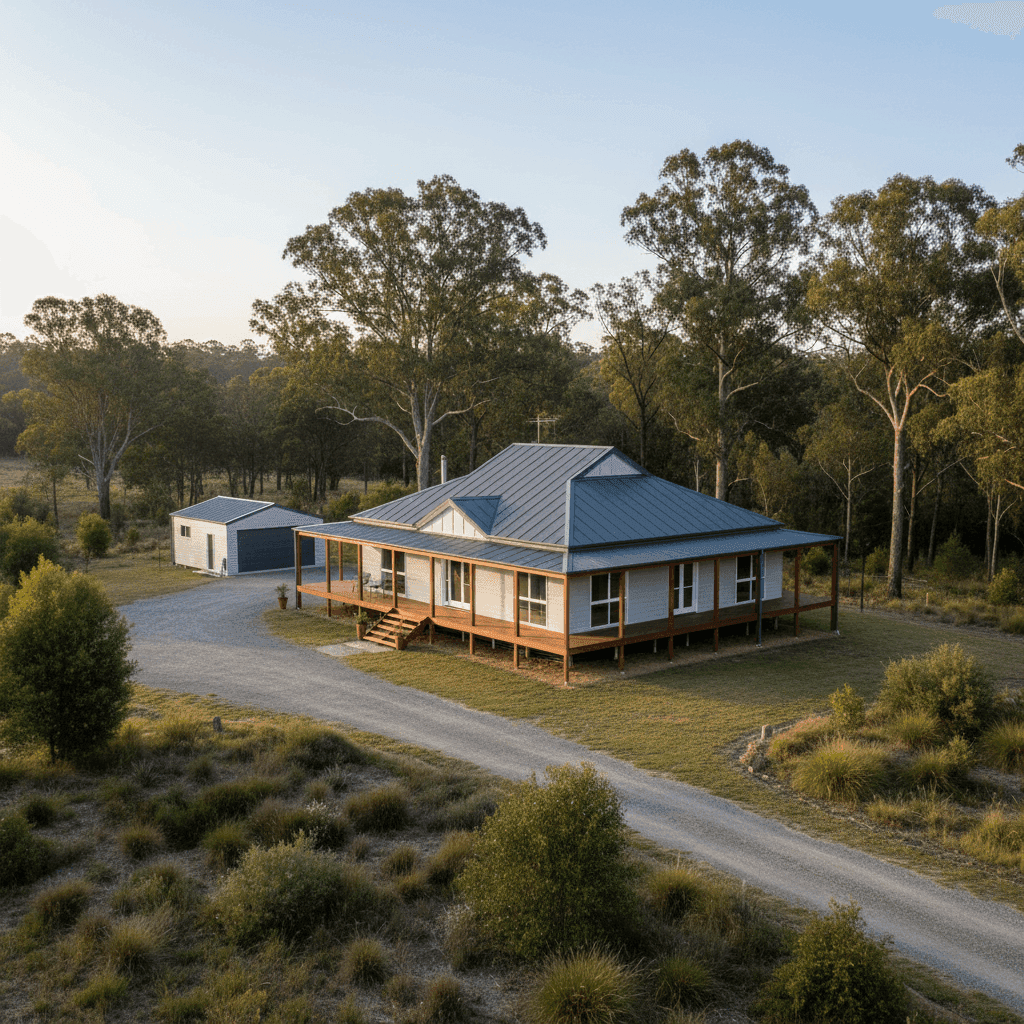
Hill Top is a quiet, semi-rural township nestled in the Southern Highlands of New South Wales, sitting within the Wingecarribee Local Government Area. It's the kind of place that attracts buyers seeking space, greenery, and a relaxed pace of life — and with that comes a particular set of considerations when it comes to insuring your home. This article takes a close look at a recent home and contents insurance quote for a five-bedroom free-standing home in Hill Top (postcode 2575), breaking down whether the price is competitive and what factors are likely driving the premium.
---
Is This Quote Fair?
The quote in question comes in at $3,313 per year (or $318/month) for combined home and contents cover, with a building sum insured of $650,000 and contents valued at $70,000. Both the building and contents excess are set at $1,000.
Our pricing analysis rates this quote as Fair — Around Average, and the numbers back that up. The suburb average for Hill Top sits at $3,236/year, meaning this quote is only $77 above the local average — a negligible difference of around 2.4%. It also falls comfortably within the suburb's interquartile range of $2,301 to $3,840, which represents the middle 50% of quotes in the area.
In short: this isn't a bargain, but it's not overpriced either. For a five-bedroom home with a granny flat, ducted climate control, and a $650,000 building sum insured, landing near the suburb average is a reasonable outcome.
---
How Hill Top Compares
To put this quote in proper context, it's worth zooming out to the broader market.
| Benchmark | Premium |
|---|---|
| This Quote | $3,313/yr |
| Hill Top Suburb Average | $3,236/yr |
| Hill Top Suburb Median | $2,859/yr |
| Wingecarribee LGA Average | $3,312/yr |
| NSW State Median | $3,770/yr |
| NSW State Average | $9,528/yr |
| National Median | $2,764/yr |
| National Average | $5,347/yr |
A few things stand out here. First, the NSW state average of $9,528/year is dramatically higher than both this quote and the local suburb average. This figure is heavily skewed by high-value properties and higher-risk areas across the state — particularly coastal and flood-prone regions — so it's not a meaningful benchmark for Hill Top homeowners. The NSW median of $3,770 is a far more useful comparison, and this quote comes in below that mark.
Compared to the national median of $2,764/year, this quote is somewhat higher — but that's consistent with what you'd expect for a larger home (five bedrooms, 130 sqm under roof on a 1,332 sqm block) with a substantial building sum insured. The national average of $5,347 is again skewed by high-risk and high-value properties across the country.
Perhaps the most telling comparison is with the Wingecarribee LGA average of $3,312/year — this quote at $3,313 is essentially identical, suggesting the pricing is well-calibrated to the local risk environment.
---
Property Features That Affect Your Premium
Several characteristics of this property will have influenced the premium calculation. Here's what matters most:
Construction materials: The home features Hardiplank/Hardiflex external walls and a steel Colorbond roof. Fibre cement cladding like Hardiplank is generally viewed favourably by insurers — it's durable, fire-resistant, and low-maintenance. Colorbond roofing is similarly well-regarded for its longevity and resistance to the elements. These materials are unlikely to attract a loading on your premium.
Stump foundation and elevated position: The home is built on stumps and elevated by less than one metre. While stump foundations are common in older Southern Highlands homes and generally accepted by insurers, the elevation does introduce some additional considerations — particularly around subfloor ventilation and the potential for moisture or pest-related issues over time. The slight elevation is unlikely to significantly impact premiums, but it's worth keeping the subfloor in good condition.
Timber and laminate flooring: These flooring types can be a consideration in claims scenarios, as they may require full replacement rather than spot repairs in the event of water damage. Insurers factor this into their risk assessments, particularly for homes on stumps where subfloor moisture is a possibility.
Granny flat: The presence of a granny flat on the property adds complexity to the insured risk. Whether it's used for family, rented out, or sits vacant, it represents additional structures and potential liability. Homeowners should confirm with their insurer that the granny flat is explicitly covered under the policy — some policies require it to be listed separately.
Ducted climate control: A ducted system is a significant asset and contributes to the overall sum insured. These systems can be costly to repair or replace, and their inclusion in the building sum insured is appropriate.
No pool, no solar panels: The absence of a swimming pool and solar panels simplifies the risk profile slightly. Both can add to premiums when present, so their exclusion here is a minor positive factor.
Building size and land: At 130 sqm of building on a 1,332 sqm block, this is a spacious property. The large land size is typical for Hill Top and the broader Southern Highlands, and while it doesn't directly affect the building premium, it does reflect the lifestyle nature of the area.
---
Tips for Homeowners in Hill Top
1. Review your building sum insured regularly. Construction costs have risen significantly in recent years, and a sum insured set even two or three years ago may no longer reflect the true cost to rebuild. At $650,000 for a 130 sqm home with a granny flat, this figure seems reasonable — but it's worth running it through a building cost calculator annually to stay on top of any gaps.
2. Confirm granny flat coverage explicitly. Don't assume your granny flat is automatically included in your home insurance. Ask your insurer to confirm in writing that the secondary dwelling is covered for both building and any contents within it. If it's tenanted, you may also need landlord insurance for that portion of the property.
3. Consider a higher excess to reduce your premium. The current excess of $1,000 is fairly standard. If you have the financial buffer to absorb a larger out-of-pocket cost in a claim, increasing your excess to $2,000 or even $2,500 can meaningfully reduce your annual premium — sometimes by 10–15%.
4. Shop around at renewal time. The home insurance market is competitive, and loyalty doesn't always pay. With 22 quotes sampled in the Hill Top area, there's a reasonable spread of pricing — from $2,301 at the 25th percentile to $3,840 at the 75th. If your renewal notice arrives and the price has crept up, it costs nothing to compare.
---
Compare Your Home Insurance Quote
Whether you're a Hill Top local or just researching what home insurance should cost in the Southern Highlands, CoverClub makes it easy to see how your quote stacks up. Get a quote today and compare your premium against real data from your suburb, your LGA, and across Australia — so you always know if you're getting a fair deal.