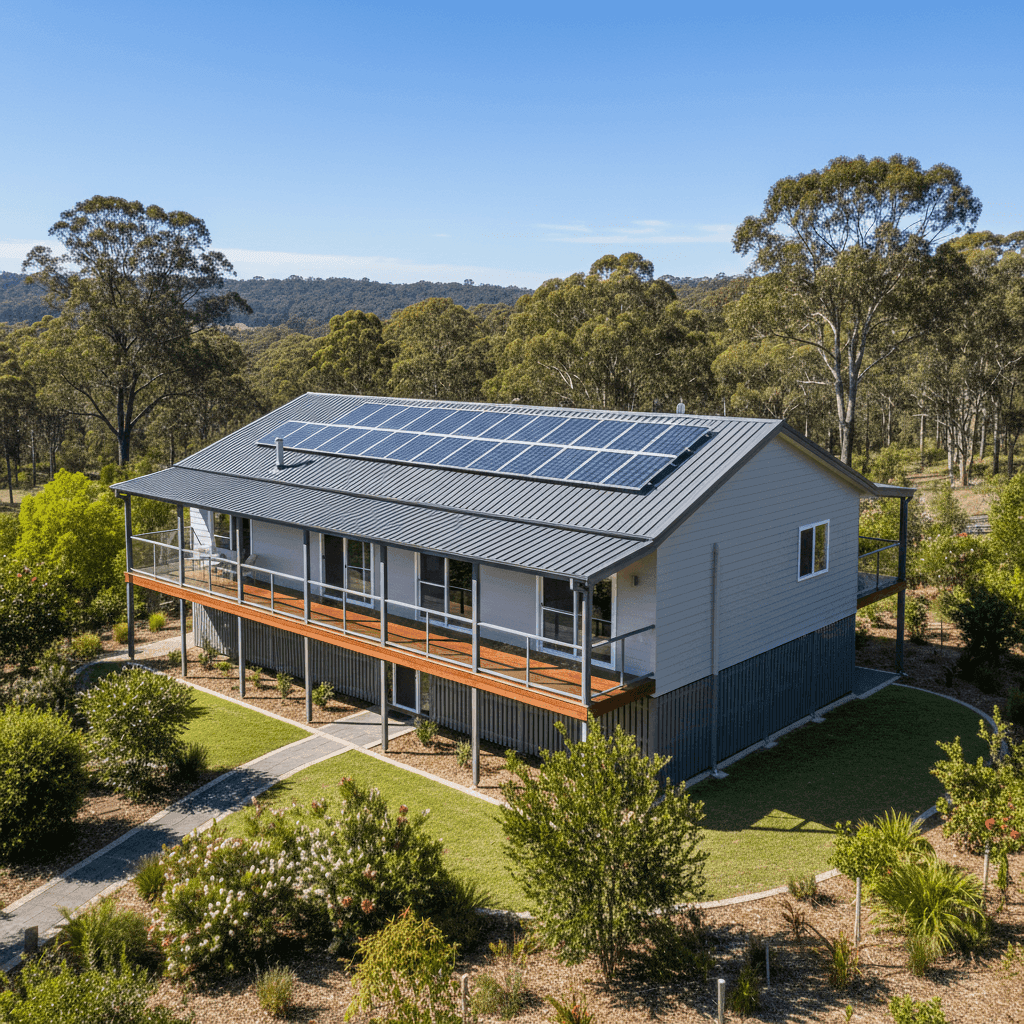
Nestled in the Southern Highlands of New South Wales, Hill Top is a quiet, leafy community that attracts families and tree-changers alike. But owning a free standing home here — like anywhere in regional NSW — comes with its own set of insurance considerations. In this article, we break down a real home and contents insurance quote for a four-bedroom, two-bathroom property in Hill Top (postcode 2575) and put the numbers into context so you can judge whether your own policy stacks up.
---
Is This Quote Fair?
The annual premium for this property came in at $3,575 per year (or $364/month), covering both building (sum insured: $884,000) and contents ($50,000). Our pricing model rates this quote as CHEAP — below the suburb average — which is genuinely good news for the homeowner.
To put that in perspective: the average premium paid by other Hill Top homeowners in our dataset is $4,148/year, and the suburb median sits at $3,916/year. This quote lands well below both figures, and even falls under the suburb's 25th percentile of $3,877/year — meaning it's cheaper than at least three-quarters of comparable quotes we've seen in the area.
That said, it's worth noting that the building excess is set at $3,000, which is relatively high. A higher excess is one of the most common ways insurers reduce the upfront premium, so homeowners should weigh the savings against the out-of-pocket cost they'd face in the event of a claim. The contents excess of $1,000 is more standard.
Overall, for the level of cover provided and the location, this quote represents solid value.
---
How Hill Top Compares
Understanding where your premium sits relative to broader benchmarks is one of the most useful things you can do as a homeowner. Here's how this quote stacks up:
| Benchmark | Premium |
|---|---|
| This Quote | $3,575/yr |
| Hill Top Suburb Average | $4,148/yr |
| Hill Top Suburb Median | $3,916/yr |
| Wingecarribee LGA Average | $3,002/yr |
| NSW State Average | $3,801/yr |
| NSW State Median | $3,410/yr |
| National Average | $2,965/yr |
| National Median | $2,716/yr |
A few things stand out here. First, Hill Top premiums are noticeably higher than the broader Wingecarribee LGA average of $3,002/year, which suggests localised risk factors — such as bushfire exposure, elevation, or the age and style of homes in the suburb — are pushing costs up in this particular pocket of the Southern Highlands.
Second, NSW as a whole sits above the national average, which is consistent with the broader trend of coastal and regional NSW properties attracting higher premiums due to weather-related risks, higher rebuild costs, and property values.
For a property of this size and specification — 214 sqm, four bedrooms, quality fittings — a $3,575 annual premium is competitive, even accounting for the elevated excess.
---
Property Features That Affect Your Premium
Several characteristics of this property will have influenced how the insurer priced this policy. Here's what matters most:
Hardiplank / Hardiflex External Walls
Fibre cement cladding like Hardiplank and Hardiflex is generally viewed favourably by insurers. It's non-combustible, durable, and resistant to rot and pests — all qualities that reduce the likelihood of a claim. This is a meaningful advantage in a bushfire-prone region like the Southern Highlands.
Steel / Colorbond Roof
Colorbond roofing is a popular choice across regional Australia, and for good reason. It performs well in high-wind conditions, is fire-resistant, and requires minimal maintenance. Insurers tend to rate steel roofing more favourably than older materials like terracotta tiles or, particularly, asbestos-containing products.
Elevated Foundation (Stumps, 1m+)
The home sits on stumps and is elevated by at least one metre. This style is common in areas with variable terrain or moisture concerns, and it can work both for and against you from an insurance standpoint. On the positive side, elevation reduces flood and subfloor moisture risk. However, elevated homes can also be more exposed to wind damage and may carry a higher rebuild cost due to the complexity of the structure.
Solar Panels
The property has solar panels installed, which are typically covered under a home insurance policy as a fixed fixture of the building. It's worth confirming with your insurer that the panels are explicitly included in your sum insured, as some policies treat them as an optional add-on.
Ducted Climate Control
Ducted heating and cooling systems add to the overall replacement value of a home. Ensuring your sum insured accurately reflects the cost to replace these systems — along with all other fixtures — is important to avoid being underinsured.
Construction Year: 2013
A home built in 2013 is relatively modern and will have been constructed to contemporary building codes, which generally means better structural integrity and safety features. This can contribute to a more competitive premium compared to older homes that may have outdated wiring, plumbing, or materials.
---
Tips for Homeowners in Hill Top
Whether you're reviewing an existing policy or shopping around for the first time, here are four practical steps worth taking:
- Review your sum insured annually. With building costs rising across Australia, the $884,000 sum insured on this policy should be reassessed each year. Underinsurance is one of the most common — and costly — mistakes homeowners make. Use a building cost calculator or speak to a quantity surveyor if you're unsure.
- Check your bushfire rating. Hill Top and the broader Southern Highlands region can carry bushfire risk depending on the specific location and surrounding vegetation. Confirm your property's Bushfire Attack Level (BAL) rating with your local council and make sure your insurer is aware of it — both for accuracy and to ensure you're adequately covered.
- Confirm solar panels are covered. If your policy doesn't explicitly list solar panels as a covered item, ask your insurer to clarify. Given the replacement cost of a quality solar system, it's not something you want to discover is excluded after a storm or fire.
- Consider whether your excess is right for you. The $3,000 building excess on this policy is on the higher side. While it reduces the annual premium, it means a significant out-of-pocket expense at claim time. If cash flow is a concern, it may be worth comparing quotes with a lower excess to find the right balance.
---
Ready to Compare?
If you're a homeowner in Hill Top or anywhere else in NSW, it pays to shop around. Premiums can vary significantly between insurers for the same property — sometimes by hundreds of dollars a year. Get a quote at CoverClub to see how your current policy compares and find out whether you're getting a fair deal.