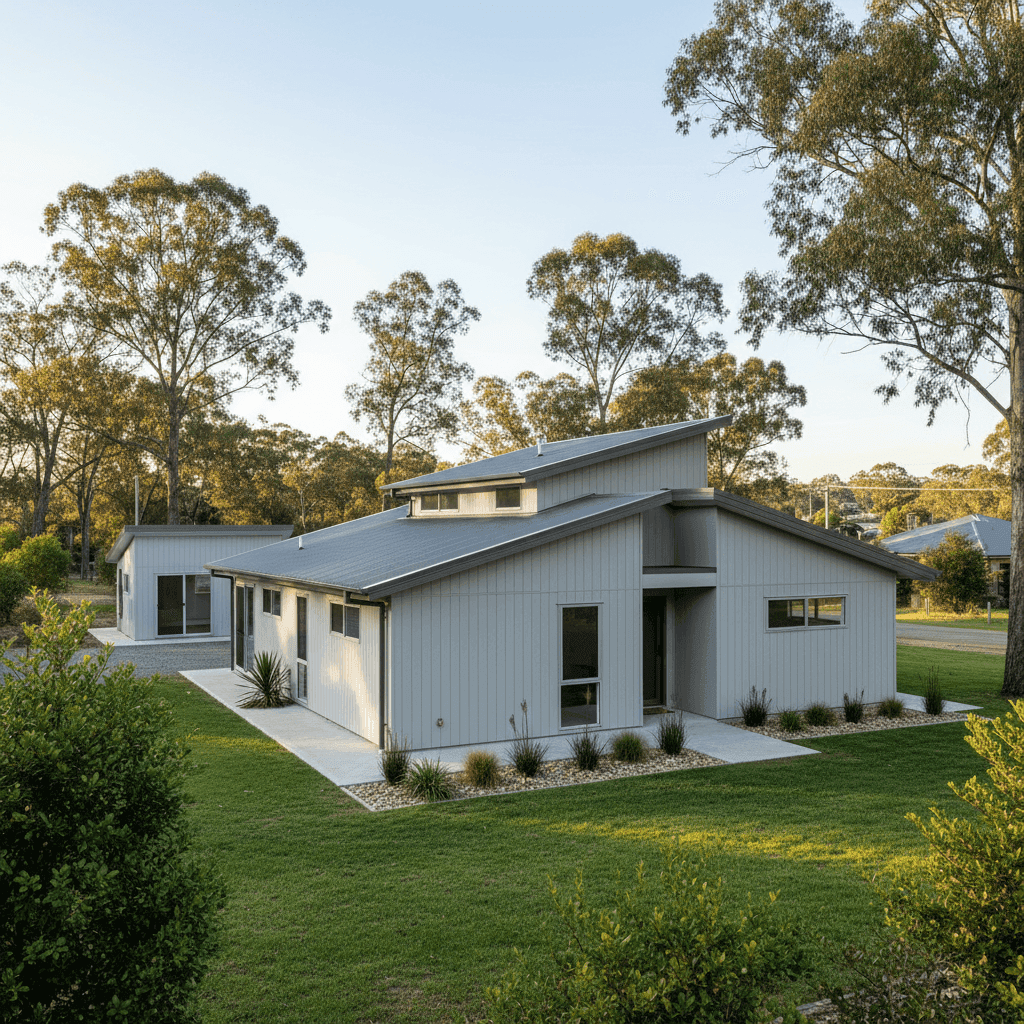
Hill Top is a quiet semi-rural township nestled in the Southern Highlands of New South Wales, sitting within the Wingecarribee Local Government Area. With its leafy streets, larger land parcels, and a relaxed pace of life, it's an appealing location for families seeking space without straying too far from the amenities of Mittagong or Bowral. For owners of a free standing home here, understanding what drives your insurance premium — and whether you're paying a fair price — is an important part of protecting one of your biggest assets.
This article breaks down a recent home and contents insurance quote for a five-bedroom, two-bathroom free standing home in Hill Top, and puts the numbers in context against local, state, and national benchmarks.
---
Is This Quote Fair?
The quoted annual premium for this property is $4,427 per year (or $424/month), covering a building sum insured of $700,000 and contents valued at $100,000, each with a $500 excess.
Based on CoverClub's pricing data, this quote is rated Expensive — above average for the Hill Top area. Here's why that matters:
- The suburb average premium for Hill Top (postcode 2575) sits at $3,236/yr, and the median is a lower $2,859/yr
- This quote comes in roughly 37% above the suburb average and nearly 55% above the suburb median
- Even at the 75th percentile for the suburb — meaning 75% of quotes are cheaper — the benchmark is $3,840/yr, still well below this figure
That said, context is everything. This is a larger five-bedroom home on a generous 1,332 sqm block with a granny flat, which meaningfully increases both the replacement cost and the insurer's risk exposure. A $700,000 building sum insured is also on the higher end for the suburb, and when combined with $100,000 in contents cover, it's not surprising the premium trends upward. The question is whether the gap is justified — or whether shopping around could close it.
You can explore full pricing data for Hill Top and surrounds at the Hill Top suburb stats page.
---
How Hill Top Compares
To put this quote in broader perspective, here's how Hill Top stacks up against NSW and national benchmarks:
| Benchmark | Average Premium | Median Premium |
|---|---|---|
| Hill Top (2575) | $3,236/yr | $2,859/yr |
| Wingecarribee LGA | $3,312/yr | — |
| NSW | $9,528/yr | $3,770/yr |
| National | $5,347/yr | $2,764/yr |
A few things stand out here. The NSW average of $9,528/yr looks alarming at first glance, but it's heavily skewed by high-risk coastal and flood-prone areas across the state — the median of $3,770/yr is a far more representative figure for typical NSW homeowners. You can dig into those figures on the NSW insurance stats page.
On a national level, the national average of $5,347/yr is also pulled upward by cyclone-prone regions in Queensland and Western Australia, with a national median of $2,764/yr reflecting what most Australian homeowners actually pay.
By those yardsticks, Hill Top is a relatively affordable suburb to insure — which makes this particular quote's premium worth scrutinising. The Wingecarribee LGA average of $3,312/yr further reinforces that the broader region is reasonably priced, and this quote sits noticeably above that mark.
---
Property Features That Affect Your Premium
Several characteristics of this property are likely influencing the premium, both upward and downward.
Factors pushing the premium higher:
- Five bedrooms and a granny flat — A larger home with a secondary dwelling means more structure to insure and greater contents exposure. Insurers factor in the additional rebuild complexity and liability considerations of a granny flat.
- High building sum insured ($700,000) — This is the single biggest driver of building premium. At 130 sqm of floor space, this sum insured implies high-quality finishes or significant rebuild cost assumptions, which affects the rate.
- Timber and laminate flooring — While stylish, these floor types can be more susceptible to water damage and may carry a marginal premium loading compared to tile or concrete floors.
- Ducted climate control — Ducted systems are expensive to repair or replace and are typically factored into contents or building valuations, nudging premiums slightly higher.
Factors that may be keeping the premium in check:
- Hardiplank/Hardiflex external walls — This fibre cement cladding is considered a durable, fire-resistant material, which is viewed favourably by insurers — particularly relevant in the Southern Highlands where bushfire risk is a consideration.
- Slab foundation — Concrete slab foundations are generally considered lower risk than stumped or suspended floors, reducing the likelihood of subsidence or pest-related structural claims.
- No pool, no solar panels — Both can add complexity and cost to a policy. Their absence simplifies the risk profile.
- Not in a cyclone risk area — This removes one of the most significant premium loading factors seen in northern Australia.
- Slightly elevated (less than 1m) — A minor elevation can assist with drainage and reduce flood risk, which may benefit the premium slightly.
---
Tips for Homeowners in Hill Top
If you're looking to make sure you're getting value from your home insurance, here are four practical steps worth taking:
- Review your building sum insured carefully. A $700,000 sum insured on a 130 sqm home is significant. Use a professional quantity surveyor or an online rebuild cost calculator to confirm this figure is accurate — over-insuring means you're paying more premium than necessary, while under-insuring can leave you exposed at claim time.
- Declare your granny flat accurately. Some policies treat secondary dwellings as a separate structure requiring additional cover, while others include them under the main building. Make sure your policy explicitly covers the granny flat and that the sum insured accounts for it — gaps here can be costly.
- Compare multiple quotes before renewing. With the suburb average sitting at $3,236/yr and this quote at $4,427/yr, there's a meaningful gap worth exploring. Get a quote through CoverClub to see how competing insurers price your specific property.
- Consider your excess level. Both the building and contents excesses here are set at $500, which is fairly standard. Opting for a higher voluntary excess (say, $1,000 or $2,000) can reduce your annual premium — a worthwhile trade-off if you have a solid emergency fund and are primarily insuring against major events rather than minor claims.
---
Compare Your Options with CoverClub
Whether you're a first-time buyer in the Southern Highlands or a long-time Hill Top resident reviewing your renewal, it pays to compare. CoverClub makes it easy to benchmark your current premium against real quotes from multiple insurers — so you can see at a glance whether you're getting a fair deal or leaving money on the table.
Get a home insurance quote today at CoverClub and find out what Hill Top homeowners are actually paying.