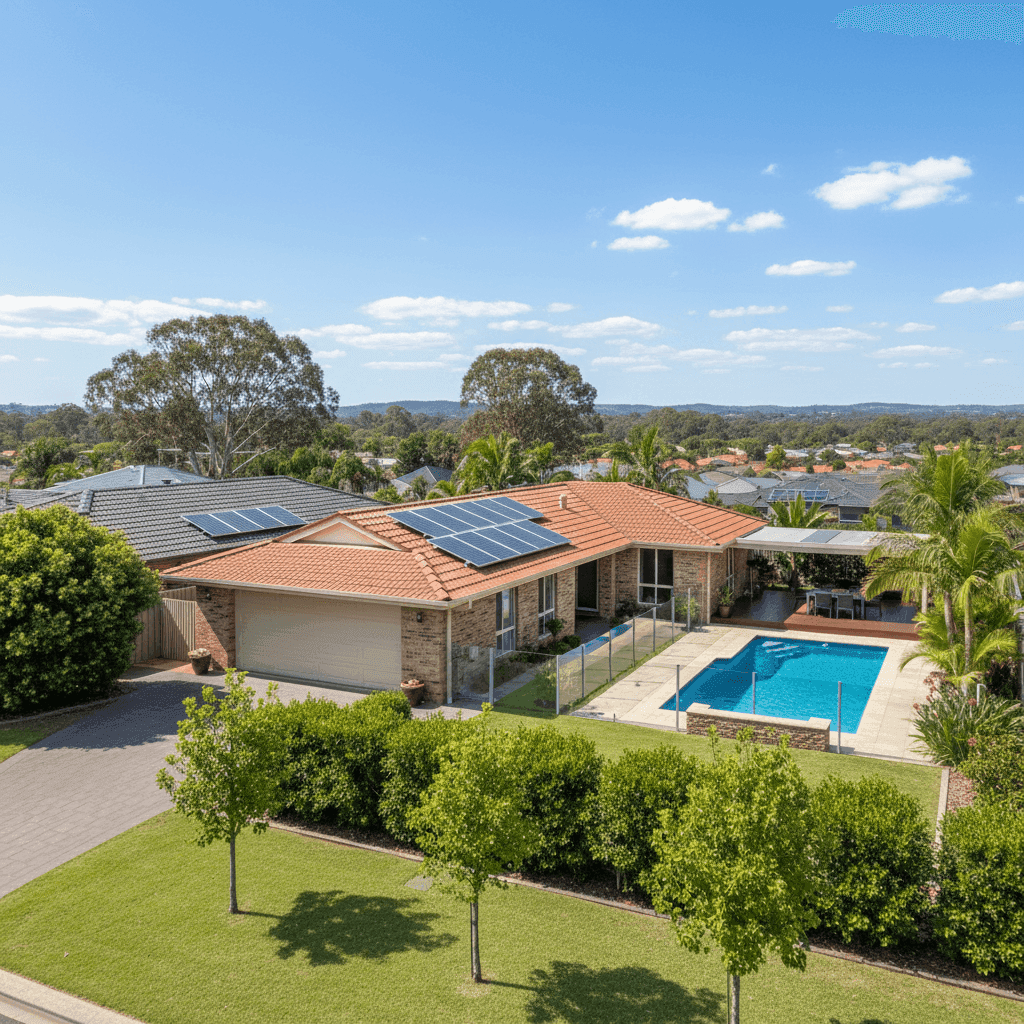
Hillcrest is a quiet residential suburb in Logan City, sitting about 30 kilometres south of Brisbane's CBD. It's a predominantly owner-occupier area characterised by established homes on generous blocks — exactly the kind of suburb where getting your home and contents insurance right really matters. This article breaks down a real insurance quote for a four-bedroom, two-bathroom free standing home in Hillcrest, and puts the numbers in context so you can judge whether you're paying a fair price.
---
Is This Quote Fair?
The quote in question comes in at $2,058 per year (or $197/month) for combined home and contents cover, with a building sum insured of $900,000 and contents valued at $110,000. Both the building and contents excess are set at $5,000.
Our price rating for this quote is FAIR — Around Average.
That assessment holds up when you look at the local data. The suburb average for Hillcrest (QLD 4118) sits at $2,637/year, with a median of $2,586/year. At $2,058, this quote comes in roughly $579 below the suburb average — a meaningful saving, though it does sit above the suburb's 25th percentile of $1,871/year. In plain terms: this homeowner is paying less than most of their neighbours, but there's still a cohort paying even less.
It's worth noting that the sample size for Hillcrest is 14 quotes, which gives a reasonable but not exhaustive picture of the local market. As more data flows in, these benchmarks will sharpen.
---
How Hillcrest Compares to QLD and National Averages
The numbers become even more interesting when you zoom out.
| Benchmark | Premium |
|---|---|
| This quote | $2,058/yr |
| Hillcrest suburb average | $2,637/yr |
| Hillcrest suburb median | $2,586/yr |
| Logan LGA average | $4,617/yr |
| QLD state average | $9,129/yr |
| QLD state median | $3,903/yr |
| National average | $5,347/yr |
| National median | $2,764/yr |
The Queensland state average of $9,129/year is dramatically higher than what Hillcrest homeowners typically pay. That figure is heavily skewed by premiums in cyclone-prone regions of North Queensland — places like Cairns, Townsville, and the Whitsundays — where insurers price in significant catastrophe risk. The QLD median of $3,903/year is a more representative figure for the bulk of south-east Queensland homeowners, and even that is comfortably above what this Hillcrest quote is delivering.
Compared to the national average of $5,347/year, this quote looks even better. The national median of $2,764/year is perhaps the most relevant yardstick for a typical Australian home — and at $2,058, this quote sits about $700 below that mark.
The Logan LGA average of $4,617/year is notably higher than the Hillcrest suburb average, suggesting that pockets within Logan carry more risk (or attract higher premiums) than Hillcrest specifically. This is a good reminder that suburb-level data is far more useful than broad LGA or state figures when benchmarking your own policy.
---
Property Features That Affect Your Premium
Several characteristics of this property work in the homeowner's favour from an insurance pricing perspective.
Brick Veneer Construction Brick veneer is one of the more insurer-friendly wall materials in Australia. It offers solid fire resistance and reasonable structural durability compared to weatherboard or lightweight cladding. Most insurers view it favourably when calculating risk.
Tiled Roof Terracotta or concrete tiles are a standard, well-understood roofing material for Australian insurers. They perform reliably in most weather conditions and don't attract the loading that some alternative materials might.
Concrete Slab Foundation A slab foundation is generally considered low-risk from a subsidence and movement perspective, particularly in south-east Queensland where soil conditions are relatively stable compared to reactive clay areas further inland.
No Cyclone Risk Hillcrest falls outside designated cyclone risk zones, which is a significant factor. Cyclone cover is one of the biggest premium drivers in Queensland — its absence here keeps costs substantially lower than for homeowners in coastal or far-north Queensland.
Swimming Pool A pool adds to the replacement cost of the property and introduces some liability considerations, which can nudge premiums upward. It's important that the building sum insured adequately accounts for pool infrastructure, fencing, and associated equipment.
Solar Panels Solar panels are an increasingly common feature on Australian homes, but they do add to the rebuild cost. Homeowners should confirm with their insurer that solar panels are explicitly covered under the building policy — some policies include them automatically, while others require a specific endorsement.
Timber and Laminate Flooring Timber and laminate floors can be more susceptible to water damage than ceramic tiles, which may be a minor factor in how insurers assess contents and internal fixtures risk.
Standard Fittings With standard-grade fittings throughout, there are no high-end fixtures or finishes inflating the replacement cost estimate — a sensible calibration for a home of this era and type.
---
Tips for Homeowners in Hillcrest
1. Review Your Building Sum Insured Carefully At $900,000, the building sum insured needs to cover the full cost of rebuilding the home from the ground up — not its market value. With a 214 sqm home built in 1996, factor in current construction costs (which have risen sharply in recent years), demolition and debris removal, architect fees, and the pool and solar panel infrastructure. Use a reputable building cost calculator and revisit this figure annually.
2. Don't Set and Forget Your Excess Both the building and contents excess on this policy are set at $5,000. A higher excess typically reduces your premium, but you need to be confident you can cover that amount out of pocket when a claim arises. If $5,000 feels uncomfortable, it may be worth modelling a lower excess option — even if it costs a little more annually.
3. Shop the Market Every Renewal The fact that this quote sits below the suburb average is encouraging, but the insurance market shifts every year. Insurers re-price their books, new entrants emerge, and your own risk profile changes. Make a habit of comparing at least two or three quotes at renewal time rather than simply accepting the rollover price.
4. Confirm Solar Panel and Pool Coverage Given this property has both a pool and solar panels, it's worth a direct conversation with your insurer to confirm exactly what's covered and to what value. Solar panel systems in particular can represent $10,000–$20,000 or more in replacement cost, and you don't want to discover a gap at claim time.
---
Compare Your Own Quote
Wondering how your Hillcrest home insurance stacks up? CoverClub makes it easy to benchmark your premium against real data from your suburb, your LGA, and across Australia. Get a quote today at CoverClub and see exactly where you sit in the market — so you can make a confident, informed decision at renewal time.