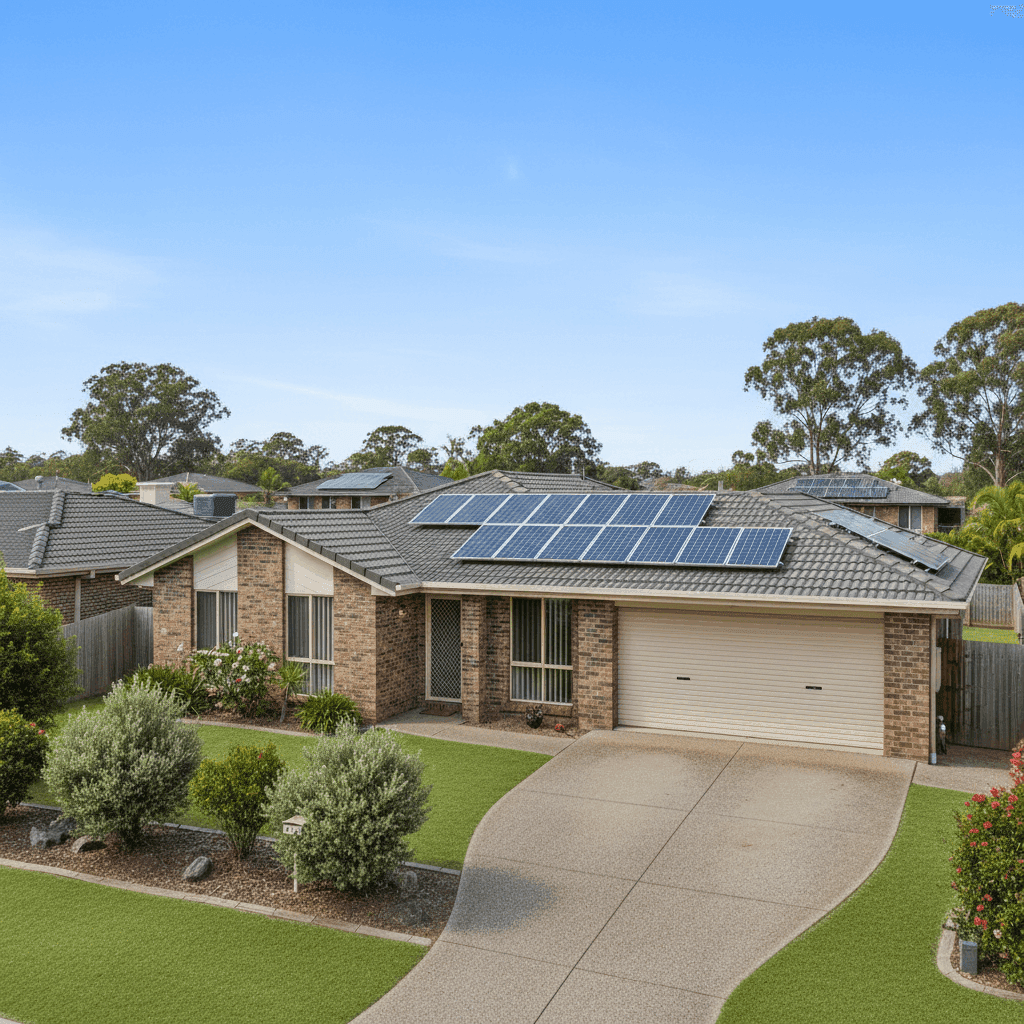
If you own a free standing home in Hillcrest, QLD 4118, you've probably noticed that home insurance costs can vary enormously depending on who you ask. This article breaks down a real building insurance quote for a four-bedroom property in the suburb, comparing it against local, state, and national benchmarks so you can make a more informed decision at renewal time.
---
Is This Quote Fair?
The quote in question comes in at $1,654 per year (or $162/month) for building-only cover on a 205 sqm free standing home, with a $1,000 building excess and a sum insured of $500,000.
Our price rating for this quote is CHEAP — below average — and the data backs that up convincingly.
The suburb average for Hillcrest sits at $2,637/year, meaning this quote is roughly 37% below what most homeowners in the area are paying. Even compared to the suburb's 25th percentile — the point at which only one in four quotes are cheaper — this premium of $1,654 still comes in well under the $1,871 mark. In other words, this is genuinely competitive pricing, not just marginally below average.
For a homeowner in Hillcrest, securing cover at this level represents real savings — potentially over $1,000 per year compared to what neighbours might be paying.
---
How Hillcrest Compares
To put this quote in broader context, it helps to look at how Hillcrest stacks up against Queensland and the rest of the country.
| Benchmark | Premium |
|---|---|
| This Quote | $1,654/yr |
| Hillcrest Suburb Average | $2,637/yr |
| Hillcrest Suburb Median | $2,586/yr |
| Logan LGA Average | $4,617/yr |
| QLD State Average | $9,129/yr |
| QLD State Median | $3,903/yr |
| National Average | $5,347/yr |
| National Median | $2,764/yr |
A few things stand out here. First, Queensland's average premium of $9,129/year is extraordinarily high — a reflection of the state's exposure to cyclones, flooding, and severe storm events in many regions. Hillcrest, however, sits in the Logan local government area and is not classified as a cyclone risk area, which goes a long way toward explaining why premiums here are far more manageable.
Even against the national average of $5,347/year, this quote looks exceptionally affordable. And while the national median of $2,764 is a more representative figure (less skewed by high-risk coastal and far-north Queensland properties), this quote still comes in below that benchmark too.
The Logan LGA average of $4,617/year is notably higher than the Hillcrest suburb average, suggesting that other parts of Logan carry more risk — likely areas with greater flood or storm exposure. Hillcrest appears to be one of the more favourably priced pockets within the region.
> Note: The suburb comparison is based on a sample of 14 quotes, so treat these figures as a useful guide rather than a definitive market survey.
---
Property Features That Affect Your Premium
Several characteristics of this particular property contribute to its competitive pricing. Understanding these factors can help you anticipate how insurers assess risk.
Brick Veneer Walls Brick veneer construction is generally well-regarded by insurers. It offers solid weather resistance and performs better than timber weatherboard in fire scenarios, which typically translates to lower premiums.
Tiled Roof A concrete or terracotta tile roof is considered durable and long-lasting. Insurers tend to price tiled roofs more favourably than colorbond or corrugated iron in some circumstances, though this can vary by insurer.
Slab Foundation A concrete slab foundation is structurally stable and less susceptible to subsidence or pest damage compared to older suspended timber floors. This is a positive risk factor from an underwriting perspective.
Construction Year: 1987 At around 38 years old, this home is neither brand new nor particularly aged. Homes built in the late 1980s generally comply with reasonable building standards, though insurers may factor in the likelihood of ageing plumbing or electrical systems when pricing.
Solar Panels The presence of solar panels adds some replacement value to the building sum insured. Ensure your $500,000 sum insured accounts for the cost of replacing the solar system in a total loss scenario — solar installations can cost $5,000–$15,000 or more to replace.
Ducted Climate Control Ducted air conditioning is a fixed building fixture and should be covered under building insurance. Again, confirm that your sum insured is sufficient to cover full reinstatement including this system.
No Pool, No Cyclone Risk The absence of a swimming pool removes a liability and maintenance risk factor. Being outside a cyclone risk zone is a significant pricing advantage in Queensland — many properties further north or closer to the coast attract substantial cyclone loading on their premiums.
---
Tips for Homeowners in Hillcrest
1. Review Your Sum Insured Annually Construction costs have risen sharply in recent years. A $500,000 sum insured may have been adequate when the policy was first taken out, but rebuilding costs for a 205 sqm brick home in South East Queensland can easily exceed this figure when you factor in demolition, site clearance, and current labour and material costs. Use a building cost calculator or speak to a local builder to sense-check your coverage.
2. Don't Overlook Your Solar Panels and Ducted System As noted above, fixed installations like solar panels and ducted air conditioning are typically covered under building insurance — but they need to be reflected in your sum insured. If these were added after the policy was first written, it's worth confirming with your insurer that they're adequately covered.
3. Compare at Renewal, Every Year The fact that this quote is well below the suburb average is a reminder that premiums vary significantly between insurers for the same property. Loyalty doesn't always pay in insurance — the best way to ensure you're not overpaying is to compare quotes each year before your renewal date.
4. Consider Your Excess Carefully This policy carries a $1,000 building excess. Opting for a higher excess (say, $2,000 or $2,500) can reduce your annual premium further — useful if you have a solid emergency fund and are unlikely to make small claims. Conversely, if cash flow is a concern, a lower excess may be worth the slightly higher premium.
---
Compare Your Home Insurance Quote Today
Whether you're renewing soon or just curious about where your current premium sits, CoverClub makes it easy to see how your quote stacks up. Get a home insurance quote in minutes and compare it against real suburb, state, and national data — so you always know if you're getting a fair deal.