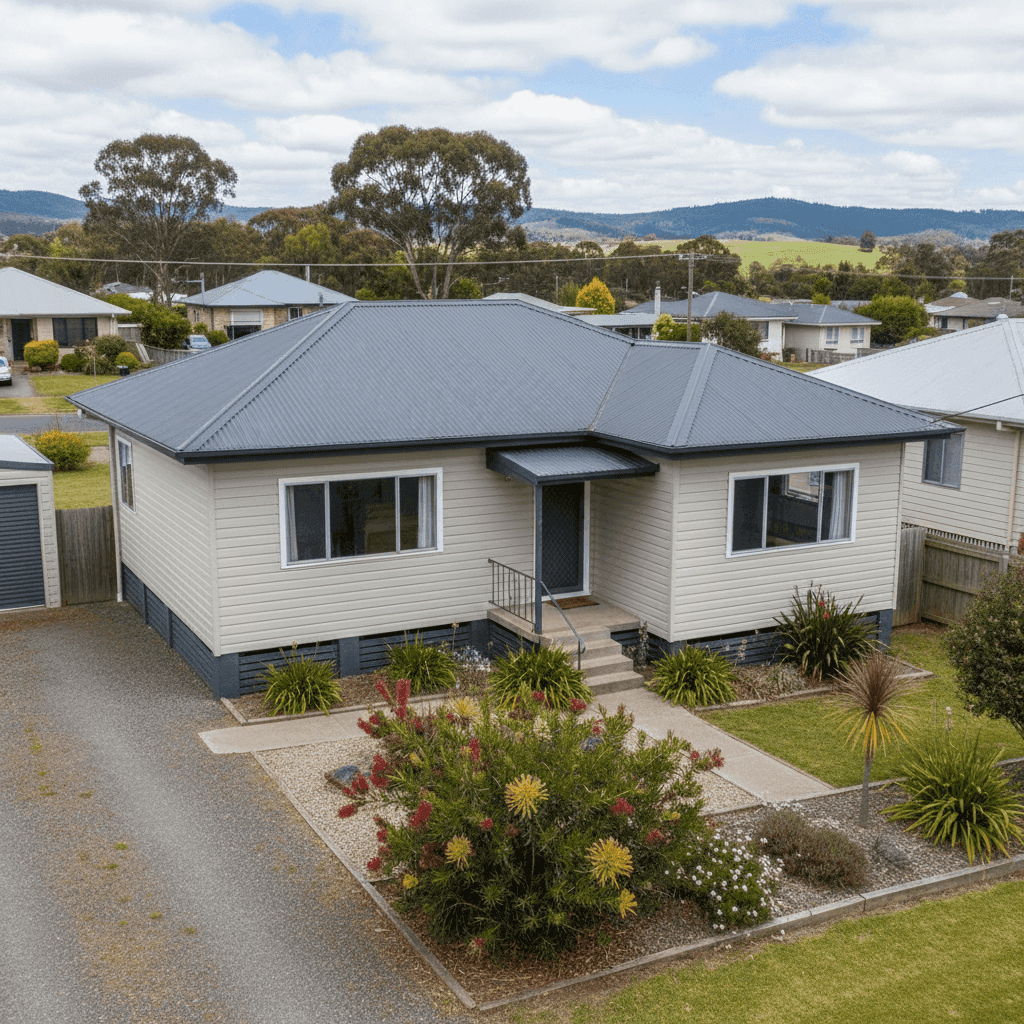
If you own a free standing home in Hillcrest, TAS 7320, you're probably wondering whether the insurance quote sitting in your inbox is a good deal or one to walk away from. In this article, we break down a real building insurance quote for a three-bedroom, one-bathroom home in Hillcrest — looking at how the premium stacks up against local, state-wide, and national benchmarks, and what property features are likely driving the cost.
---
Is This Quote Fair?
The quote in question comes in at $1,022 per year (or roughly $107 per month) for building-only cover, with a $3,000 building excess and a sum insured of $632,000.
Our price rating for this quote is FAIR — Around Average, and the data backs that up. Within the Hillcrest suburb, the average annual premium sits at $1,246 and the median at $1,184. At $1,022, this quote lands just above the 25th percentile ($990), meaning it's more affordable than roughly three-quarters of quotes in the area. That's a solid result for a homeowner who has done their homework.
It's worth noting the sample size for Hillcrest is relatively small (10 quotes), so there's some natural variance in those figures. Still, the trend is clear: this premium is on the lower end of what locals are paying, without venturing into suspiciously cheap territory that might signal inadequate cover.
---
How Hillcrest Compares
Context is everything when evaluating an insurance quote. Here's how Hillcrest stacks up across different geographic benchmarks:
| Benchmark | Average Premium | Median Premium |
|---|---|---|
| Hillcrest (suburb) | $1,246/yr | $1,184/yr |
| Burnie LGA | $1,919/yr | — |
| Tasmania (state) | $2,814/yr | $2,326/yr |
| Australia (national) | $5,347/yr | $2,764/yr |
The numbers tell an interesting story. Hillcrest homeowners are paying significantly less than the Tasmanian state average, and a fraction of the national average. Even compared to the broader Burnie LGA average of $1,919, Hillcrest premiums look very competitive.
This is partly a reflection of Hillcrest's relatively low-risk profile — it sits outside cyclone zones, is not a high-density urban area, and doesn't face some of the extreme weather pressures that push premiums sky-high in other parts of Australia (think flood-prone Queensland or cyclone-exposed northern WA).
You can explore more local data on the Hillcrest suburb stats page, compare against the broader Tasmanian insurance landscape, or see where you sit on the national scale.
---
Property Features That Affect Your Premium
Every home tells a story, and insurers read that story carefully when calculating your premium. Here's how the key features of this particular property are likely influencing the cost:
Construction Era (1954)
Homes built in the 1950s carry a degree of age-related risk. Older properties may have outdated electrical wiring, plumbing, or structural elements that increase the likelihood of a claim. Insurers generally price this in, though a well-maintained older home can still attract competitive rates.
Vinyl Cladding Exterior
Vinyl cladding is relatively common on homes of this era and is generally considered a moderate-risk external wall material. It's not as fire-resistant as brick veneer, but it's also lighter and less prone to the cracking issues associated with some masonry products. Insurers tend to rate it similarly to weatherboard.
Steel / Colorbond Roof
Colorbond roofing is widely regarded as a positive factor by insurers. It's durable, low-maintenance, resistant to fire and corrosion, and performs well in high-wind conditions. Homes with Colorbond roofs often attract more favourable premiums than those with older tile or fibro roofing.
Stump Foundation
Stumped foundations are common in older Tasmanian homes and can introduce some risk around subsidence, movement, and pest access (particularly termites). Lenders and insurers alike pay attention to foundation type, and stumps can occasionally nudge premiums slightly higher than slab construction.
Timber / Laminate Flooring
Timber flooring adds to the rebuild cost of a home and is factored into the sum insured calculation. It also carries a higher fire risk than concrete or tile flooring, which may have a minor effect on premiums.
No Pool, Solar, or Cyclone Risk
The absence of a swimming pool, solar panels, and cyclone-zone designation all work in this homeowner's favour. Pools add liability risk, solar panels increase the sum insured, and cyclone coverage can dramatically inflate premiums in affected areas. Being free of all three keeps costs down.
---
Tips for Homeowners in Hillcrest
Whether you're reviewing your current policy or shopping around for the first time, here are a few practical steps worth taking:
1. Review your sum insured regularly At $632,000 for a 130 sqm home, the sum insured here is on the higher end for the area. Building costs have risen sharply in recent years — make sure your sum insured reflects current rebuild costs, not the price you paid or what the home is worth on the market. Underinsurance is one of the most common and costly mistakes homeowners make.
2. Consider your excess carefully The $3,000 building excess on this policy is relatively high. A higher excess typically lowers your annual premium, but it means you'll need to cover more out-of-pocket if you do need to make a claim. Think about what you can comfortably afford in an emergency before locking in a high excess purely to save on premiums.
3. Maintain your older home proactively With a 1954 build, staying on top of maintenance is both a practical and financial priority. Insurers may reduce cover or dispute claims if damage is attributed to wear and tear or lack of upkeep. Annual checks on your roof, gutters, stumps, and electrical systems can prevent small issues from becoming expensive claims — or policy complications.
4. Compare quotes before renewing Even if your current insurer has treated you well, the home insurance market is competitive. Prices can vary significantly between providers for identical cover. A quick comparison at renewal time could save you hundreds of dollars a year without sacrificing protection.
---
Ready to Compare?
Whether this quote is your starting point or you're looking to benchmark your existing policy, CoverClub makes it easy to see what's available in your area. Get a home insurance quote today and find out if you're paying a fair price — or if there's a better deal waiting for you.