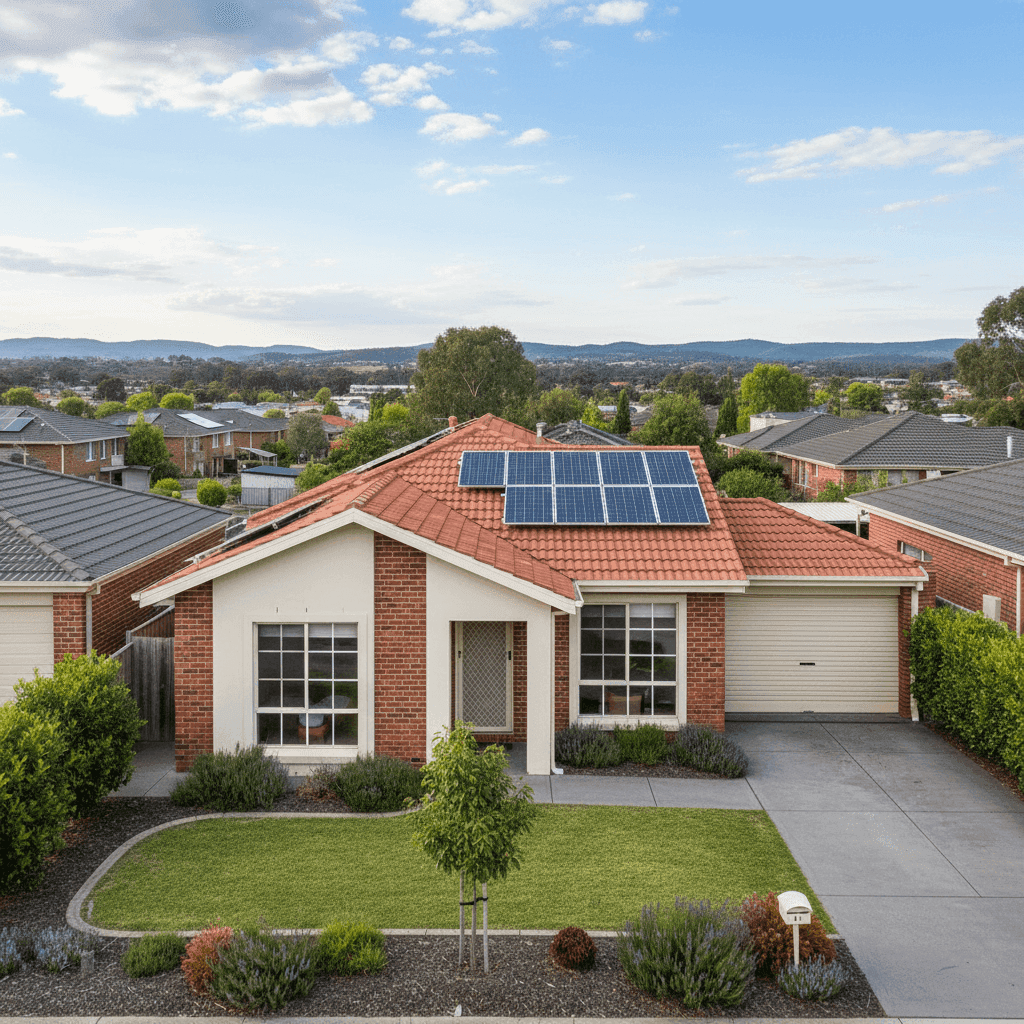
If you own a free standing home in Hillside, VIC 3037, you're probably curious about what a fair home insurance premium looks like — and whether you're paying too much (or too little). This article breaks down a real building insurance quote for a four-bedroom, two-bathroom brick veneer home in Hillside, comparing it against suburb, state, and national benchmarks so you can make a genuinely informed decision.
---
Is This Quote Fair?
The quote in question comes in at $1,257 per year (or $121 per month) for building-only cover, with a $2,000 building excess and a sum insured of $646,000. Our price rating for this quote is CHEAP — below average for the area.
To put that in perspective: the suburb average for Hillside sits at $2,573 per year, and the median is $2,312 per year. That means this quote is roughly 51% below the suburb average and well beneath even the 25th percentile of local quotes ($1,737/yr). In plain terms, fewer than one in four Hillside homeowners are paying this little for comparable cover.
Is that a red flag? Not necessarily. A below-average premium can reflect a combination of favourable property characteristics, a competitive insurer, and a higher-than-average excess. However, it's always worth scrutinising what's included — and what's excluded — before assuming a cheap quote is automatically the best value.
---
How Hillside Compares
Understanding where Hillside sits in the broader insurance landscape helps frame just how competitive this quote really is.
| Benchmark | Annual Premium |
|---|---|
| This Quote | $1,257 |
| Hillside Suburb Average | $2,573 |
| Hillside Suburb Median | $2,312 |
| Hillside 25th Percentile | $1,737 |
| Hillside 75th Percentile | $3,145 |
| LGA (Brimbank) Average | $1,707 |
| VIC State Average | $3,000 |
| VIC State Median | $2,718 |
| National Average | $5,347 |
| National Median | $2,764 |
Hillside itself is already a relatively affordable suburb to insure compared to the broader Victorian average — and the VIC state average of $3,000/yr is notably lower than the national average of $5,347/yr, which is heavily influenced by high-risk regions in Queensland and Western Australia prone to cyclones, floods, and bushfires.
Within the Brimbank LGA, the average premium of $1,707/yr is already modest, suggesting the local area benefits from relatively lower natural hazard exposure compared to many other parts of Australia. You can explore more localised data on the Hillside suburb stats page.
This quote, at $1,257/yr, sits well below even the LGA average — making it an exceptionally competitive result by almost any measure.
---
Property Features That Affect Your Premium
Several characteristics of this particular property work in its favour from an insurance risk perspective:
Brick Veneer Construction Brick veneer walls are generally viewed favourably by insurers. They offer solid resistance to fire and are considered more durable than timber or weatherboard cladding, which can translate to lower premiums.
Tiled Roof A tiled roof is another risk-positive feature. Tiles are durable, fire-resistant, and less susceptible to storm damage than some alternatives like corrugated iron in certain configurations. Combined with the brick veneer exterior, this home presents a low-risk construction profile.
Concrete Slab Foundation Slab foundations are common in Victoria for homes built around the year 2000 and are generally considered structurally stable. They're less vulnerable to subsidence and pest-related damage than older pier-and-beam foundations.
Solar Panels The presence of solar panels is worth noting. Some insurers include solar panels under building cover automatically, while others treat them as optional extras or exclude damage caused by electrical faults in the panels. It's essential to confirm with your insurer that your solar system is fully covered under the policy.
Ducted Climate Control Ducted heating and cooling systems are a significant fixed asset and typically covered under building insurance. Their inclusion in the sum insured calculation is important — if the system needs replacing after a covered event, you want to be confident the $646,000 sum insured is sufficient.
No Pool, No Cyclone Risk The absence of a swimming pool removes a common source of liability and maintenance-related claims. Being outside a designated cyclone risk area also meaningfully reduces the premium, as cyclone-prone regions in northern Australia face significantly higher base rates.
Standard Fittings With standard-quality fittings throughout, the cost to rebuild or repair is more predictable and generally lower than a home with premium or custom finishes. This is reflected in the sum insured and, in turn, the premium.
---
Tips for Homeowners in Hillside
1. Review Your Sum Insured Annually At $646,000, the sum insured needs to reflect the true cost of rebuilding your home from scratch — not its market value. Construction costs have risen significantly in recent years across Victoria. Use a building cost calculator or speak to a quantity surveyor to ensure you're not underinsured.
2. Confirm Solar Panel Coverage With solar panels on the roof, double-check your policy's product disclosure statement (PDS) to understand exactly what's covered. Look for coverage of the panels themselves, inverters, and any damage caused by electrical faults originating from the system.
3. Consider Your Excess Carefully This quote carries a $2,000 building excess, which is on the higher end. A higher excess typically lowers your premium, but it means more out-of-pocket costs when you make a claim. Make sure this figure is genuinely manageable for your household budget before locking it in.
4. Don't Assume Cheap Means Best A below-average premium is great — but only if the policy actually covers what you need it to. Compare policy features like flood cover, storm surge, accidental damage, and temporary accommodation benefits alongside the price. The cheapest policy that leaves you underprotected isn't a bargain.
---
Compare Your Options with CoverClub
Whether you're renewing your policy or shopping around for the first time, CoverClub makes it easy to see how your quote stacks up. With real data from thousands of Australian homeowners, you can benchmark your premium against your neighbours and find out if you're getting a fair deal — or leaving money on the table.
Get a home insurance quote today and see how Hillside compares in real time.