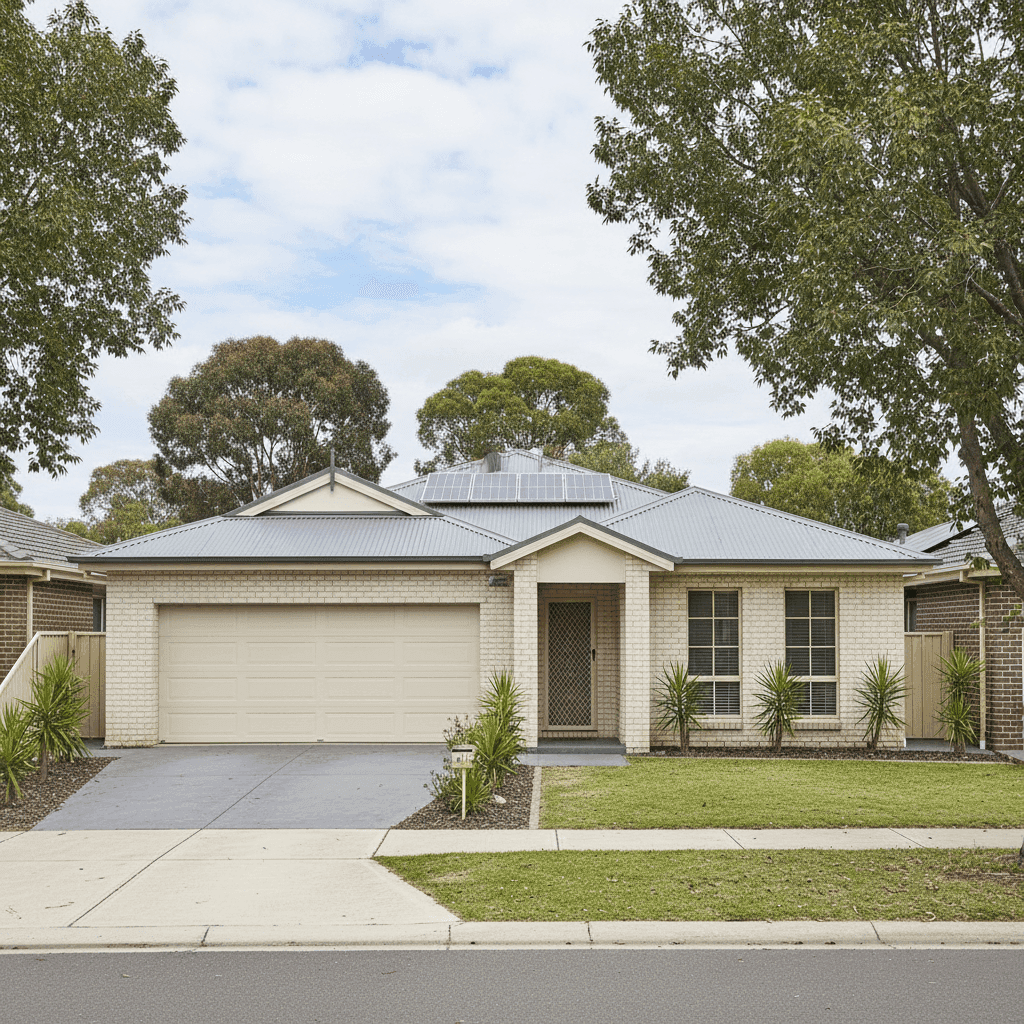
If you own a four-bedroom free standing home in Hillside, VIC 3037, you've probably wondered whether you're paying a fair price for home and contents insurance — or quietly overpaying year after year. This article breaks down a real quote for a property in this suburb, puts it in context against local and national benchmarks, and offers practical advice for homeowners looking to get better value from their cover.
---
Is This Quote Fair?
The quote in question comes to $1,794 per year (or $181/month) for combined home and contents insurance, covering a building sum insured of $750,000 and contents valued at $50,000. Both the building and contents excess are set at $2,000.
Our price rating for this quote is FAIR — Around Average.
That's a reasonably positive result. Based on 63 quotes collected for properties in the Hillside area, the suburb average sits at $2,573/year and the median at $2,312/year. This quote lands below both of those figures, and it also falls just above the 25th percentile of $1,737/year — meaning it's in the more affordable tier of quotes for the area without being an outlier.
In plain terms: this homeowner is paying less than most of their neighbours for comparable cover, which is a solid outcome. That said, "fair" doesn't mean there's no room to improve — it simply means the quote is reasonably competitive within its market context.
---
How Hillside Compares
To really appreciate where this quote sits, it helps to zoom out and look at the broader picture.
| Benchmark | Annual Premium |
|---|---|
| This Quote | $1,794 |
| Hillside Suburb Average | $2,573 |
| Hillside Suburb Median | $2,312 |
| Hillside 25th Percentile | $1,737 |
| Hillside 75th Percentile | $3,145 |
| LGA (Brimbank) Average | $1,707 |
| VIC State Average | $3,000 |
| VIC State Median | $2,718 |
| National Average | $5,347 |
| National Median | $2,764 |
A few things stand out here. First, Hillside is genuinely affordable by Victorian standards — the VIC state average of $3,000/year is notably higher than what most Hillside homeowners are paying. Second, nationally, the picture is even more stark: the national average of $5,347/year is heavily skewed by high-risk coastal and cyclone-prone regions in Queensland and Western Australia, which drives that figure well above what metropolitan Melbourne homeowners typically encounter.
The LGA (Brimbank) average of $1,707/year is the most local benchmark available, and this quote sits just above it — consistent with the "fair" rating. You can explore more detailed pricing data for this area on the Hillside suburb stats page.
---
Property Features That Affect Your Premium
Every property is different, and insurers weigh up a range of factors when pricing a policy. Here's how the specific characteristics of this home likely influence the premium:
Brick Veneer Walls Brick veneer is one of the most common wall materials in Melbourne's outer suburbs, and insurers generally view it favourably. It offers good fire resistance and structural durability compared to lightweight cladding or weatherboard, which can translate to a more competitive premium.
Steel/Colorbond Roof Colorbond roofing is another positive signal for insurers. It's durable, low-maintenance, and performs well in high-wind events. Unlike older tile roofs, there's no risk of individual tiles dislodging and causing damage — a factor that can otherwise contribute to claims.
Concrete Slab Foundation A slab foundation is standard for homes built in this era and is generally considered low-risk by underwriters. It provides a stable base and is less susceptible to subsidence issues compared to pier-and-beam or strip footings in certain soil types.
Solar Panels The presence of solar panels adds a modest layer of complexity to a home insurance policy. Panels represent a significant asset (often worth $5,000–$15,000 or more), and homeowners should confirm whether their policy covers them under the building sum insured or as a separate item. Damage from storms, hail, or electrical faults should ideally be included.
Ducted Climate Control Ducted heating and cooling systems are a valuable fixed asset and are typically covered under building insurance. However, mechanical breakdown is usually excluded from standard policies — so if your system is ageing, it's worth understanding exactly what events are and aren't covered.
Construction Year: 1995 At around 30 years old, this home is well past its initial warranty period but not yet considered heritage or high-risk aged stock. Insurers may factor in the likelihood of gradual wear on plumbing, electrical systems, and roofing, though a well-maintained property of this age shouldn't attract a significant loading.
Building Size: 214 sqm At 214 square metres, this is a mid-to-large family home. The $750,000 building sum insured works out to roughly $3,505 per square metre — which is broadly in line with current rebuild cost estimates for brick veneer homes in metropolitan Melbourne, though homeowners should periodically reassess this figure as construction costs continue to rise.
---
Tips for Homeowners in Hillside
1. Review your building sum insured annually Construction costs in Victoria have risen significantly over the past few years. If your sum insured hasn't been updated recently, you may be underinsured — meaning a total loss payout might not cover the full cost of rebuilding. Use a building cost calculator or speak with a quantity surveyor to get an independent estimate.
2. Confirm solar panel coverage in your policy documents Don't assume your solar panels are automatically covered. Read the Product Disclosure Statement (PDS) carefully to understand whether they're included in the building definition, what events are covered, and whether there's a sub-limit that might apply.
3. Consider a higher excess to reduce your premium This policy carries a $2,000 excess on both building and contents. If you have a financial buffer and rarely make small claims, opting for a higher excess (say, $2,500 or $3,000) could meaningfully reduce your annual premium. Just make sure the saving justifies the additional out-of-pocket cost if you do need to claim.
4. Compare quotes at renewal — every year Even if your current insurer offers a renewal price that seems reasonable, the market changes constantly. New insurers enter the market, risk models are updated, and discounts come and go. Taking 15 minutes to compare quotes at renewal can easily save you hundreds of dollars without sacrificing cover quality.
---
Compare Home Insurance Quotes in Hillside
Whether you're reviewing an existing policy or shopping for cover on a new property, CoverClub makes it easy to see how different insurers price your specific home. Get a quote today and find out if there's a better deal waiting for you — it takes just a few minutes and could save you significantly at renewal time.