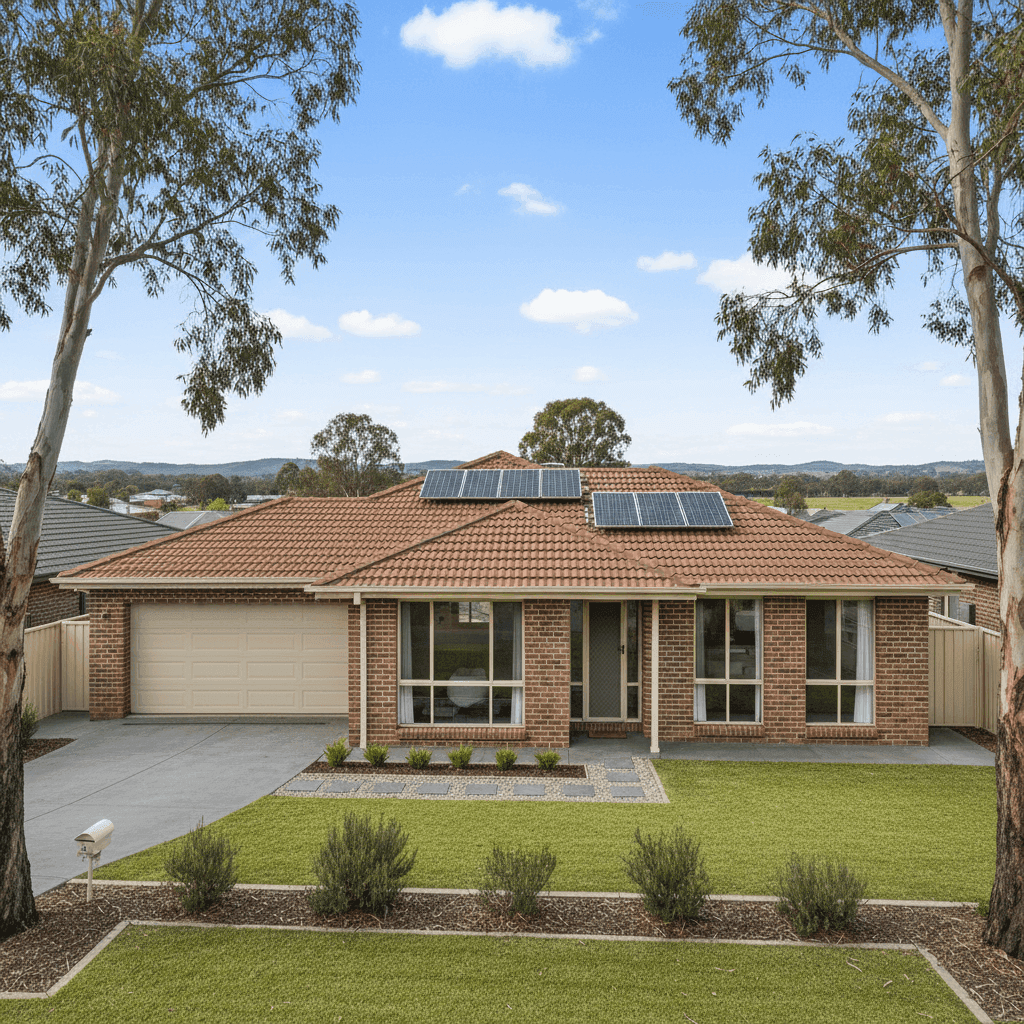
If you own a free standing home in Hillvue, NSW 2340, you're probably wondering whether your home insurance premium is competitive — or whether you're quietly overpaying year after year. This article breaks down a real home and contents insurance quote for a four-bedroom brick veneer property in Hillvue, comparing it against local, state, and national benchmarks to help you understand what fair value actually looks like.
---
Is This Quote Fair?
The short answer: yes — this is an excellent result.
The quote in question comes in at $1,692 per year (or roughly $177 per month) for combined home and contents cover, with a building sum insured of $900,000 and contents valued at $80,000. The building excess sits at $3,000, with a separate $1,000 excess for contents claims.
Our pricing engine rates this quote as CHEAP — below average for the area. Based on a sample of 51 quotes for comparable properties in Hillvue, the suburb average premium is $2,274 per year and the median sits at $2,336. That means this policy is coming in roughly $582 below the suburb average — a saving of about 26% compared to what most Hillvue homeowners are paying.
Even measured against the suburb's 25th percentile (the cheapest quarter of quotes), which sits at $2,090 per year, this premium still undercuts the competition. That's a meaningful result, and suggests the insurer has assessed the risk profile of this particular property favourably.
---
How Hillvue Compares
To put this quote in broader context, it helps to look at how Hillvue and the 2340 postcode compare to the rest of the country.
| Benchmark | Annual Premium |
|---|---|
| This Quote | $1,692 |
| Hillvue Suburb Average | $2,274 |
| Hillvue Suburb Median | $2,336 |
| Liverpool Plains LGA Average | $2,851 |
| NSW Average | $9,528 |
| NSW Median | $3,770 |
| National Average | $5,347 |
| National Median | $2,764 |
A few things stand out here. First, NSW as a whole has a strikingly high average premium of $9,528 — but this figure is heavily skewed by high-risk and high-value properties across the state, particularly in flood-prone, bushfire-affected, and coastal areas. The NSW median of $3,770 is a more realistic yardstick for most homeowners.
Compared to the national median of $2,764, Hillvue's median of $2,336 is actually quite competitive, suggesting the suburb benefits from relatively moderate risk conditions. This quote, at $1,692, sits well below even the national median — a strong outcome by any measure.
The Liverpool Plains LGA average of $2,851 is also worth noting. Hillvue tracks below that LGA-wide figure, which may reflect more favourable local risk characteristics within the postcode.
---
Property Features That Affect Your Premium
Several characteristics of this property likely contribute to its competitive premium.
Brick veneer construction is generally viewed favourably by insurers. It offers solid fire resistance and structural durability compared to weatherboard or fibre cement cladding, which can translate to lower rebuild risk assessments.
Tiled roofing is another positive factor. Tiles are durable, fire-resistant, and tend to perform well in hail events compared to Colorbond or corrugated iron in certain scenarios — though they can be more expensive to repair if damaged.
Stumps foundation is worth flagging. Homes on stumps (also known as pier or post foundations) can be more susceptible to movement and moisture-related issues than slab-on-ground construction. However, they also allow better airflow underneath the property, which can reduce dampness in some climates. Insurers assess this on a case-by-case basis.
Solar panels are present on this property. While solar systems add value to a home, they also add to the replacement cost in the event of damage — particularly from hail or storm. It's important to ensure your building sum insured accounts for the full replacement value of your solar installation.
Ducted climate control adds to the overall value of the home's fittings, and is reflected in the above-average fittings quality rating. This can influence both the sum insured and the premium, as high-quality internal fixtures cost more to replace.
At 214 sqm and built in 1995, this is a well-established mid-sized home. Properties from this era are generally well-understood by insurers — not so old as to raise significant concerns about outdated wiring or plumbing, but mature enough to warrant attention to maintenance.
---
Tips for Homeowners in Hillvue
1. Review your building sum insured regularly A $900,000 building sum insured is substantial, but construction costs have risen sharply in recent years. Make sure your sum insured reflects current rebuild costs — not just the market value of your home. Underinsurance remains one of the most common and costly mistakes Australian homeowners make.
2. Factor in your solar panels Ensure your insurer is aware of your solar panel system and that it's explicitly covered under your building policy. Some policies include it automatically; others may require it to be listed separately. Check the product disclosure statement (PDS) carefully.
3. Don't set-and-forget your policy Even a competitively priced policy should be reviewed at renewal. Insurers regularly adjust their pricing, and what's cheap today may not be in 12 months. Use tools like CoverClub's quote comparison to benchmark your renewal premium each year.
4. Consider your excess carefully This policy carries a $3,000 building excess. While a higher excess typically reduces your premium, it's worth making sure you can comfortably cover that amount out of pocket in the event of a claim. If $3,000 would be a financial stretch, it may be worth exploring policies with a lower excess — even if the annual premium is slightly higher.
---
Compare Your Own Quote
Whether you're a first-time buyer or a long-term Hillvue resident, it pays to shop around. The data is clear: premiums for the same property can vary significantly between insurers, and the difference between the cheapest and most expensive quotes in this suburb spans hundreds of dollars per year.
Get a home insurance quote at CoverClub and see how your current premium stacks up against the market in seconds — no obligation, no jargon.