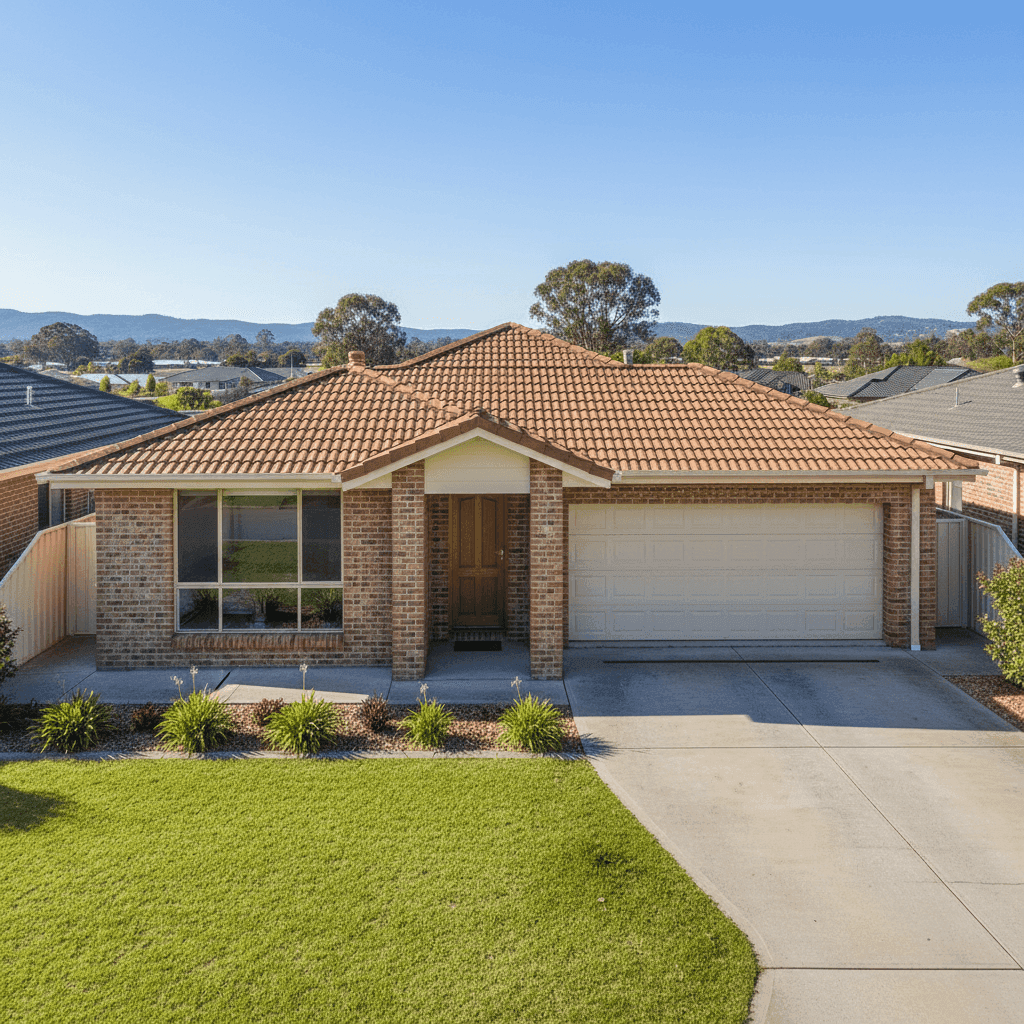
Hillvue is a quiet residential suburb on the southern fringe of Tamworth in the New England region of New South Wales. With its mix of established family homes and easy access to Tamworth's amenities, it's a popular spot for owner-occupiers looking for affordable living in regional NSW. If you own a free standing home here, understanding what you should be paying for home and contents insurance — and whether your current quote is competitive — can save you hundreds of dollars a year.
This article breaks down a real home and contents insurance quote for a 3-bedroom, brick veneer home in Hillvue, and compares it against suburb, state, and national benchmarks to help you make a more informed decision.
---
Is This Quote Fair?
The quote in question comes in at $1,012 per year (or roughly $101 per month) for a combined home and contents policy, covering a building sum insured of $639,000 and contents valued at $59,000. The building excess is $3,000 and the contents excess is $1,000.
Our pricing engine rates this quote as CHEAP — Below Average, which is great news for the homeowner. To put that in perspective:
- The suburb average for Hillvue (based on 42 quotes) is $2,012/year
- The suburb median sits at $1,647/year
- Even the 25th percentile — meaning the cheapest quarter of quotes in the area — is $1,101/year
This quote lands below even the cheapest 25% of premiums recorded in the suburb, making it genuinely competitive. At roughly half the suburb average, the homeowner is in a strong position — assuming the coverage terms and excess levels suit their needs.
It's worth noting that a $3,000 building excess is on the higher side. While this helps bring the annual premium down, it does mean you'd be out of pocket by that amount before your insurer contributes to any building claim. Make sure the savings in premium outweigh the risk of a higher excess for your situation.
---
How Hillvue Compares
Zooming out beyond the suburb level reveals just how favourably priced home insurance tends to be in this part of regional NSW — and how this particular quote performs even within that context.
| Benchmark | Annual Premium |
|---|---|
| This Quote | $1,012 |
| Hillvue Suburb Average | $2,012 |
| Hillvue Suburb Median | $1,647 |
| Liverpool Plains LGA Average | $4,131 |
| NSW State Average | $3,801 |
| NSW State Median | $3,410 |
| National Average | $2,965 |
| National Median | $2,716 |
Interestingly, the Liverpool Plains LGA average of $4,131/year is significantly higher than both the Hillvue suburb average and the NSW state average. This suggests that while Hillvue itself may benefit from lower risk factors (such as proximity to Tamworth's infrastructure and emergency services), other parts of the LGA — which includes more rural and flood-prone areas — push the LGA-wide average up considerably.
For a deeper look at how premiums vary across the postcode, visit the Hillvue suburb insurance stats page. You can also explore NSW-wide insurance trends or compare against national home insurance averages.
---
Property Features That Affect Your Premium
Several characteristics of this property influence how insurers price the risk — and in this case, many of them work in the homeowner's favour.
Brick Veneer Walls & Tiled Roof
Brick veneer is one of the most common and well-regarded construction types in Australia. Insurers generally view it favourably because it offers solid fire resistance and structural durability. Combined with a tiled roof — which is also considered a lower-risk roofing material compared to corrugated iron or older fibrous cement — this home presents a relatively low construction risk profile.
Slab Foundation
A concrete slab foundation is the standard for homes of this era and is generally straightforward for insurers to assess. It doesn't carry the same elevated risk as older stumped or timber-framed subfloors, which can be more susceptible to moisture and pest damage.
Construction Year: 1975
Homes built in the mid-1970s are well past the 50-year mark, which can sometimes attract scrutiny from insurers around ageing plumbing, wiring, and roofing materials. However, a well-maintained 1975 home with brick veneer and tiles is still considered insurable at competitive rates — particularly if it hasn't been subject to major claims history.
Ducted Climate Control
The presence of ducted climate control adds to the replacement value of the home's fixtures and fittings, which is reflected in the building sum insured. It's a meaningful inclusion that ensures you're not underinsured if the system needs to be replaced as part of a major claim.
Slightly Elevated Foundation
The property is noted as being elevated by less than 1 metre. While this is a modest elevation, it can offer some marginal benefit in flood-risk assessments — water is less likely to enter the home during minor flooding events compared to a ground-level slab.
No Pool, No Solar Panels
The absence of a swimming pool and solar panels keeps the risk profile simpler. Both features can add complexity to claims and slightly increase premiums, so their absence here contributes to a cleaner, lower-cost quote.
---
Tips for Homeowners in Hillvue
Whether you're reviewing your current policy or shopping around for the first time, here are some practical steps to make sure you're getting the right cover at the right price.
- Check your sum insured regularly. Building costs in regional NSW have risen significantly in recent years due to labour and material shortages. A sum insured of $639,000 for a 130 sqm home may be appropriate today, but it's worth recalculating your rebuild cost annually using an independent building cost estimator to avoid being underinsured.
- Understand your excess before you commit. A $3,000 building excess is above average. If you're unlikely to claim for smaller incidents, this trade-off for a lower premium makes sense. But if your home is older and more likely to need maintenance-related repairs, a lower excess might be worth the extra premium cost.
- Review your contents sum insured. $59,000 in contents cover is a reasonable starting point, but it's easy to underestimate the replacement value of everything you own — furniture, appliances, clothing, electronics, and more. Do a room-by-room audit every year or two to make sure you're not left short after a major event.
- Compare quotes at renewal time. The insurance market in Hillvue shows a wide spread of premiums — from the 25th percentile at $1,101 to the 75th percentile at $2,588. That's a $1,487 gap for what may be similar levels of cover. Shopping around at renewal is one of the simplest ways to avoid overpaying.
---
Ready to See What You Could Pay?
Whether you're a Hillvue local or looking at property anywhere in NSW, comparing home insurance quotes is one of the smartest financial habits you can build. CoverClub makes it easy to see real quotes side by side, so you know exactly where you stand.
Get a home insurance quote today and find out if you're paying a fair price — or leaving money on the table.