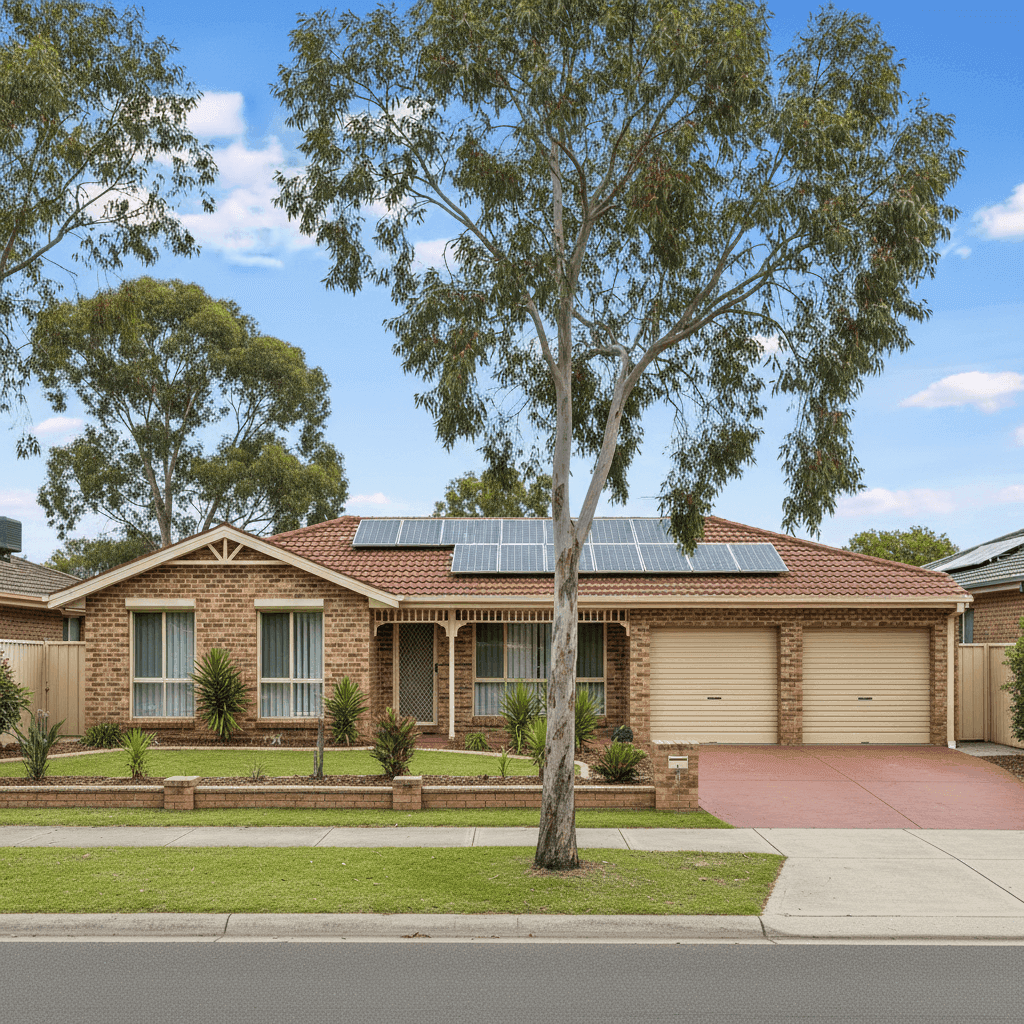
Hinchinbrook is a well-established residential suburb in Sydney's south-west, sitting within the Liverpool Local Government Area. It's the kind of neighbourhood characterised by solid family homes on quiet streets — and the property we're examining here fits that profile perfectly: a four-bedroom, two-bathroom free-standing home built in 1999 with brick veneer walls, a tiled roof, and a slab foundation. At 214 square metres, it's a comfortable family-sized dwelling with a few notable features, including solar panels and ducted climate control.
So what does it cost to insure a home like this? A recent quote came back at $1,859 per year (or $190/month) for combined home and contents cover, with a building sum insured of $618,000 and contents valued at $70,000. Let's unpack whether that's a good deal.
---
Is This Quote Fair?
The short answer: it's fair — but not exceptional. CoverClub's pricing analysis rates this quote as "Around Average" for the area, which means you're not being stung, but there's likely room to do better if you shop around.
To put the figure in context, the suburb average for Hinchinbrook sits at $1,612 per year, with a median of $1,601. This quote of $1,859 comes in above both of those benchmarks, placing it closer to the upper half of the local pricing range. The 75th percentile for the suburb is $2,213, so while this premium isn't at the top of the market, it's nudging above the midpoint.
That said, the sum insured here ($618,000 for the building alone) is substantial, and the inclusion of contents cover adds to the overall cost. Policies vary enormously in what they cover, so a higher premium isn't always a red flag — it's worth ensuring the policy limits and inclusions justify the price.
---
How Hinchinbrook Compares
One of the most striking data points in this analysis is how dramatically Hinchinbrook premiums differ from state and national figures. Check out the breakdown:
| Benchmark | Average Premium | Median Premium |
|---|---|---|
| Hinchinbrook (suburb) | $1,612/yr | $1,601/yr |
| Liverpool LGA | $2,029/yr | — |
| NSW (state) | $9,528/yr | $3,770/yr |
| National | $5,347/yr | $2,764/yr |
The NSW state average of $9,528 is heavily skewed by high-risk areas — think flood-prone regions, bushfire zones, and coastal properties facing storm surge. Hinchinbrook, by contrast, is a relatively low-risk suburban environment, which is reflected in its much more modest premiums.
Similarly, the national average of $5,347 is pulled upward by Queensland's cyclone-exposed coastlines and other high-risk postcodes. For a landlocked south-western Sydney suburb like Hinchinbrook, premiums are considerably more affordable.
Even within the Liverpool LGA, Hinchinbrook comes out ahead — the LGA average is $2,029, meaning homes in this specific suburb tend to attract lower premiums than many of their neighbours across the broader council area.
You can explore the full breakdown of local pricing data on the Hinchinbrook suburb stats page.
---
Property Features That Affect Your Premium
Several characteristics of this property directly influence how insurers price the risk. Here's what matters most:
Brick Veneer Walls & Tiled Roof Brick veneer is one of the most common construction types in Australian suburbia, and insurers generally view it favourably. It offers solid fire resistance and durability. Combined with a tiled roof — another well-regarded roofing material — this home presents a relatively low structural risk profile, which helps keep premiums in check.
Slab Foundation A concrete slab foundation is standard for homes of this era in NSW and is considered low-risk from an insurer's perspective. It reduces concerns around subsidence and pest-related structural damage that can affect homes on stumps or piers.
Solar Panels The presence of solar panels is worth noting. While they add value to the property, some insurers treat them as an additional risk (due to potential fire hazards or storm damage to panels). It's important to confirm that your policy explicitly covers solar panels — both the panels themselves and any damage they might cause to the roof.
Ducted Climate Control Ducted air conditioning systems are a significant fixed asset in a home. Damage to these systems — whether from electrical faults, storms, or other events — can be costly to repair or replace. Ensuring your building sum insured accounts for this is important.
Building Size: 214 sqm At 214 square metres, this is a mid-to-large family home. The building sum insured of $618,000 works out to roughly $2,888 per square metre — a reasonable rebuild estimate for a brick veneer home in greater Sydney, though it's always worth getting a professional assessment to ensure you're not underinsured.
No Pool, Standard Fittings The absence of a pool removes one common source of liability and additional premium loading. Standard-quality fittings also mean the contents valuation is more straightforward, without the complexity of high-end appliances or luxury fixtures pushing costs higher.
---
Tips for Homeowners in Hinchinbrook
1. Review Your Sum Insured Regularly Construction costs have risen sharply across Australia in recent years. If your building sum insured hasn't been updated to reflect current rebuild costs, you could be underinsured. Use a building cost calculator or consult a quantity surveyor to validate your $618,000 figure.
2. Confirm Solar Panel Coverage Not all standard home insurance policies automatically cover solar panels. Before renewing or switching, ask your insurer directly whether your panels are covered for storm damage, fire, and accidental breakage — and whether the inverter is included.
3. Compare Quotes Before Renewing With this quote sitting above the suburb median, it's worth shopping around at renewal time. The 25th percentile for Hinchinbrook is just $916 per year — a reminder that significantly cheaper options do exist in this postcode, though policy inclusions will vary. Get a comparison quote at CoverClub to see what else is available.
4. Consider Your Excess Strategy This policy carries a $3,000 building excess and a $1,000 contents excess. Opting for a higher excess is a common way to reduce your annual premium — but make sure the excess is an amount you could genuinely afford to pay out of pocket if you needed to make a claim.
---
Find a Better Deal with CoverClub
Whether you're reviewing your current policy or insuring a new property, it pays to compare. CoverClub makes it easy to see how your premium stacks up against real quotes from across your suburb and state. Enter your address and get started today — it only takes a few minutes and could save you hundreds of dollars a year.