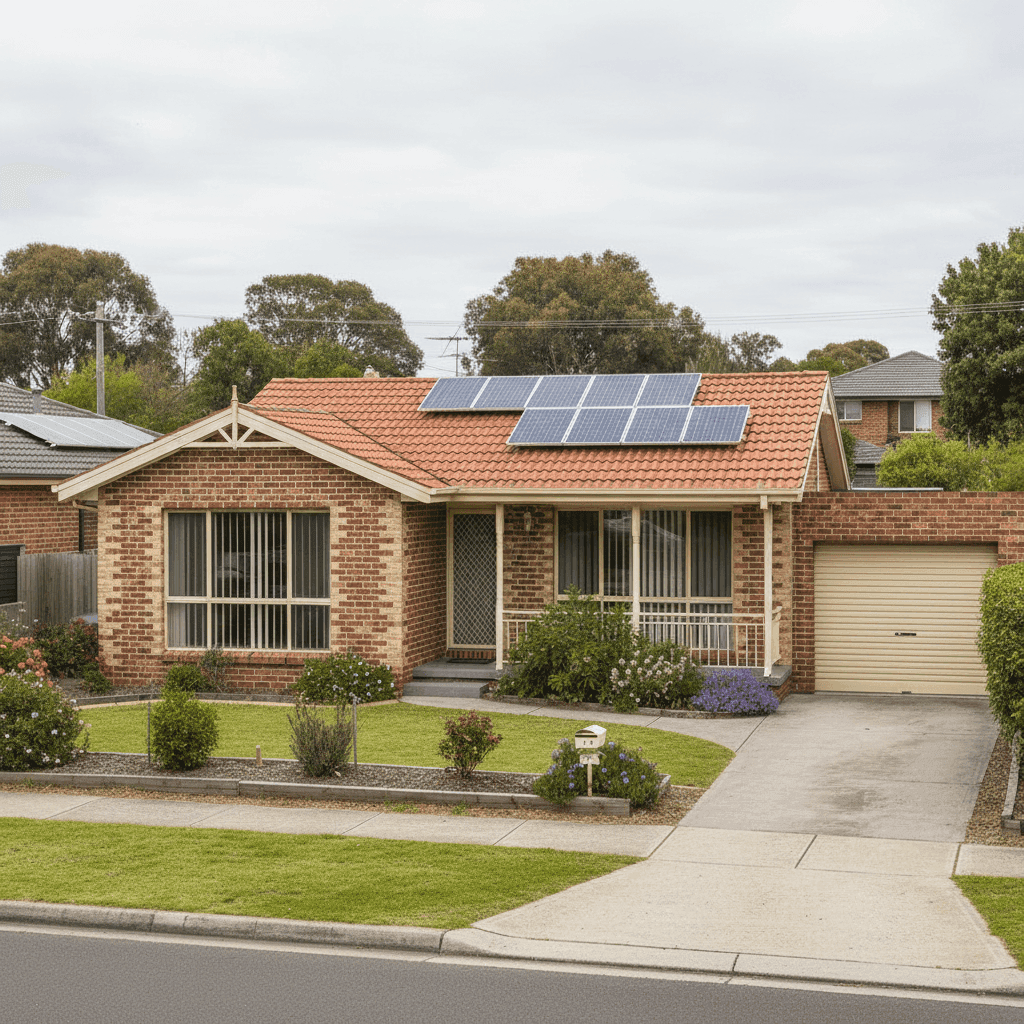
Hinchinbrook is a well-established residential suburb in Sydney's south-west, sitting within the Liverpool Local Government Area. It's home to a mix of brick veneer houses built across the 1990s and 2000s — exactly the kind of solid, suburban property that makes up the backbone of Australia's home insurance market. If you own a free standing home here and you're trying to work out whether your building insurance premium is reasonable, this analysis is for you.
We recently reviewed a quote for a 3-bedroom, 1-bathroom free standing home in Hinchinbrook (postcode 2168), built in 1997 with brick veneer walls, a tiled roof, slab foundation, and a building size of 130 sqm. The property includes solar panels and ducted climate control — both features worth noting when it comes to your sum insured. The quote covers building only (no contents), with a sum insured of $366,000.
---
Is This Quote Fair?
The annual premium on this quote came in at $1,338 per year (or roughly $128 per month), with a building excess of $2,000. Our rating for this quote is FAIR — Around Average.
That "fair" rating isn't a cause for alarm, but it's also not a signal to stop shopping around. It means the premium sits in a reasonable range relative to what other homeowners in the area are paying — but there's still potential room to save depending on the insurer and the specific cover terms on offer.
It's worth noting that the excess on this policy is set at $2,000 for building claims. A higher excess generally reduces your premium, so if you're comparing this quote to others, make sure you're comparing like-for-like excess levels. A policy with a $500 excess might look more expensive upfront but could save you money in the event of a claim.
---
How Hinchinbrook Compares
To put the $1,338 annual premium in context, here's how it stacks up against local, state, and national benchmarks:
| Benchmark | Average | Median |
|---|---|---|
| Hinchinbrook (2168) | $1,612/yr | $1,601/yr |
| Liverpool LGA | $2,029/yr | — |
| NSW | $9,528/yr | $3,770/yr |
| National | $5,347/yr | $2,764/yr |
(Based on quotes collected by CoverClub. See full [Hinchinbrook suburb stats](https://coverclub.com.au/stats/NSW/2168/hinchinbrook), [NSW state stats](https://coverclub.com.au/stats/NSW), and [national stats](https://coverclub.com.au/stats/national).)
A few things stand out here. First, this quote is below the suburb average of $1,612 and below the suburb median of $1,601 — which is a good sign. It also sits comfortably within the suburb's interquartile range of $916 to $2,213, suggesting it's neither unusually cheap nor suspiciously expensive.
Second, the NSW state average of $9,528 looks startling at first glance, but that figure is heavily skewed by high-risk and high-value properties across the state — coastal areas, flood zones, and prestige homes all pull the average up significantly. The NSW median of $3,770 is a more useful comparison point, and against that benchmark, $1,338 looks quite competitive.
Similarly, the national average of $5,347 is distorted by catastrophe-prone regions in Queensland and Western Australia. The national median of $2,764 is again more instructive — and this quote comes in well below that figure.
The Liverpool LGA average of $2,029 is perhaps the most directly relevant comparison, and the quote at $1,338 sits meaningfully below that, which is encouraging. It's worth noting that the suburb sample size here is 19 quotes, so while directionally useful, these figures should be treated as a guide rather than a definitive benchmark.
---
Property Features That Affect Your Premium
Several characteristics of this property work in the homeowner's favour from an insurance pricing perspective:
Brick veneer construction is generally viewed favourably by insurers. It offers solid fire resistance and structural durability compared to timber-framed or weatherboard homes. Combined with a tiled roof, this property sits in a construction category that tends to attract lower premiums than metal or fibrous cement alternatives.
Slab foundation is standard for homes of this era in Western Sydney and doesn't introduce any particular risk premium. Similarly, tiled flooring throughout is durable and less susceptible to water damage than carpet or timber, which can subtly influence how insurers assess replacement costs.
The solar panels are worth a specific mention. Many homeowners overlook the fact that solar systems need to be included in the building sum insured — they're fixed to the structure and typically covered under building (not contents) insurance. At $366,000, the sum insured here should account for the panels. If you're unsure whether your solar system is adequately covered, it's worth checking your policy wording carefully.
Ducted climate control adds to the replacement cost of the home, and again, this should be factored into the building sum insured. Underinsurance is a genuine risk for properties with high-value fixed inclusions like ducted HVAC systems — if your sum insured doesn't reflect the true cost to rebuild, you could face a shortfall at claim time.
The property is not in a cyclone risk area, which removes one of the more significant premium loading factors that affect homes in northern Queensland and parts of Western Australia. This is a meaningful advantage for Hinchinbrook homeowners.
---
Tips for Homeowners in Hinchinbrook
1. Review your sum insured regularly Building costs have risen sharply in recent years. A sum insured that was adequate in 2020 may no longer reflect what it would actually cost to rebuild your home today. Use a building cost calculator or speak with a quantity surveyor to make sure your $366,000 (or equivalent) still holds up — especially given the solar panels and ducted climate control.
2. Compare excesses carefully The $2,000 building excess on this policy is on the higher end of what's typical. Before assuming a lower-excess policy is more expensive, get a few comparison quotes — sometimes the premium difference is smaller than you'd expect, and a lower excess can make a meaningful difference if you need to claim.
3. Don't pay for cover you don't need — but don't undercut yourself either This policy is building only, with no contents cover. That's perfectly appropriate if you're an investor or if you have a separate contents policy. But if you're an owner-occupier without contents insurance, it's worth considering whether your belongings are adequately protected.
4. Shop around at renewal time Insurers don't always reward loyalty. Premiums can shift significantly year to year, and the market in the Liverpool LGA is competitive. Set a reminder to compare quotes at least a few weeks before your renewal date so you have time to switch if a better deal is available.
---
Ready to Compare?
Whether you're renewing soon or just curious about what the market looks like, CoverClub makes it easy to compare home insurance quotes for properties in Hinchinbrook and across Australia. Get a quote today and see how your current premium stacks up — you might be surprised at what's available.