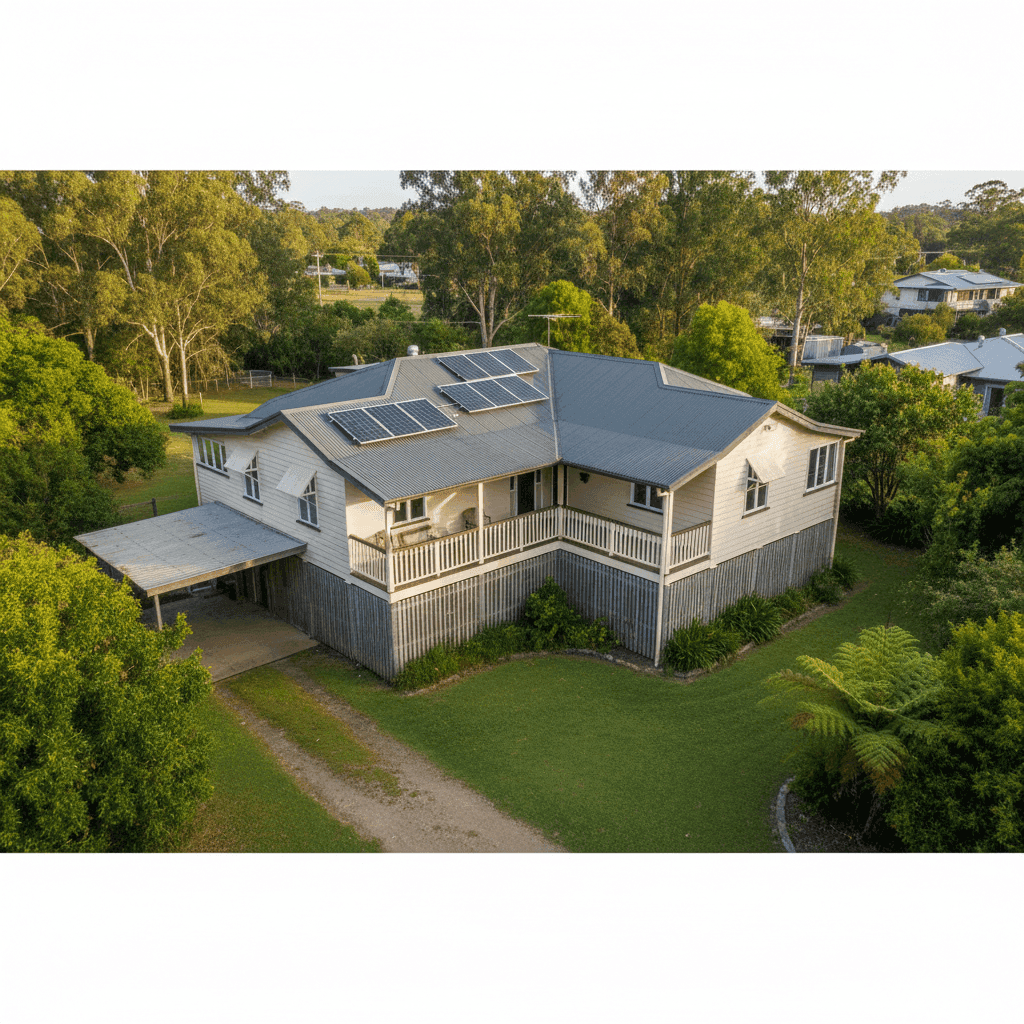
If you own a free standing home in Hogarth Range, NSW 2469, you'll know it's a quiet, semi-rural corner of the Northern Rivers region — beautiful country, but not without its quirks when it comes to insuring your property. This article breaks down a recent home and contents insurance quote for a 3-bedroom weatherboard home in the area, examines whether the price is competitive, and offers practical tips to help local homeowners get the best value from their cover.
---
Is This Quote Fair?
The quote in question comes in at $3,706 per year (or $376/month) for combined home and contents insurance, covering a building sum insured of $600,000 and $60,000 worth of contents. Our analysis rates this quote as CHEAP — below average for the area, which is genuinely good news for the homeowner.
To put that in perspective: the NSW state average premium sits at $9,528 per year, with a state median of $3,770. That means this quote lands just below the state median — a meaningful saving in a state where premiums have been climbing steadily in recent years. Compared to the national average of $5,347 and a national median of $2,764, the quote is above the national median but well under the national average — a reasonable outcome for a regional NSW property with several risk-influencing characteristics.
In short: for Hogarth Range and the broader Richmond Valley area, this is a competitive result.
---
How Hogarth Range Compares
Suburb-level data for Hogarth Range (2469) is limited due to the small population in the area, but the broader benchmarks tell a telling story. Check out the Hogarth Range insurance stats page for the latest figures as more data becomes available.
What stands out most is the Richmond Valley LGA average of $41,437 per year — an extraordinarily high figure that reflects the elevated flood, storm, and bushfire risk across parts of this local government area. While that average is likely skewed by a subset of very high-risk properties (particularly those in flood-prone zones along the Richmond River and its tributaries), it underscores just how variable premiums can be within a single LGA.
| Benchmark | Annual Premium |
|---|---|
| This Quote | $3,706 |
| NSW Median | $3,770 |
| NSW Average | $9,528 |
| National Median | $2,764 |
| National Average | $5,347 |
| Richmond Valley LGA Average | $41,437 |
The fact that this particular property is coming in below the NSW median — and dramatically below the LGA average — suggests the home's specific risk profile is working in the owner's favour. More on that below.
---
Property Features That Affect Your Premium
Several characteristics of this property influence what insurers charge. Here's how each one plays into the final premium:
Weatherboard Timber Walls
Weatherboard homes are among the most common older-style constructions in regional NSW, but they do carry a higher fire risk than brick or rendered masonry. Insurers typically price timber-clad homes at a slight premium over brick equivalents. That said, weatherboard is well understood by Australian insurers and the loading is generally moderate.
Steel / Colorbond Roof
This is a positive for insurers. Colorbond roofing is durable, resistant to corrosion, and performs well in both high-wind and hail events compared to older tile or fibro roofing. It's one of the features likely keeping this quote competitive.
Stump Foundation & Elevated Design
The home sits on stumps and is elevated by less than 1 metre. Stump foundations are common in older Queensland and Northern Rivers-style homes and can actually offer some flood resilience, as water may flow beneath the structure rather than directly into it. However, insurers also note that elevated homes on stumps can be more vulnerable to wind uplift. In this case, the modest elevation (under 1m) limits that exposure.
Timber and Laminate Flooring
Timber flooring is generally straightforward to assess for reinstatement costs. It's neither a major risk driver nor a significant discount factor — but it does contribute to an accurate building sum insured calculation.
Solar Panels
The property has solar panels installed. These are increasingly common across regional NSW and most insurers now include them under standard building cover, though it's worth confirming this with your specific policy. Solar panels can occasionally add a small loading to premiums due to their replacement cost and potential electrical risk, but the impact is usually minor.
1953 Construction
Older homes built before modern building codes can present higher reinstatement costs and may use materials (such as asbestos sheeting in some cases) that complicate repairs. A 1953 build warrants careful attention to the sum insured to ensure it accurately reflects current rebuild costs — not just the market value of the property.
No Cyclone Risk
Hogarth Range falls outside designated cyclone risk zones, which is a meaningful premium advantage compared to properties in Far North Queensland or coastal NT. This is one reason the quote compares favourably against some other regional Australian locations.
---
Tips for Homeowners in Hogarth Range
1. Double-check your building sum insured With a 1953-built weatherboard home, the cost to fully rebuild using today's labour and materials can be surprisingly high — and often exceeds what people expect. Use a current building cost calculator and review your sum insured annually. Being underinsured is one of the most common and costly mistakes homeowners make.
2. Confirm solar panel coverage in your policy Not all policies automatically cover solar panels under building insurance. Before your next renewal, check the Product Disclosure Statement (PDS) to confirm your panels are included — and for how much. If they're not listed, ask your insurer to add them explicitly.
3. Review your excess settings This quote carries a $4,000 building excess and a $1,000 contents excess. A higher excess generally reduces your premium, but make sure you can comfortably cover that amount out of pocket if you need to make a claim. If $4,000 feels like a stretch, it may be worth adjusting.
4. Shop around at renewal time Even if your current premium is rated as cheap, the insurance market shifts every year. Loyalty doesn't always pay — in fact, new customers often receive better rates. Use a comparison tool at least once a year to make sure you're still getting value.
---
Ready to Compare?
Whether you're a first-time buyer or a long-term homeowner in Hogarth Range, it pays to see what's available across the market. At CoverClub, we make it easy to compare home and contents insurance quotes from a range of Australian insurers — so you can be confident you're not paying more than you need to.
Get a home insurance quote today and see how your current cover stacks up.