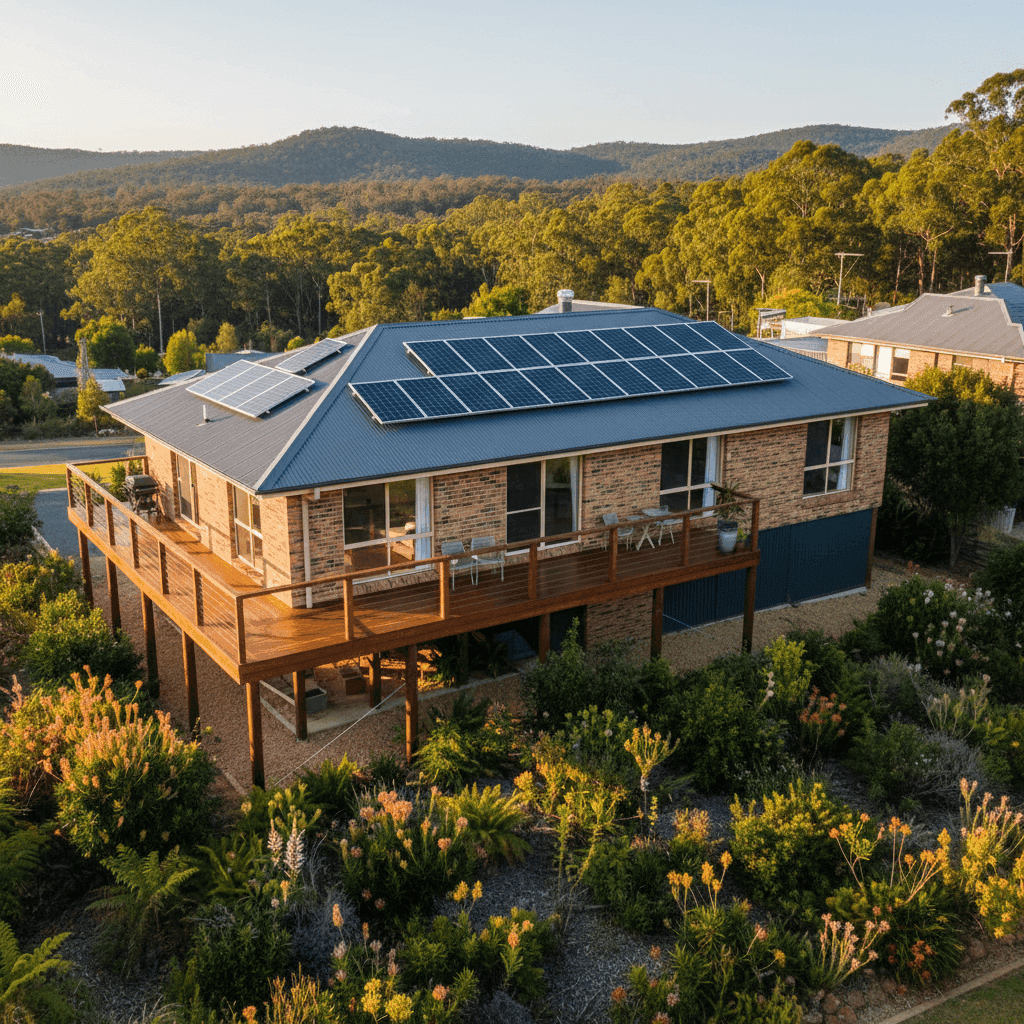
Holgate is a quiet, semi-rural suburb nestled in the Central Coast region of New South Wales, sitting just inland from the Bouddi Peninsula. It's the kind of area where larger, well-appointed homes on generous blocks are the norm — and that character is reflected in what homeowners here typically pay for insurance. This article breaks down a real home and contents insurance quote for a five-bedroom free standing home in Holgate (postcode 2250), examines whether the price stacks up, and offers practical guidance for local homeowners looking to get better value.
---
Is This Quote Fair?
The quote in question comes in at $7,360 per year (or $723/month) for combined home and contents cover, with a building sum insured of $1,370,000 and contents valued at $200,000. The building excess is $3,000 and the contents excess is $1,000.
Our pricing analysis rates this quote as Expensive — above average for the area.
To put that in perspective: the suburb average for Holgate sits at $4,944/year, with a median of $4,353/year. This quote is roughly 49% above the suburb average and 69% above the suburb median. Even against the 75th percentile for the area ($5,550/year), this premium is notably higher.
That said, context matters. This is a large, five-bedroom home with above-average fittings, a building sum insured of $1.37 million, and several features — like solar panels, ducted climate control, and an elevated foundation — that can influence pricing. The high sum insured alone is likely the single biggest driver of the elevated premium. A larger insured value means greater potential liability for the insurer, and that cost is passed on through the premium.
If you're paying this rate, it's worth shopping around — but it's also worth understanding why the number is where it is before assuming it's simply overpriced.
---
How Holgate Compares
Benchmarking this quote against broader data reveals just how much location and property characteristics can shift what you pay:
| Benchmark | Annual Premium |
|---|---|
| This Quote | $7,360 |
| Holgate Suburb Average | $4,944 |
| Holgate Suburb Median | $4,353 |
| NSW State Average | $3,801 |
| NSW State Median | $3,410 |
| National Average | $2,965 |
| National Median | $2,716 |
| Hawkesbury LGA Average | $10,350 |
A few things stand out here. First, Holgate itself already sits well above the NSW state average of $3,801/year and significantly above the national average of $2,965/year. This isn't unusual for the Central Coast — properties here tend to be larger and more valuable than the national norm.
Second, it's worth noting that the nearby Hawkesbury LGA average is a striking $10,350/year — a figure heavily influenced by flood risk in that region. By comparison, Holgate looks considerably more insurable, and this quote, while expensive relative to the suburb, is well below what flood-prone areas nearby are paying.
The sample size for Holgate is relatively small (13 quotes), so suburb-level averages should be treated as a guide rather than a definitive benchmark. Individual property characteristics can cause significant variation.
---
Property Features That Affect Your Premium
Several aspects of this property are worth examining in the context of insurance pricing:
High sum insured. At $1,370,000, the building sum insured is substantial. This reflects both the size of the home (315 sqm) and the above-average quality of fittings. Rebuilding a large, well-appointed home from scratch — including demolition, materials, and labour — is expensive, and insurers price accordingly.
Elevated foundation (stumps). The home sits elevated by at least one metre on stumps. While this can reduce flood risk by keeping the floor level above potential inundation, it also introduces complexity in the event of a claim — repairs to elevated structures can cost more due to access and structural considerations.
Brick veneer construction. Brick veneer walls are generally viewed favourably by insurers. They offer solid fire resistance and durability compared to lightweight cladding materials, which can help moderate premiums.
Steel/Colorbond roof. Metal roofing is typically considered low-risk by insurers — it's durable, fire-resistant, and performs well in storms. This is a positive factor for the premium.
Solar panels. Solar panel systems add to the replacement value of a home and are increasingly common in Central Coast properties. It's important to confirm with your insurer that your solar system is explicitly covered under your policy, as some policies have limits or exclusions around solar.
Ducted climate control. Ducted systems are a significant fixed asset and contribute to the overall replacement cost of the home. Their inclusion in the sum insured is appropriate and adds to the overall premium.
Timber/laminate flooring with above-average fittings. High-quality internal finishes — including timber flooring — increase the cost to repair or replace the interior after a claim, which is reflected in the premium.
No pool, no cyclone risk zone. The absence of a pool removes one common source of liability exposure. Being outside a designated cyclone risk area also keeps premiums lower than they might otherwise be for a property of this size.
---
Tips for Homeowners in Holgate
1. Review your sum insured carefully — but don't underinsure. It can be tempting to lower your building sum insured to reduce your premium, but underinsurance is one of the most costly mistakes a homeowner can make. If your home is destroyed and the rebuild cost exceeds your sum insured, you're personally liable for the difference. Use a building cost calculator or speak with a quantity surveyor to make sure your figure is accurate.
2. Compare quotes before renewal. Insurers rarely reward loyalty with their best pricing. If you haven't compared quotes in the last 12 months, you may be leaving money on the table. Even a difference of a few hundred dollars a year compounds significantly over time. Get a comparison quote at CoverClub to see what other insurers are offering for your property.
3. Check what's included for solar panels. With solar panels on the roof, make sure your policy explicitly covers the system — including panels, inverter, and mounting hardware — for both damage and theft. Some policies include this automatically; others treat it as an optional add-on or have sub-limits that may not fully cover a modern system.
4. Consider your excess settings. This policy carries a $3,000 building excess and a $1,000 contents excess. Opting for a higher voluntary excess is one of the most straightforward ways to reduce your annual premium. If you have a strong emergency fund and are unlikely to make small claims, increasing your excess could offer meaningful savings.
---
Ready to Compare?
Whether you're renewing soon or just curious about what else is on the market, it pays to compare. CoverClub makes it easy to benchmark your current premium against real quotes for properties like yours in Holgate and across NSW. Start your comparison here — it only takes a few minutes, and you might be surprised what you find.
For more data on insurance pricing in your area, visit the Holgate suburb stats page or explore NSW-wide home insurance trends.