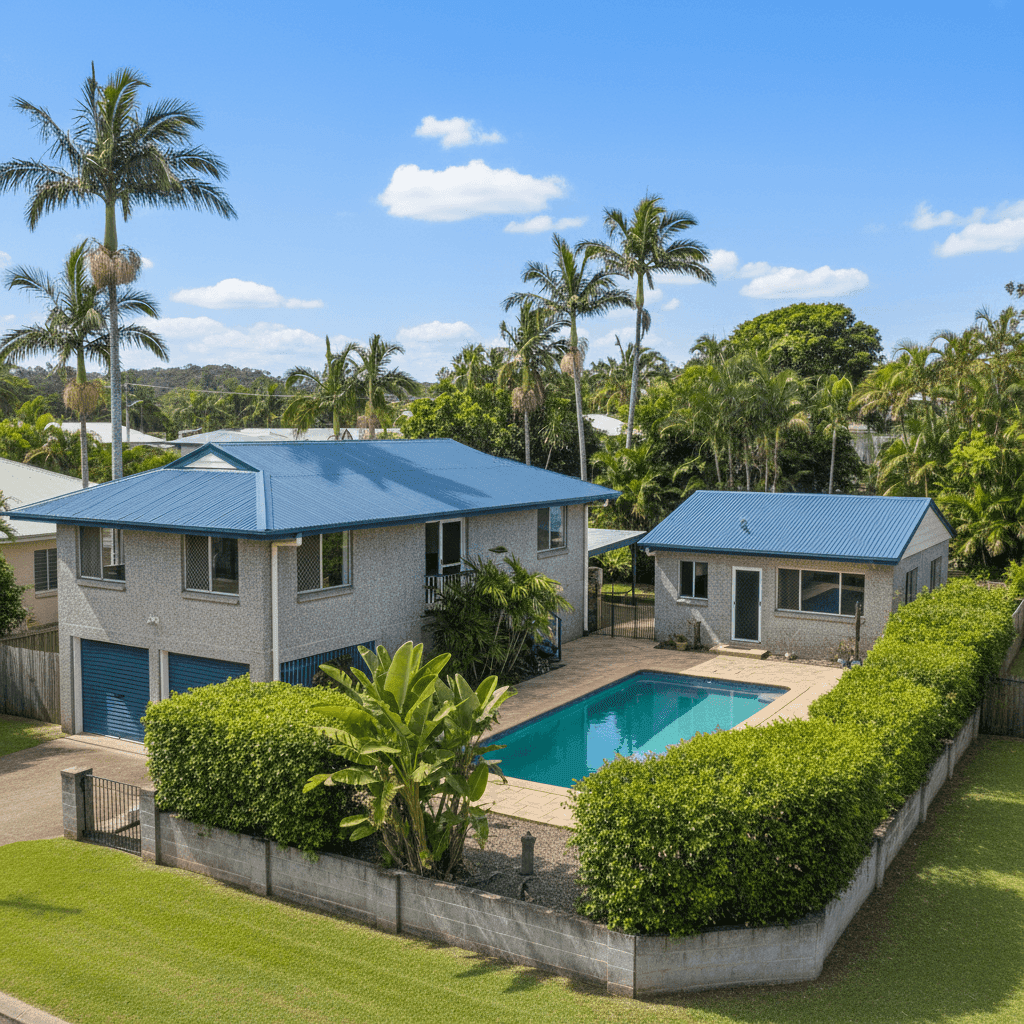
If you own a free standing home in Holloways Beach, QLD 4878, you already know this coastal suburb north of Cairns comes with a lifestyle most Australians can only dream about — but it also comes with some of the more complex home insurance considerations in the country. From tropical cyclone exposure to the unique mix of construction styles found in the area, getting the right building cover at a fair price takes a little more homework here than in many other parts of Australia.
This article breaks down a real building-only insurance quote for a 3-bedroom, 1-bathroom free standing home in Holloways Beach, helping you understand whether the premium stacks up, what's driving the cost, and what you can do about it.
---
Is This Quote Fair?
The quote in question comes in at $5,760 per year (or $552/month) for building-only cover on a home insured for $644,000, with a $1,000 building excess. Our price rating for this quote is FAIR — Around Average.
That rating reflects where this premium sits relative to what other homeowners in the same suburb are paying. At $5,760 per year, this quote lands just below the Holloways Beach suburb median of $5,789/yr — essentially right in the middle of the pack locally. It's also meaningfully below the suburb average of $6,875/yr, which suggests there are some higher-priced policies pulling that average upward.
In short: this isn't a bargain, but it's not an overpriced outlier either. For a cyclone-prone coastal suburb in Far North Queensland, landing near the median is a reasonable outcome — and well worth benchmarking before you simply renew.
---
How Holloways Beach Compares
Understanding one quote in isolation only tells part of the story. Here's how this premium sits across different comparison points:
| Benchmark | Premium |
|---|---|
| This quote | $5,760/yr |
| Suburb median (Holloways Beach) | $5,789/yr |
| Suburb average | $6,875/yr |
| Suburb 25th percentile | $4,633/yr |
| Suburb 75th percentile | $9,158/yr |
| QLD state average | $9,129/yr |
| QLD state median | $3,903/yr |
| National average | $5,347/yr |
| National median | $2,764/yr |
| Cairns LGA average | $12,404/yr |
A few things stand out here. First, the Queensland state average of $9,129/yr is significantly higher than this quote — but the QLD median of just $3,903/yr tells a very different story. That gap between average and median in Queensland reflects the extreme variation across the state: coastal and cyclone-exposed areas like Cairns push averages up dramatically, while inland and south-east Queensland properties can be insured for far less.
The Cairns LGA average of $12,404/yr is particularly striking. This quote at $5,760 is less than half that LGA average, which is a meaningful result. It's worth noting, however, that LGA averages can be skewed by higher-value properties and more exposed locations within the broader Cairns region.
Compared to the national picture, where the median sits at just $2,764/yr, Holloways Beach is clearly in elevated-premium territory. That's not surprising — Far North Queensland carries genuine natural hazard risk that insurers price accordingly.
The suburb sample size of 8 quotes is relatively small, so treat these local figures as directional rather than definitive. As more data comes in, these benchmarks will sharpen.
---
Property Features That Affect Your Premium
Several characteristics of this property have a direct bearing on what insurers charge. Here's what matters most:
Cyclone Risk Area
This is the single biggest factor. Holloways Beach sits within a designated cyclone risk zone, and insurers apply significant loadings to properties in these areas to account for the potential cost of wind, rain, and storm surge damage. Cyclone-rated premiums in Far North Queensland can be two to three times higher than equivalent properties in southern states.
Concrete External Walls
Concrete construction is generally viewed favourably by insurers — it's more resistant to fire, wind, and impact than timber weatherboard. In a cyclone-prone area, this is a meaningful advantage and likely helps moderate the premium compared to lighter construction types.
Steel/Colorbond Roof
Colorbond roofing is durable and performs well in tropical conditions. It's a common and well-regarded roofing choice in Queensland, and insurers typically treat it as a lower-risk option than older tile or corrugated iron roofs.
Slab Foundation
A concrete slab foundation is standard and stable — no particular risk loading here, and no elevated subfloor that could be vulnerable to flooding or pest ingress.
Swimming Pool
The presence of a pool adds to the replacement cost of the property and is factored into the sum insured. Pools also carry liability considerations, though for building-only cover the primary impact is on the insured value.
Granny Flat
A granny flat on the property adds to the overall building replacement cost and is an important inclusion in the sum insured calculation. Underinsuring a property that includes a secondary dwelling is a common and costly mistake — make sure the $644,000 sum insured genuinely reflects the cost to rebuild both structures.
1991 Construction
Homes built in the early 1990s are neither brand new nor particularly aged. Some insurers apply age-related loadings to older properties due to the potential for outdated wiring, plumbing, or building materials — though a 1991 build is generally not considered high-risk on this front.
---
Tips for Homeowners in Holloways Beach
1. Review your sum insured carefully — especially with a granny flat With a granny flat and a pool on the property, the cost to fully rebuild is higher than a standard 3-bedroom home. Building costs in Far North Queensland have risen sharply in recent years. Use a building cost calculator or speak to a quantity surveyor to make sure $644,000 is genuinely sufficient — underinsurance can leave you significantly out of pocket after a major claim.
2. Shop around before renewal This quote is rated fair, but the suburb's 25th percentile sits at $4,633/yr — meaning roughly a quarter of comparable properties are insured for less. It's worth comparing quotes at CoverClub to see whether a different insurer offers a more competitive rate for your specific property profile.
3. Ask about cyclone mitigation discounts Some insurers offer premium reductions for homes with cyclone-rated construction features — things like cyclone shutters, reinforced garage doors, or roof tie-downs. If your home has any of these features, make sure your insurer knows about them. It may not always translate to a discount, but it's worth the conversation.
4. Consider your excess strategically This policy carries a $1,000 building excess. In cyclone-prone areas, some policies apply a separate, higher cyclone excess on top of the standard excess. Read your Product Disclosure Statement carefully to understand what you'd actually pay out of pocket after a storm event — and consider whether a higher voluntary excess might reduce your annual premium to a worthwhile degree.
---
Compare Your Home Insurance Today
Whether you're renewing your current policy or shopping for the first time, comparing quotes is the single most effective way to make sure you're not overpaying. CoverClub makes it easy to see how your premium stacks up against real data from your suburb and across Australia.
Get a home insurance quote at CoverClub and find out if you're paying a fair price — or if there's a better deal waiting for you.