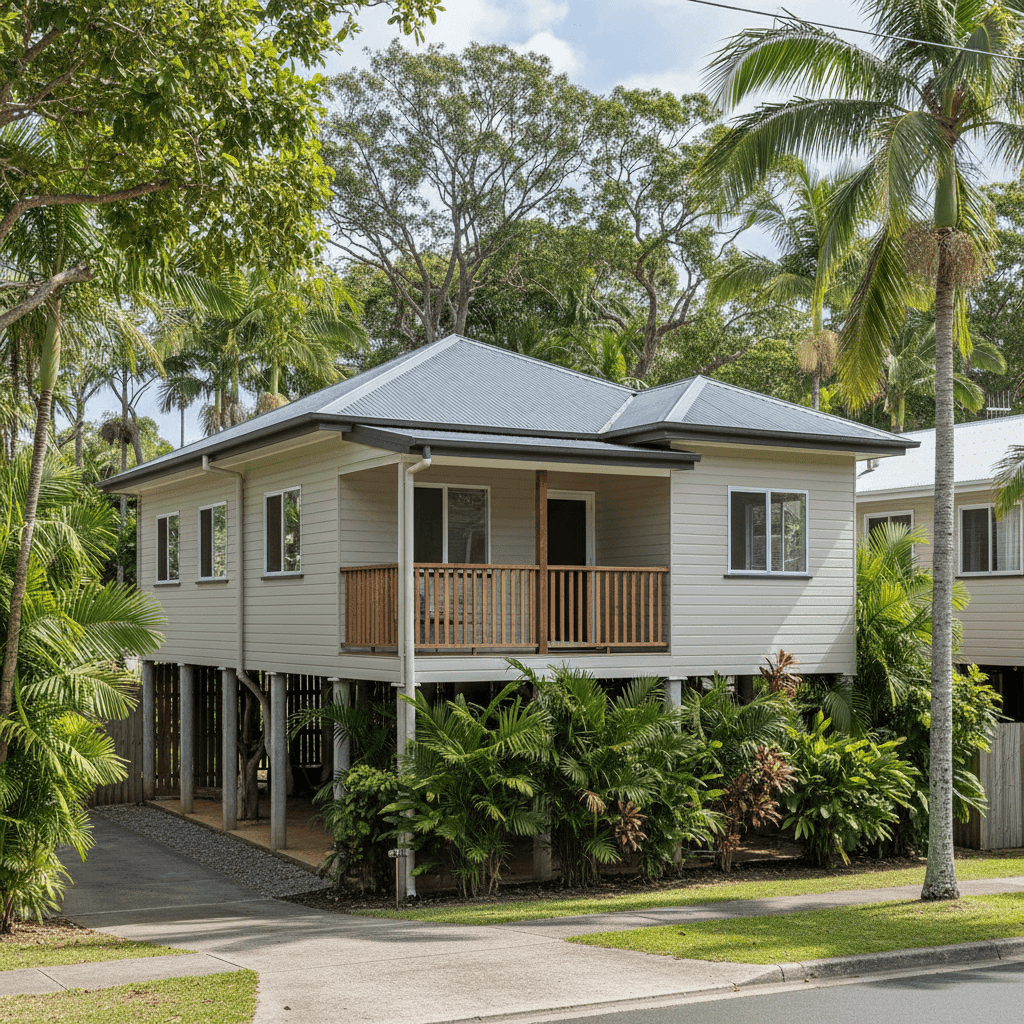
Holloways Beach is a quiet coastal suburb just north of Cairns, known for its relaxed beachside lifestyle and proximity to the Great Barrier Reef. It's the kind of place many Australians dream of calling home — but insuring a property here comes with some very real financial considerations. This article breaks down a recent building insurance quote for a one-bedroom free standing home in the area, puts the premium in context, and offers practical guidance for homeowners navigating the local insurance market.
---
Is This Quote Fair?
The quote in question comes in at $22,929 per year (or $2,197/month) for building-only cover on a 143 sqm free standing home, with a $1,000 building excess and a sum insured of $350,000.
Our price rating for this quote is Expensive — Above Average.
To put that into perspective: the average home insurance premium across Queensland sits at around $9,129 per year, and the national average is $5,347 per year. This quote is more than double the state average and more than four times the national average. Even within the Cairns Local Government Area — itself one of the more expensive insurance markets in Australia — the average premium is $12,404 per year, meaning this quote is still significantly above what most comparable properties in the region are paying.
That said, "expensive" doesn't automatically mean "wrong." Premiums are calculated based on a wide range of risk factors, and Holloways Beach has several characteristics that genuinely push costs higher. The key question is whether the specific features of this property justify a premium at this level — and whether shopping around might yield a more competitive result.
---
How Holloways Beach Compares
Here's how this quote stacks up against the available benchmarks:
| Benchmark | Premium |
|---|---|
| This quote | $22,929/yr |
| Suburb average (Holloways Beach) | $6,875/yr |
| Suburb median | $5,789/yr |
| Suburb 75th percentile | $9,158/yr |
| LGA average (Cairns) | $12,404/yr |
| QLD state average | $9,129/yr |
| National average | $5,347/yr |
| National median | $2,764/yr |
Even at the 75th percentile for the suburb — meaning 75% of quotes are cheaper — premiums in Holloways Beach reach $9,158 per year. This quote sits well above that threshold, placing it in the most expensive tier of outcomes for the area.
It's worth noting that the suburb sample size is relatively small (8 quotes), so the local averages should be interpreted with some caution. Still, the gap between this quote and every available benchmark is substantial enough to warrant a closer look — and a comparison shop.
You can explore the full pricing data for Holloways Beach on CoverClub, or compare it against Queensland-wide statistics and national home insurance averages.
---
Property Features That Affect Your Premium
Several characteristics of this property are likely contributing to its elevated premium. Understanding these factors can help homeowners make more informed decisions — both when buying coverage and when considering property improvements.
Cyclone Risk Area
This is almost certainly the single biggest driver of cost. Holloways Beach falls within a designated cyclone risk zone, and insurers price this risk heavily. Far North Queensland is one of the most cyclone-exposed regions in Australia, and premiums in the area reflect the potential for significant structural damage from severe weather events. This is a risk that cannot be avoided simply by choosing a different insurer — it's baked into the geography.
Elevated Construction
The home is elevated by at least one metre, which is actually a positive risk factor in many respects. Elevated homes tend to perform better in flood events, which can reduce certain types of claims. However, elevated structures can also be more vulnerable to wind uplift during cyclones, which some insurers factor into their pricing.
Hardiplank / Hardiflex External Walls
Fibre cement cladding like Hardiplank and Hardiflex is a popular choice in Queensland for good reason — it's durable, resistant to moisture, and performs reasonably well in high-wind environments. Insurers generally view this material favourably compared to weatherboard or other timber cladding.
Steel / Colorbond Roof
Colorbond roofing is widely regarded as one of the better choices for cyclone-prone areas. It's lightweight, strong, and purpose-built for Australian conditions. This should, in theory, work in the homeowner's favour when insurers assess risk.
Slab Foundation & Modern Construction (2020)
Built in 2020, this is a relatively new home, which typically means it was constructed to current building codes — including the more stringent cyclone-resistance standards introduced in Queensland in recent decades. Newer builds on slab foundations are generally viewed as lower risk than older properties.
Vinyl Flooring & Standard Fittings
These are fairly neutral factors from an insurance perspective. Standard fittings and vinyl flooring suggest a modest replacement cost, which is consistent with the $350,000 sum insured for a 143 sqm home.
---
Tips for Homeowners in Holloways Beach
1. Compare Multiple Insurers — Seriously
The spread between the cheapest and most expensive quotes in cyclone-prone areas can be enormous. Different insurers model cyclone risk differently, and some have far more appetite for this type of exposure than others. Getting at least three to five quotes is essential — not just a nice-to-have. Start comparing quotes on CoverClub to see what's available for your specific property.
2. Review Your Sum Insured Carefully
At $350,000 for a 143 sqm home built in 2020 with standard fittings, it's worth verifying that this figure accurately reflects your rebuild cost — not the market value of the property. Overinsuring pushes premiums up unnecessarily, while underinsuring can leave you seriously exposed after a major event. A quantity surveyor can provide a professional rebuild estimate if you're unsure.
3. Ask About Cyclone Mitigation Discounts
Some insurers offer premium reductions for homes that have undergone cyclone-proofing improvements — things like roof tie-downs, impact-resistant windows, or cyclone shutters. Given that this home was built in 2020, it may already meet current standards, but it's worth confirming with your insurer and asking whether any documentation of compliance can support a lower premium.
4. Consider Your Excess Strategy
This quote carries a $1,000 building excess. Opting for a higher voluntary excess — say, $2,500 or $5,000 — can meaningfully reduce your annual premium. In a cyclone-prone area, where you're primarily insuring against catastrophic events rather than minor claims, a higher excess can be a sensible trade-off.
---
Ready to Find a Better Deal?
Home insurance in Holloways Beach is undeniably expensive — but that doesn't mean every quote has to be this high. CoverClub makes it easy to compare building insurance options for your specific property, so you can see exactly where your current quote sits relative to the market. Get a quote today at CoverClub and find out if you could be paying less for the same level of cover.