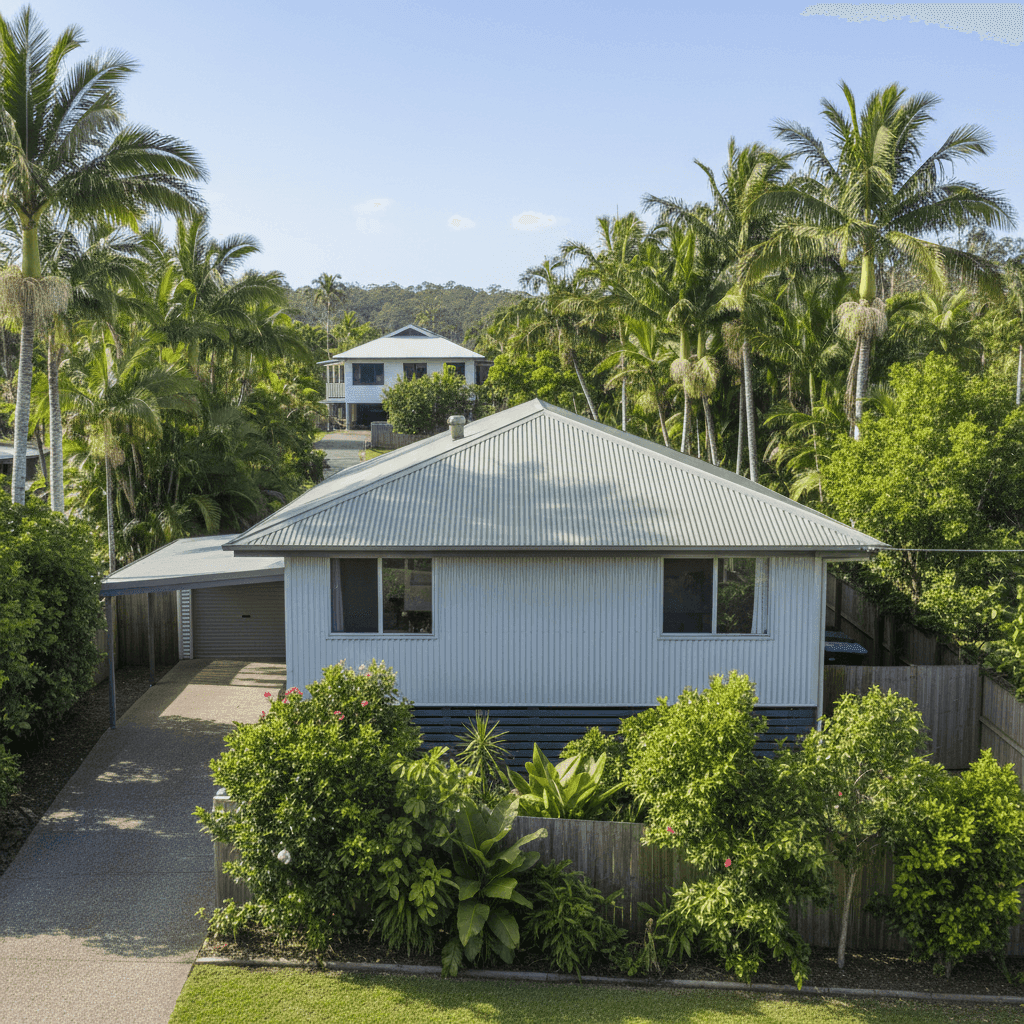
If you own a free standing home in Holloways Beach, QLD 4878, you already know this beachside suburb north of Cairns comes with a lifestyle most Australians can only dream about — but it also comes with some of the most challenging home insurance conditions in the country. This article breaks down a real building-only insurance quote for a 2-bedroom, 1-bathroom home in the area, compares it against local, state, and national benchmarks, and offers practical guidance for keeping your premiums as manageable as possible.
---
Is This Quote Fair?
The quote in question sits at $39,643 per year (or $3,799/month) for building-only cover on a 2-bedroom free standing home, with a building excess of $2,000 and a sum insured of $500,000.
Our price rating for this quote is EXPENSIVE — above average for the suburb.
To put that in context: the suburb average for Holloways Beach sits at around $6,875 per year, and the median is $5,789 per year. This quote is nearly six times the local median — a significant gap that warrants a closer look. Even at the 75th percentile of local quotes (i.e., among the priciest quarter of properties in the area), premiums sit at $9,158 per year. This quote eclipses that figure by a wide margin.
That said, it's important to understand why this premium is so elevated before drawing conclusions. Several property-specific and geographic factors are likely driving the cost — more on those below.
---
How Holloways Beach Compares
To understand just how unusual this quote is, it helps to look at the broader picture. Here's how Holloways Beach stacks up against Queensland and national figures:
| Benchmark | Average Premium | Median Premium |
|---|---|---|
| Holloways Beach (suburb) | $6,875/yr | $5,789/yr |
| Cairns LGA | $12,404/yr | — |
| Queensland | $9,129/yr | $3,903/yr |
| National | $5,347/yr | $2,764/yr |
(Based on [Holloways Beach suburb data](https://coverclub.com.au/stats/QLD/4878/holloways-beach), [QLD state data](https://coverclub.com.au/stats/QLD), and [national data](https://coverclub.com.au/stats/national) from CoverClub.)
A few things stand out here. First, Queensland's average premium of $9,129 is already well above the national average of $5,347 — a reflection of the state's elevated exposure to severe weather events including cyclones, flooding, and storm surge. Second, the Cairns LGA average of $12,404 per year is notably higher than the broader QLD figure, illustrating just how much insurers price in the cyclone risk specific to Far North Queensland.
Even so, this particular quote — at $39,643 — sits dramatically above the Cairns LGA average. It's worth noting that the suburb sample size is relatively small (8 quotes), so local averages may not fully capture the range of outcomes for properties with specific risk characteristics. Still, this quote is an outlier by any measure.
---
Property Features That Affect Your Premium
Several characteristics of this property are likely contributing to the elevated premium:
📍 Cyclone Risk Area
This is almost certainly the single biggest driver. Holloways Beach falls within a designated cyclone risk zone, meaning insurers apply significant loadings to account for the potential cost of a major tropical cyclone event. Far North Queensland has a well-documented history of cyclone damage, and insurers price this risk accordingly — sometimes aggressively.
🏠 Aluminium External Walls
Aluminium cladding is relatively common in tropical Queensland, offering good resistance to moisture and corrosion. However, it can be viewed by some insurers as less robust than brick or rendered masonry in high-wind events, which may contribute to a higher risk assessment.
🏗️ Construction Era (1987)
A home built in 1987 predates some of the stricter cyclone-resistant building codes introduced in Queensland following Cyclone Tracy and later updated after Cyclone Larry (2006) and Cyclone Yasi (2011). Older homes may be assessed as more vulnerable to wind damage, which can push premiums higher.
🔩 Steel/Colorbond Roof
Colorbond roofing is durable and widely used across Queensland. However, in cyclone-prone areas, insurers still consider the age and condition of the roof when calculating risk. A roof from 1987 — even if well maintained — may attract scrutiny.
🧱 Slab Foundation
A concrete slab foundation is generally considered stable and is common in Queensland's coastal areas. This is unlikely to be a negative factor, but it's worth noting for completeness.
❄️ Ducted Climate Control
The presence of ducted air conditioning adds to the overall replacement value of the home, which can nudge the sum insured — and therefore the premium — upward.
💰 Sum Insured: $500,000
At $500,000 for a 153 sqm home, the sum insured is on the higher end. Building replacement costs in cyclone-prone areas are elevated due to the need for cyclone-rated materials and construction practices, so this figure may well be appropriate — but it's worth reviewing with a quantity surveyor or using an online building calculator to ensure accuracy.
---
Tips for Homeowners in Holloways Beach
1. Get Multiple Quotes
With a premium this far above the local average, shopping around is essential. Different insurers assess cyclone risk differently, and the spread between the cheapest and most expensive quotes in cyclone zones can be enormous. Use CoverClub's free quote comparison tool to see what other insurers are offering for your property.
2. Review Your Sum Insured
Over-insuring your home means you're paying a higher premium than necessary. Commissioning a professional building replacement cost assessment — or using a reputable online calculator — can help you arrive at a more accurate sum insured. Even a modest reduction could translate to meaningful savings.
3. Invest in Cyclone Mitigation
Some insurers offer premium discounts for homes that have undergone cyclone-proofing upgrades, such as cyclone straps on the roof, impact-resistant windows and doors, or other structural improvements. Given the age of this home (1987), a professional assessment of its cyclone resilience could be worthwhile — both for safety and potential insurance savings.
4. Consider a Higher Excess
Opting for a higher building excess (currently $2,000) can reduce your annual premium. If you have the financial capacity to cover a larger out-of-pocket expense in the event of a claim, this trade-off may make sense. Ask your insurer for a quote with excess options of $2,500, $5,000, or higher to see the impact on your premium.
---
Compare Your Home Insurance Today
Whether this quote is right for your property or not, the best way to know is to compare. CoverClub makes it easy to see what multiple insurers would charge for your specific home — in seconds, with no obligation. Get a free quote at CoverClub and find out if you could be paying less for the same level of cover.
For more data on home insurance costs in your area, visit the Holloways Beach suburb stats page, explore Queensland-wide insurance trends, or check out national home insurance benchmarks.