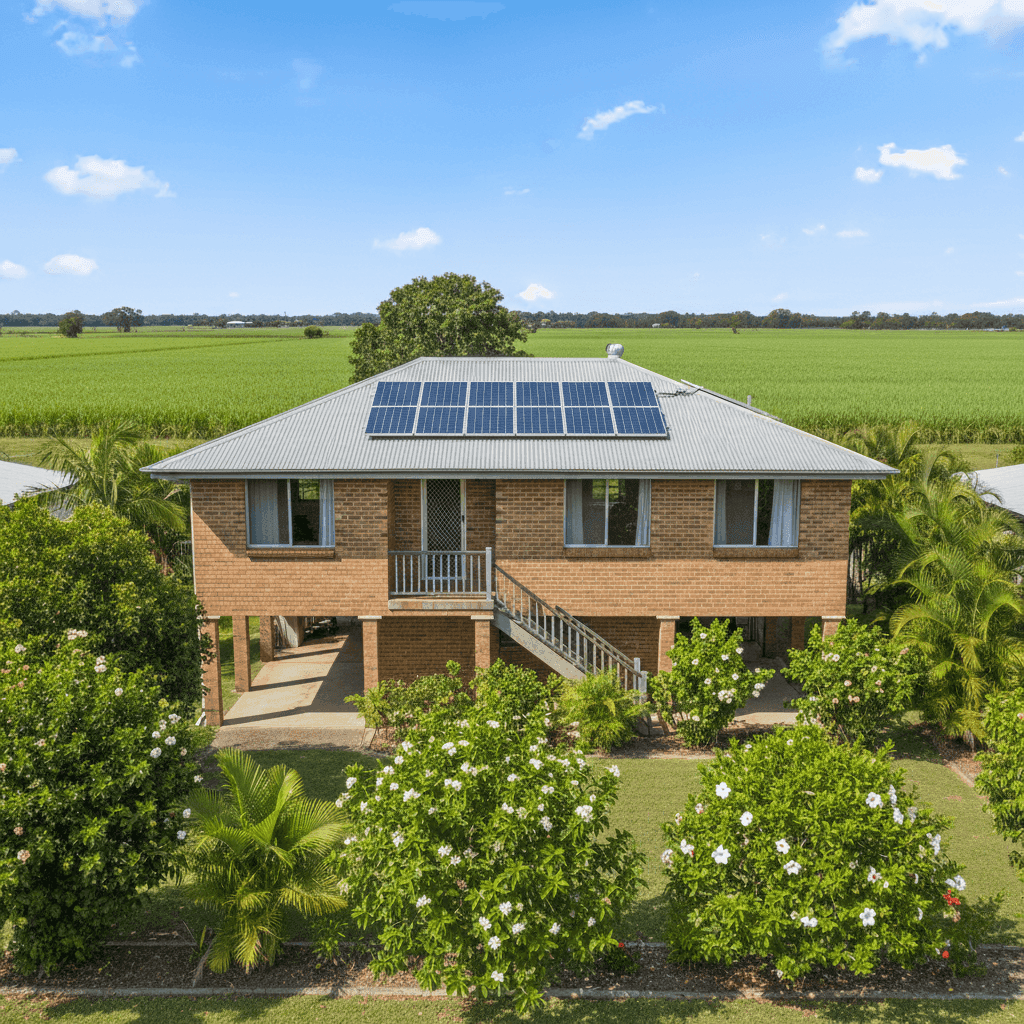
Home Hill is a small, tight-knit town in Queensland's Burdekin region — known for its sugar cane fields, tropical climate, and the kind of character-filled homes that have stood for decades. If you own a free standing home in this postcode, you already know that insurance isn't cheap. Cyclone risk, ageing construction, and a regional location all push premiums well above what most Australians pay. This article breaks down a real home and contents insurance quote for a 3-bedroom property in Home Hill (QLD 4806), and puts the numbers into context so you can judge whether your own premium stacks up.
---
Is This Quote Fair?
The annual premium for this property came in at $7,753 per year (or $775/month), covering both building (insured to $675,000) and contents ($50,000). The building excess is $2,000 and the contents excess is $1,000.
Our price rating for this quote is FAIR — Around Average.
That might sound alarming at first glance — nearly $8,000 a year is a significant household expense. But when you understand the risk profile of this property and its location, the figure starts to make more sense. Home Hill sits firmly in a cyclone risk zone, which alone can multiply premiums several times over compared to southern states. Add in a 1979 construction year, stump foundations, and a brick veneer exterior, and insurers are pricing in a genuinely elevated risk.
A "Fair" rating means this quote is broadly in line with what comparable properties in the area are attracting. It's not a bargain, but it's not an outlier either — and in a high-risk regional market, that's actually a reasonable outcome.
---
How Home Hill Compares
To understand what "fair" really means here, it helps to zoom out and look at the broader picture. Here's how this premium sits across different benchmarks:
| Benchmark | Average Premium | Median Premium |
|---|---|---|
| Home Hill (4806) | $10,223/yr | $8,003/yr |
| Burdekin LGA | $8,726/yr | — |
| Queensland | $4,547/yr | $3,931/yr |
| National | $2,965/yr | $2,716/yr |
At $7,753, this quote sits below both the suburb average and median for Home Hill — a positive sign. It's also below the Burdekin LGA average of $8,726. You can explore the full breakdown of local pricing on our Home Hill suburb stats page.
That said, the spread of premiums in this postcode is wide. Based on 95 quotes sampled in the area, the 25th percentile sits at $4,875/yr while the 75th percentile reaches $13,663/yr. That's a $8,788 gap between cheaper and more expensive policies — a reminder that shopping around in this market can make an enormous difference.
Compared to the Queensland state average of $4,547/yr, this premium is roughly 70% higher. And against the national average of $2,965/yr, it's more than double. These comparisons aren't meant to alarm — they simply reflect the reality of insuring a property in a cyclone-prone region of Far North Queensland.
---
Property Features That Affect Your Premium
Several characteristics of this particular home have a meaningful impact on what insurers charge. Here's what's at play:
Cyclone Risk Zone
This is the single biggest premium driver. Home Hill is classified as a cyclone risk area, and insurers price this in heavily. Cyclone damage can be catastrophic and widespread, and the cost of rebuilding in regional Queensland after a major event is substantial. There's no getting around this — it's a geographic reality.
Construction Era (1979)
Homes built in the late 1970s were constructed to different standards than modern builds. While many are structurally sound, older homes can present higher risk for electrical faults, plumbing issues, and roofing vulnerabilities — all factors insurers weigh when calculating premiums.
Stump Foundations
The property sits on stumps, elevated by less than 1 metre. This style is common in Queensland and offers some protection against flooding and moisture. However, elevated homes can also be more exposed to wind uplift during cyclonic events, which insurers factor into their risk models.
Brick Veneer Walls
Brick veneer is generally considered a moderate-risk construction type — more resilient than timber weatherboard, but not as robust as full double brick. In cyclone zones, wall construction plays a role in how an insurer assesses structural vulnerability.
Steel/Colorbond Roof
Colorbond roofing is durable and widely used across Queensland. It performs reasonably well in high winds when properly installed and maintained. This is a neutral-to-positive factor from an insurer's perspective.
Solar Panels
The property has solar panels installed, which adds a small amount of replacement value to the building sum insured. Some insurers include solar panels under the building policy automatically; others may require them to be specifically listed. It's worth confirming your policy covers them.
Sum Insured: $675,000
The building is insured for $675,000, which reflects the cost to rebuild — not the market value of the property. In regional Queensland, rebuild costs can be high due to the logistics of getting materials and tradespeople to the area. Ensuring your sum insured is accurate is critical.
---
Tips for Homeowners in Home Hill
If you're paying for home insurance in this area, here are four practical steps worth considering:
1. Shop the market — every year. The 25th-to-75th percentile spread in Home Hill is enormous. Loyalty rarely pays in insurance, and a different insurer may price your specific risk very differently. Use a comparison tool like CoverClub to see multiple quotes side by side.
2. Review your sum insured regularly. Construction costs have risen sharply across Australia in recent years. If your building sum insured hasn't been updated in a few years, you may be underinsured — meaning you'd face a significant shortfall in a total loss scenario. Consider getting a professional building valuation or using an online rebuild cost calculator.
3. Check your cyclone-specific policy terms. Not all policies treat cyclone damage the same way. Some have separate cyclone excess clauses, waiting periods, or exclusions for certain types of damage. Read the Product Disclosure Statement (PDS) carefully, particularly the sections on storm, wind, and cyclone cover.
4. Confirm your solar panels are covered. With solar panels on the roof, make sure your policy explicitly covers them — both for storm damage and for any liability arising from electrical faults. Ask your insurer directly if you're unsure, and keep records of your system's installation and value.
---
Ready to Compare?
Whether you're reviewing an existing policy or shopping for the first time, it pays to see what's available in the market. CoverClub makes it easy to compare home and contents insurance quotes for properties across Queensland — including high-risk postcodes like Home Hill. Get a quote today and see how your premium stacks up.