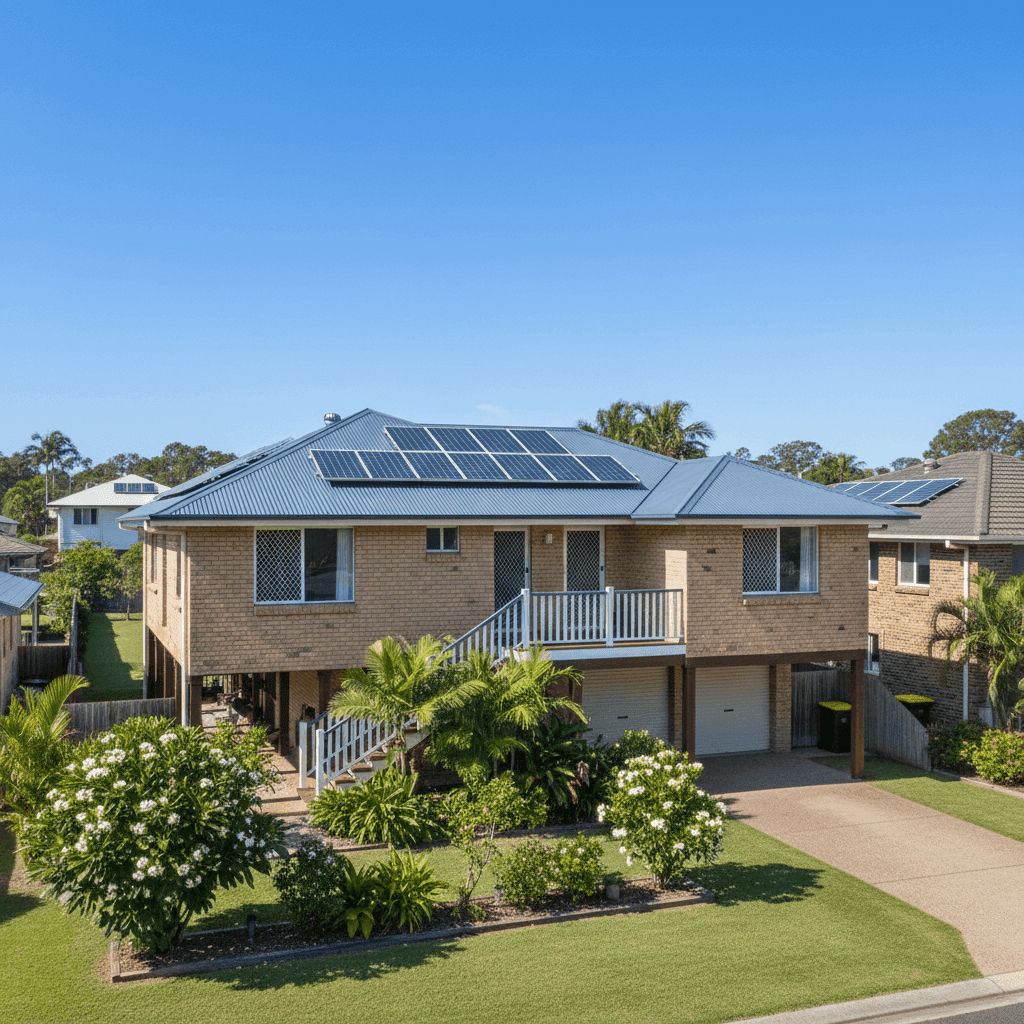
If you own a free standing home in Home Hill, QLD 4806, you already know that insurance isn't cheap in this part of North Queensland. Sitting in the heart of the Burdekin region, Home Hill is a cyclone-prone area with a relatively small but telling pool of insurance data — and premiums here tell quite a story. This article breaks down a real home and contents insurance quote for a three-bedroom property in the suburb, compares it against local, state, and national benchmarks, and offers practical advice for homeowners looking to manage their costs.
---
Is This Quote Fair?
The quote in question comes to $6,177 per year (or $618/month) for a combined home and contents policy, covering a building sum insured of $385,000 and contents valued at $50,000. The building excess is $2,000 and the contents excess is $1,000.
Our price rating for this quote is FAIR — Around Average.
That might sound reassuring at first glance, but it's important to understand what "average" means in the context of Home Hill. Based on 95 quotes collected for the 4806 postcode, the suburb average premium sits at $10,223 per year, with a median of $8,003. This quote, at $6,177, actually lands below both of those figures — closer to the 25th percentile of $4,875 than the median.
So while it's rated "fair" relative to comparable properties and cover levels, the homeowner is actually doing reasonably well compared to many of their neighbours. The wide spread between the 25th percentile ($4,875) and the 75th percentile ($13,663) highlights just how variable premiums can be in this area — a $8,788 gap depending on your insurer, property characteristics, and cover selections.
---
How Home Hill Compares
To put this quote in broader perspective, it's worth zooming out to Queensland-wide data and national figures.
| Benchmark | Average Premium | Median Premium |
|---|---|---|
| Home Hill (4806) | $10,223/yr | $8,003/yr |
| LGA (Burdekin) | $7,319/yr | — |
| Queensland | $4,547/yr | $3,931/yr |
| National | $2,965/yr | $2,716/yr |
The numbers are stark. Home Hill's average premium is more than double the Queensland state average and more than three times the national median. Even the Burdekin LGA average of $7,319 — which encompasses a wider area — sits well above state and national norms.
This isn't a reflection of poor value from insurers; it's a reflection of genuine risk. Home Hill is located in a declared cyclone risk zone, sits near the Burdekin River (raising flood exposure), and has a housing stock that includes many older homes. These are real factors that drive up the cost of claims — and therefore premiums — across the board.
For this particular homeowner, a quote of $6,177 represents meaningful savings against the suburb average of $10,223 — a difference of over $4,000 per year. Choosing the right insurer and structuring your policy carefully clearly makes a significant difference.
---
Property Features That Affect Your Premium
Several characteristics of this property directly influence what insurers charge. Understanding them helps you make sense of your quote — and potentially find ways to reduce it.
Cyclone risk area: This is the single biggest premium driver for homes in Home Hill. Properties in North Queensland's cyclone belt attract significant loadings from most insurers, who factor in the cost of wind, rain, and storm damage when pricing policies. There's no getting around this — it's a geographic reality.
Construction year (1979): Homes built in the late 1970s predate modern cyclone-resistant building codes, which were significantly strengthened following Cyclone Tracy in 1974 and further refined in subsequent decades. Older homes may have less robust roof-to-wall connections and structural ties, which increases risk in the eyes of insurers.
Brick veneer walls and Colorbond roof: Brick veneer is a widely accepted construction type that performs reasonably well in most conditions. Colorbond steel roofing is durable and relatively low-maintenance, and is generally viewed favourably by insurers compared to older roofing materials like terracotta tiles or asbestos sheeting.
Elevated on stumps (less than 1m): Homes on stumps have some flood resilience advantage over slab-on-ground construction, though at less than one metre of elevation, the protection is modest. Stump foundations are common in Queensland and are generally well understood by insurers.
Solar panels: The presence of solar panels adds replacement value to the property. Homeowners should confirm with their insurer whether solar panels are covered under the building policy and up to what limit — some policies cap or exclude them unless specifically noted.
Vinyl flooring and standard fittings: These are cost-effective choices that keep the overall replacement value of the home at a more manageable level, which in turn helps moderate the building sum insured and, by extension, the premium.
---
Tips for Homeowners in Home Hill
1. Shop around — the spread is enormous. With a 25th-to-75th percentile range of nearly $9,000 in this suburb, the insurer you choose matters enormously. Don't accept a renewal quote without comparing it. Get a fresh quote through CoverClub to see where your current policy sits relative to the market.
2. Review your sum insured carefully. Underinsurance is a serious risk, particularly in cyclone-prone areas where rebuilding costs can escalate quickly after a major event. Make sure your $385,000 building sum insured reflects current construction costs in the Burdekin region — these have risen significantly in recent years due to labour and materials inflation.
3. Consider your excess strategically. A $2,000 building excess is on the higher side, which helps keep the annual premium down. If you have sufficient savings to cover that excess in the event of a claim, this is a sensible trade-off. However, if a $2,000 outlay would be a financial strain, it may be worth modelling the premium difference with a lower excess.
4. Ask your insurer about cyclone mitigation discounts. Some insurers offer premium reductions for homes that have undergone cyclone-proofing upgrades — such as improved roof tie-downs, storm shutters, or re-roofing with compliant materials. Given the age of this home (built 1979), even modest improvements could qualify for a discount and provide genuine protection.
---
Compare Your Home Insurance Today
Whether you're reviewing a renewal or shopping for the first time, understanding where your premium sits in context is the first step to making a confident decision. CoverClub makes it easy to compare home and contents insurance quotes for properties across Queensland and beyond.
See suburb insurance stats for Home Hill · Explore QLD insurance data · View national benchmarks
Ready to see what you could be paying? [Get a quote at CoverClub today](https://coverclub.com.au/?focus=address) — it takes just a few minutes and could save you thousands.