Home Hill is a small but characterful town in Queensland's Burdekin region, sitting roughly halfway between Townsville and Bowen along the Bruce Highway. It's a community defined by its sugar cane heritage, tropical climate — and, as any local will tell you, its exposure to cyclone season. For homeowners here, getting the right insurance cover isn't just a formality; it's an essential part of protecting what is likely their most significant asset.
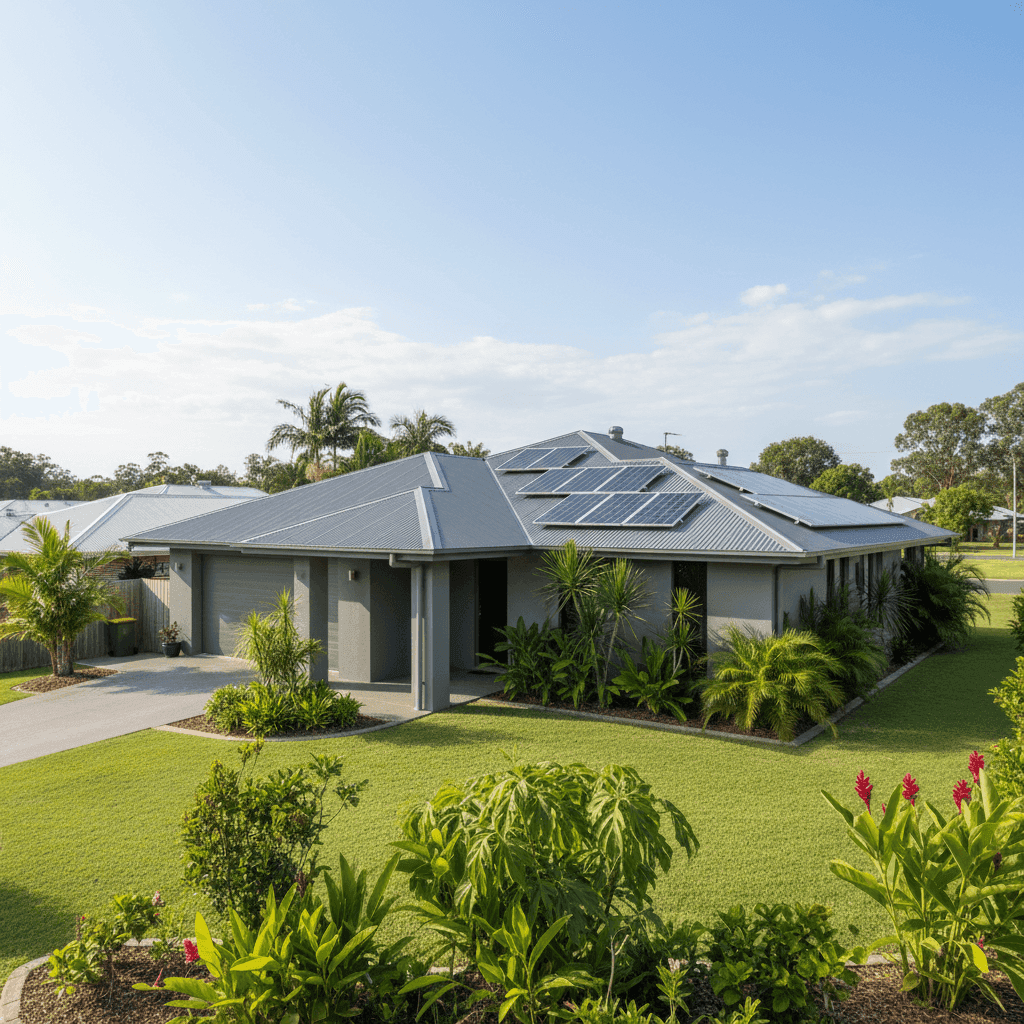
This article breaks down a real home and contents insurance quote for a five-bedroom, two-bathroom free-standing home in Home Hill (postcode 4806), built in 2021 with concrete external walls, a steel Colorbond roof, and a slab foundation. The property spans 325 sqm, features above-average fittings, tiled flooring, and has solar panels installed — a fairly modern and well-appointed home by any measure.
---
Is This Quote Fair?
The annual premium for this property came in at $12,770 per year (or $1,277/month), covering a building sum insured of $825,000 and contents valued at $80,000. The building excess is $3,000 and the contents excess is $1,000.
CoverClub's pricing analysis rates this quote as FAIR — around average for the area.
That rating holds up when you look at the local data. According to Home Hill suburb insurance statistics, the suburb average premium sits at $10,223/year, while the median is $8,003/year. This quote lands above both figures, but importantly, it falls well within the suburb's interquartile range — the 25th percentile is $4,875/year and the 75th percentile is $13,663/year. In other words, a quarter of comparable properties in Home Hill are quoted above $13,663, so at $12,770 this premium is on the higher side of the middle band but not an outlier.
Given the size of the home (325 sqm), the high building sum insured ($825,000), and the cyclone risk designation, a premium in this range is genuinely reasonable. Insurers price cyclone-prone areas with a significant loading, and that's reflected here.
---
How Home Hill Compares
The numbers tell a striking story when you zoom out from the suburb level.
| Benchmark | Premium |
|---|---|
| This quote | $12,770/yr |
| Home Hill suburb average | $10,223/yr |
| Home Hill suburb median | $8,003/yr |
| Burdekin LGA average | $7,319/yr |
| QLD state average | $4,547/yr |
| QLD state median | $3,931/yr |
| National average | $2,965/yr |
| National median | $2,716/yr |
This quote is roughly 2.8× the Queensland state average and more than 4× the national average. That's a significant gap — but it's one that reflects genuine risk rather than insurer opportunism.
Home Hill sits in a designated cyclone risk zone, which is one of the most heavily weighted factors in any insurer's pricing model. The Queensland state insurance statistics consistently show that premiums in North Queensland run far higher than the state average, which is itself elevated compared to the national picture. Coastal and near-coastal QLD communities bear the brunt of cyclone, flood, and storm surge risk, and insurance pricing reflects that reality.
The Burdekin LGA average of $7,319/year is a useful local reference point — this quote sits above it, but the LGA average includes smaller homes and lower sum-insured properties, so the comparison isn't entirely apples-to-apples.
---
Property Features That Affect Your Premium
Several characteristics of this home have a meaningful influence on its insurance cost — some pushing the premium up, others providing modest offsets.
Cyclone risk designation is the single biggest factor. Homes in cyclone-prone areas attract significant premium loadings because the potential for severe structural damage is real and well-documented. Insurers operating in North Queensland price this risk carefully.
Concrete external walls are actually a positive from an insurer's perspective. Concrete construction is highly resistant to wind damage, fire, and impact — all relevant perils in this region. Compared to weatherboard or lightweight cladding, concrete walls typically attract more favourable pricing.
Steel Colorbond roofing is similarly well-regarded. Colorbond is durable, resistant to corrosion, and performs well in high-wind events when correctly installed to cyclone standards. It's a common and sensible choice for North Queensland homes.
Slab foundation and tiled flooring contribute to the home's overall resilience profile. Slabs eliminate the underfloor void that can be vulnerable in flood events, and tiles are far more resistant to water damage than carpet or timber flooring — a meaningful consideration in a region prone to heavy tropical rainfall.
Above-average fittings quality increases the cost to rebuild and replace, which flows directly into the building sum insured and, in turn, the premium. A $825,000 sum insured for a 325 sqm home reflects the quality of inclusions and the elevated construction costs in regional Queensland.
Solar panels add a modest premium loading, as they represent an additional asset to insure and can complicate roof repairs following storm damage.
---
Tips for Homeowners in Home Hill
1. Make sure your building sum insured reflects true rebuild costs. Construction costs in regional Queensland have risen sharply in recent years. Underinsurance is a serious risk — if your sum insured doesn't cover the full cost to rebuild, you could face a significant shortfall after a major claim. Use a building cost calculator or speak with a quantity surveyor to validate your figure.
2. Review your cyclone preparedness and document it. Some insurers offer discounts or more competitive pricing for homes that meet or exceed cyclone construction standards (such as those outlined in AS 4055 or the Queensland Development Code). If your home was built to cyclone standards — which, given it was constructed in 2021, it almost certainly was — make sure your insurer is aware of this.
3. Compare quotes annually. The insurance market in North Queensland is competitive, and premiums can shift significantly between providers. Don't assume your renewal price is the best available. Getting a fresh quote through CoverClub takes minutes and could surface meaningfully better pricing.
4. Consider your excess settings carefully. This policy carries a $3,000 building excess and a $1,000 contents excess. Opting for a higher excess can reduce your annual premium, but make sure the excess is genuinely affordable in the event of a claim. In a cyclone-prone area where claims can be frequent and significant, a very high excess can become a financial burden.
---
Compare Your Home Insurance Options
Whether you're reviewing an existing policy or shopping for the first time, comparing quotes is the most effective way to ensure you're getting fair value. CoverClub makes it easy to benchmark your premium against real data from your suburb and state — so you can make an informed decision rather than simply accepting the first number you're given.
Get a home insurance quote for your Home Hill property and see how your premium stacks up against the market in minutes.