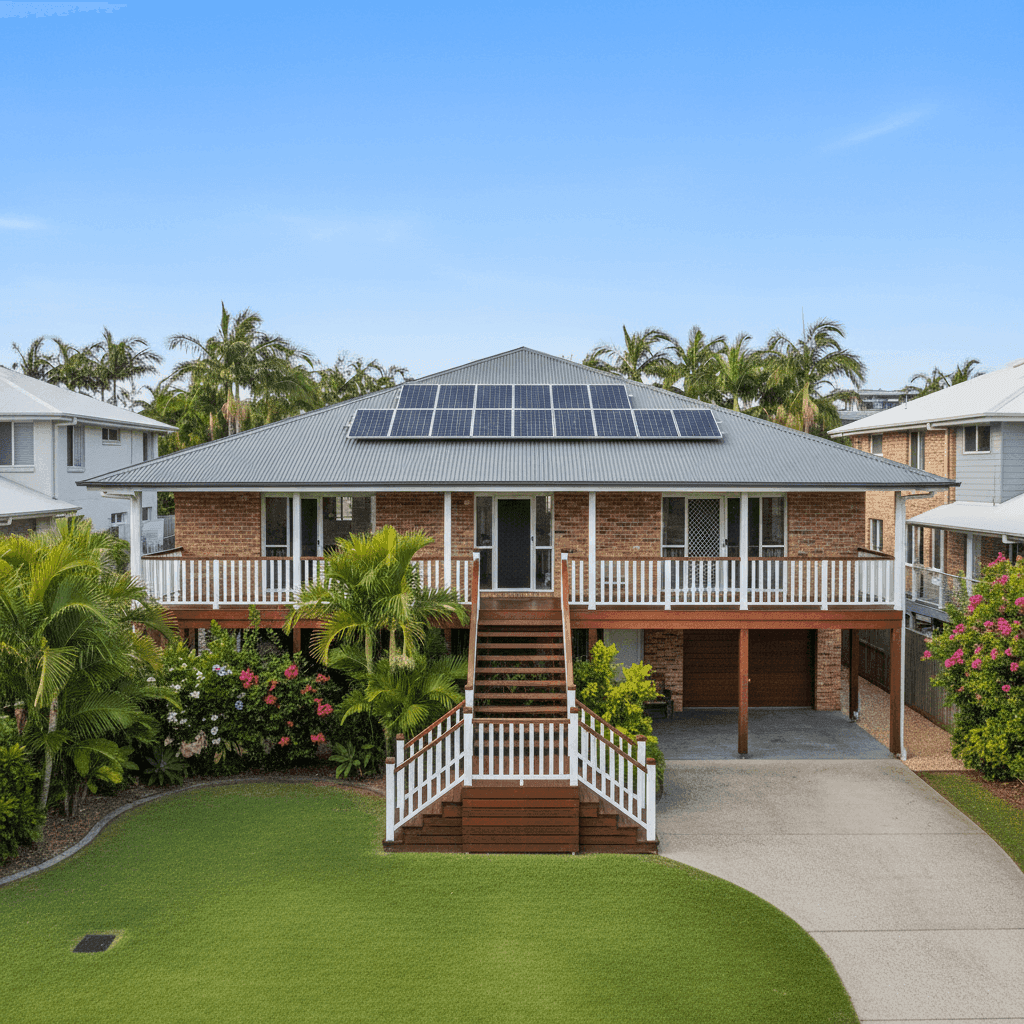
Hope Island, nestled within the Gold Coast's prized waterway corridor, is one of South-East Queensland's most sought-after residential addresses. But living in a premium suburb doesn't automatically mean paying a premium insurance bill — as this real quote for a three-bedroom, free-standing home in postcode 4212 clearly demonstrates. In this article, we break down what was quoted, why the price looks the way it does, and what homeowners in the area should know before renewing or shopping around.
---
Is This Quote Fair?
The short answer: yes — and then some. This quote came in at $2,687 per year (or $269/month) for combined home and contents cover, with a building sum insured of $469,000 and contents valued at $121,000. That earns it a "Cheap" price rating, meaning it sits well below the average for comparable properties in the area.
To put that in perspective, the suburb average for Hope Island (QLD 4212) sits at a substantial $7,397 per year, with a median of $5,067/yr across 479 quotes collected in the area. Even the 25th percentile — representing the cheaper end of the market locally — comes in at $3,482/yr. This quote beats that benchmark comfortably.
At $2,687/yr, this homeowner is paying roughly 64% less than the suburb average and about 47% less than the suburb median. That's a meaningful saving of over $4,700 annually compared to what many Hope Island residents are paying.
The excess structure is also worth noting: a $3,000 building excess and $1,000 contents excess. The higher building excess is a common lever insurers use to reduce premiums — accepting more out-of-pocket exposure in the event of a claim in exchange for lower ongoing costs. Whether that trade-off suits your financial situation is a personal decision, but for homeowners with strong emergency savings, it can be a smart strategy.
---
How Hope Island Compares
Hope Island is an outlier when it comes to insurance pricing — and not in a good way for most residents. The Gold Coast LGA average sits at $8,161 per year, which is notably higher than the broader Queensland state average of $4,547/yr and significantly above the national average of $2,965/yr.
| Benchmark | Annual Premium |
|---|---|
| This Quote | $2,687 |
| Hope Island Suburb Average | $7,397 |
| Hope Island Suburb Median | $5,067 |
| Hope Island 25th Percentile | $3,482 |
| Hope Island 75th Percentile | $10,486 |
| QLD State Average | $4,547 |
| QLD State Median | $3,931 |
| Gold Coast LGA Average | $8,161 |
| National Average | $2,965 |
| National Median | $2,716 |
What's driving Hope Island's elevated suburb average? A combination of factors: the area's proximity to waterways and canals raises flood and storm surge risk assessments for many properties; the high concentration of prestige homes inflates average sum-insured values; and the Gold Coast's broader exposure to severe weather events — including intense subtropical storms — keeps insurers cautious.
This particular quote, however, sits just below the national median of $2,716/yr, which is a remarkable result for a Gold Coast property.
---
Property Features That Affect Your Premium
Several characteristics of this property likely contributed to its competitive pricing:
Brick Veneer Construction Brick veneer is generally viewed favourably by insurers. It offers solid fire resistance and structural durability compared to lightweight cladding materials, which can translate to lower rebuild risk assessments.
Steel/Colorbond Roof Colorbond roofing is a strong performer in Queensland's climate. It handles heat, UV exposure, and moderate wind events well, and is less susceptible to hail damage than tiles in many scenarios. Insurers typically regard it as a lower-risk roofing material.
Elevated Foundation (At Least 1m) This is a significant factor. Being elevated by at least one metre provides meaningful protection against inundation from localised flooding and stormwater runoff — a real concern in the Hope Island area given its canal-side geography. Elevated homes often attract more favourable flood risk assessments.
Slab Foundation with Timber/Laminate Flooring A concrete slab foundation is structurally sound and low-maintenance. The timber and laminate flooring adds some contents complexity (these materials can be costly to replace after water damage), but overall the combination is standard for the era and region.
1987 Construction Homes built in the late 1980s sit in an interesting middle ground — old enough to potentially have some wear, but generally constructed to standards that predate some of the cost-cutting shortcuts seen in later decades. Renovations and maintenance history will play a role in how insurers assess the risk.
Solar Panels Solar panels are increasingly common and most modern home insurance policies cover them as part of the building. Their presence here doesn't dramatically affect the premium, but it's worth confirming with your insurer that panels are explicitly included in your building sum insured.
Ducted Climate Control Ducted air conditioning systems are a meaningful asset — and a costly one to repair or replace. Ensuring your building sum insured accounts for the full replacement cost of this system is important when setting your coverage level.
No Pool The absence of a pool removes one source of liability and maintenance risk that some insurers factor into their pricing.
---
Tips for Homeowners in Hope Island
1. Don't assume your neighbours are paying what you're paying The wide spread between Hope Island's 25th percentile ($3,482/yr) and 75th percentile ($10,486/yr) shows just how much premiums vary. Your property's specific flood zone classification, elevation, construction type, and insurer can all produce dramatically different outcomes. Always compare multiple quotes before renewing.
2. Review your building sum insured annually Construction costs in South-East Queensland have risen significantly in recent years. A sum insured of $469,000 for 153 sqm works out to roughly $3,065/sqm — which is within a reasonable range for a brick veneer home with standard fittings, but worth validating against current builder rates each year. Being underinsured at claim time can be a costly mistake.
3. Understand your flood and storm cover Hope Island's canal-adjacent setting means flood cover is not a detail to skim over. Check whether your policy covers riverine flooding, storm surge, and flash flooding separately — these are often defined differently in policy documents. Some insurers exclude certain flood types by default.
4. Leverage your elevation If your home is elevated and you're not already getting credit for it in your premium, make sure this detail is accurately recorded when you get quotes. Some comparison tools and insurers ask specifically about elevation, and it can meaningfully reduce your assessed risk — particularly for flood-related events.
---
Ready to See What You Could Pay?
Whether you're a Hope Island local or just researching the area, CoverClub makes it easy to compare home and contents insurance quotes side by side. With real pricing data from hundreds of properties across QLD 4212, you can see exactly where your quote sits — and whether there's a better deal waiting. Get a quote at CoverClub today and find out what your home is really worth insuring.