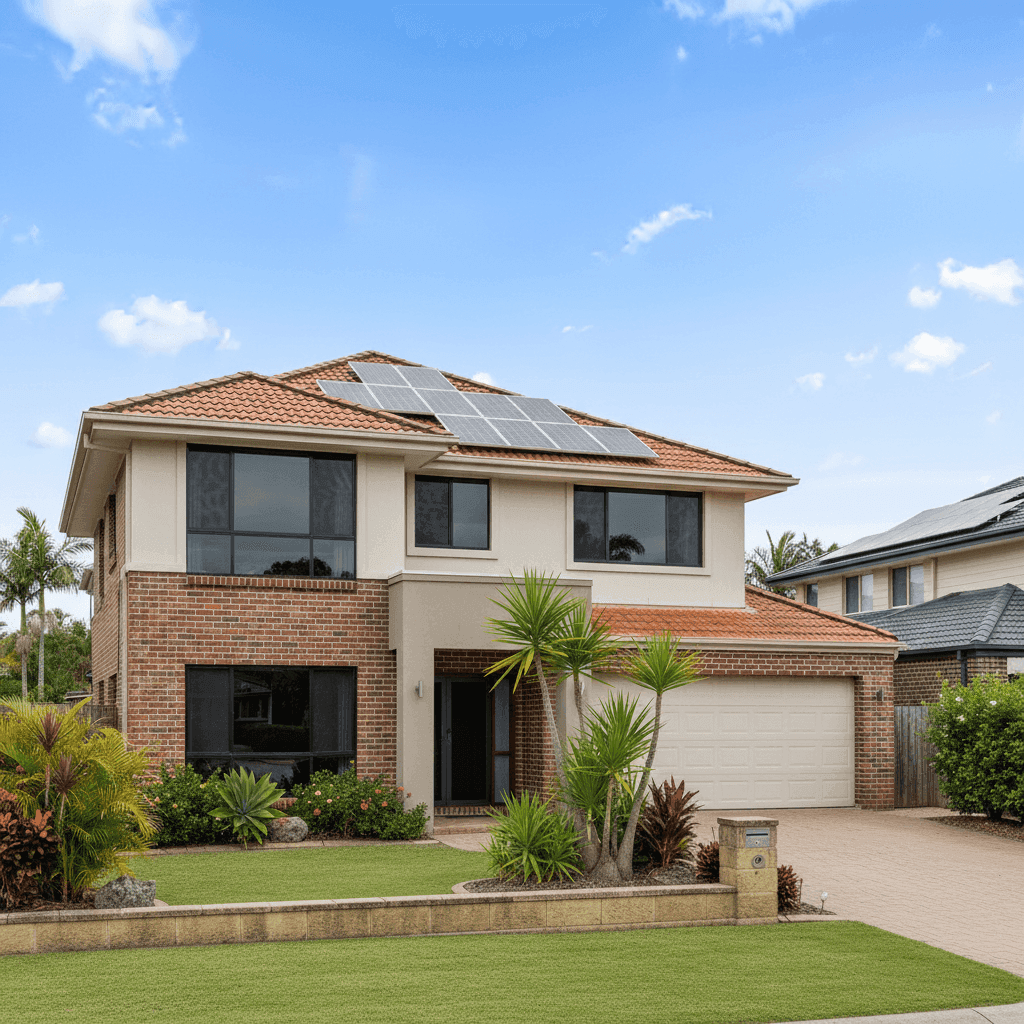
Hope Island, nestled within the Gold Coast's prestigious canal and lake network, is one of South-East Queensland's most sought-after addresses. It's a suburb of beautiful free standing homes, manicured streetscapes, and — as many homeowners discover — some surprisingly variable insurance premiums. This article takes a close look at a real home insurance quote for a four-bedroom, three-bathroom free standing home in Hope Island (postcode 4212) and unpacks what it means for you as a local homeowner.
---
Is This Quote Fair?
The quote in question comes in at $4,111 per year (or around $400 per month) for combined Home and Contents cover, with a building sum insured of $1,310,000 and contents valued at $175,000. Both the building and contents excess are set at $1,000.
Our price rating for this quote is FAIR — Around Average, and the data backs that up.
When you compare this figure against the Hope Island suburb average of $7,397/yr, this quote is sitting well below what many local homeowners are paying. In fact, it's also comfortably below the suburb median of $5,067/yr, placing it closer to the 25th percentile ($3,482/yr) than the middle of the pack. That's a meaningful saving — potentially thousands of dollars annually compared to neighbours with similar properties.
Zooming out to the state level, the Queensland average sits at $4,547/yr with a median of $3,931/yr. This quote at $4,111 sits neatly between those two figures — right in the heart of the QLD average range. So while it looks like great value against local Hope Island premiums, it's broadly in line with what Queenslanders pay across the board.
Against national benchmarks, the picture shifts slightly. The national average is $2,965/yr and the median is $2,716/yr — both considerably lower. However, it's important to understand why Queensland premiums tend to run higher than the national average, which we'll explore below.
---
How Hope Island Compares
The spread of premiums in Hope Island is striking. With 479 quotes analysed, the data tells a story of significant variation:
| Benchmark | Premium |
|---|---|
| Hope Island 25th Percentile | $3,482/yr |
| This Quote | $4,111/yr |
| Hope Island Median | $5,067/yr |
| Gold Coast LGA Average | $5,494/yr |
| Hope Island Average | $7,397/yr |
| Hope Island 75th Percentile | $10,486/yr |
| QLD State Average | $4,547/yr |
| National Average | $2,965/yr |
The sheer range — from $3,482 at the 25th percentile all the way to $10,486 at the 75th — reflects just how much individual property characteristics, insurer selection, and coverage levels can influence what you pay. The fact that this quote lands below both the suburb median and the Gold Coast LGA average of $5,494/yr suggests it represents genuine value in context.
Queensland's elevated premiums compared to the national average are largely driven by the state's exposure to severe weather events — cyclones, flooding, hailstorms, and storm surge. Even in areas like Hope Island that fall outside designated cyclone risk zones, insurers price in the broader Queensland weather environment. You can explore more suburb-level data on the Hope Island stats page.
---
Property Features That Affect Your Premium
Several characteristics of this particular property are worth examining through an insurance lens.
Brick Veneer Construction & Tiled Roof Brick veneer walls combined with a tiled roof is a well-regarded combination from an insurer's perspective. These materials offer solid resistance to fire and wind damage, and are generally viewed more favourably than lightweight cladding or metal roofing in storm-prone regions. This construction profile can contribute to more competitive premiums.
Slab Foundation A concrete slab foundation is standard for Queensland homes built in the 2000s and generally presents fewer underwriting concerns than older stumped or timber-framed foundations. It's a neutral-to-positive factor in premium pricing.
Built in 2009 At around 15–16 years old, this home is relatively modern. Newer builds tend to comply with more recent building codes — particularly those updated after major weather events — which can translate to lower risk profiles and, in turn, more competitive premiums.
Above-Average Fittings Quality With above-average fittings, the $1,310,000 building sum insured reflects the cost to fully rebuild a well-appointed home of 214 sqm in today's construction market. Getting the sum insured right is critical — underinsurance remains one of the most common and costly mistakes Australian homeowners make.
Solar Panels This property has solar panels, which adds a specific coverage consideration. Not all policies automatically cover solar systems as part of the building, so it's worth confirming with your insurer that panels, inverters, and associated wiring are explicitly included in your policy.
Ducted Climate Control Ducted air conditioning systems are a significant fixed asset and should be covered under the building sum insured. Given the Queensland climate, these systems are also subject to wear and potential storm damage — another reason to ensure your sum insured is adequate.
No Pool The absence of a pool removes one layer of liability and maintenance risk that insurers factor into some policies, which can be a modest premium benefit.
---
Tips for Homeowners in Hope Island
1. Review Your Sum Insured Annually Construction costs in South-East Queensland have risen sharply in recent years. A sum insured of $1,310,000 may be appropriate today, but it's worth reassessing each renewal to ensure it still reflects the true cost of rebuilding your home — including fittings, fixtures, and permanent features like your ducted system and solar installation.
2. Confirm Solar Panel Coverage Ask your insurer directly whether your solar panels and inverter are covered under the building section of your policy, and to what value. Some insurers cap coverage or require separate endorsement. Don't assume — get it in writing.
3. Shop Around at Renewal The wide premium spread in Hope Island (from $3,482 to over $10,486) shows that insurer pricing varies enormously for similar properties. Your current insurer may not be the most competitive option at renewal. Comparing quotes annually is one of the simplest ways to avoid overpaying.
4. Consider Your Excess Carefully Both the building and contents excess on this policy are set at $1,000. Opting for a higher excess can reduce your annual premium, but make sure it's an amount you could comfortably cover out of pocket in the event of a claim. For a home of this value, a $1,000 excess is reasonable, but it's worth modelling the savings against a higher excess option.
---
Compare Your Home Insurance with CoverClub
Whether you're renewing your existing policy or insuring a new property in Hope Island, it pays to see what the market has to offer. CoverClub aggregates real quote data from across Australia to help you understand whether you're getting a fair deal — and find a better one if you're not.
Get a home insurance quote today and see how your premium stacks up against your neighbours, your state, and the national average. It takes minutes and could save you thousands.