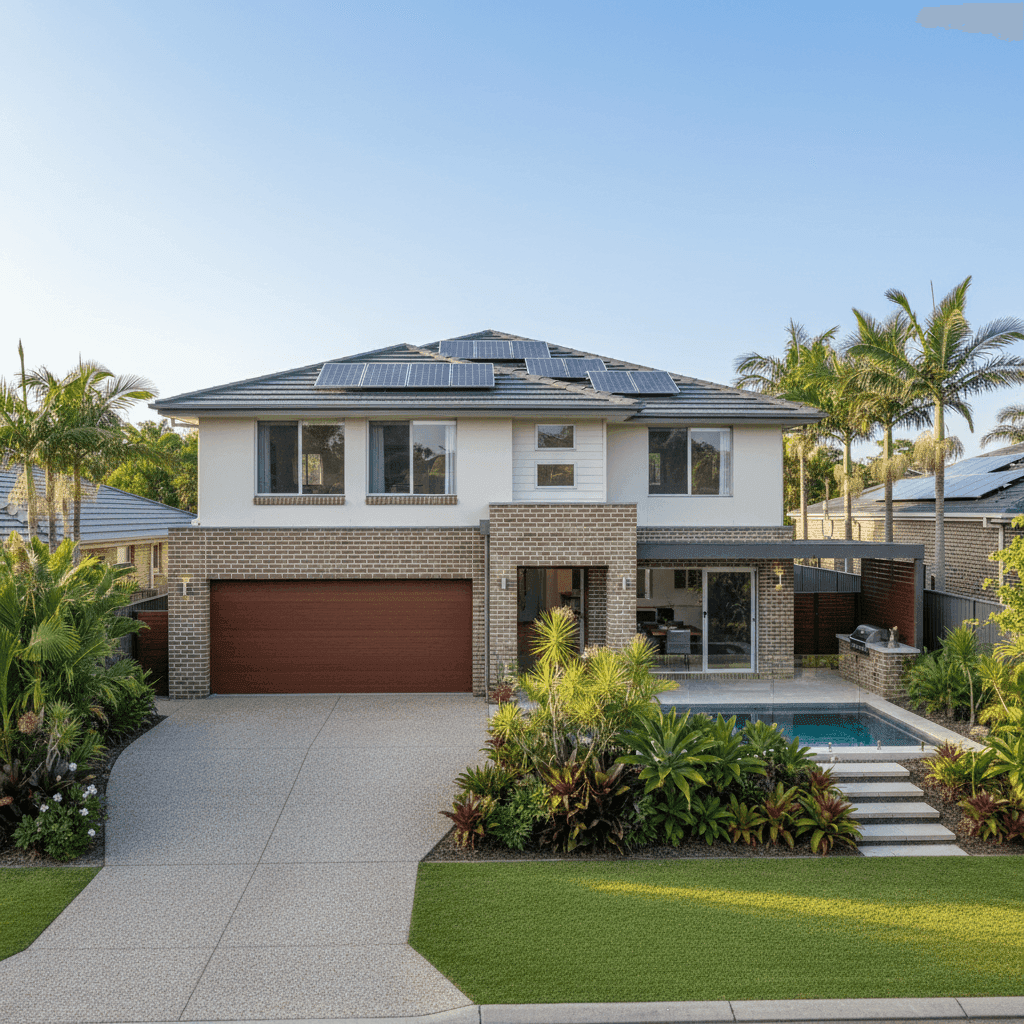
Hope Island, nestled within the Gold Coast's prestigious canal and waterway network, is one of South-East Queensland's most sought-after residential addresses. For owners of a free standing home in this suburb, protecting a significant asset is a serious financial consideration — and understanding whether your insurance premium is competitive is just as important as having the right cover in place.
This article breaks down a real home and contents insurance quote for a four-bedroom, five-bathroom free standing home in Hope Island (postcode 4212), and puts the numbers into context using suburb, state, and national benchmarks.
---
Is This Quote Fair?
The annual premium for this property came in at $9,323 per year (or $932 per month), covering a building sum insured of $1,313,000 and $100,000 in contents. Our independent price rating for this quote is FAIR — Around Average.
That rating reflects a nuanced picture. On one hand, the premium sits notably above the Queensland state average of $4,547/yr and well above the national average of $2,965/yr. On the other hand, when you zoom in to Hope Island itself, the story changes considerably — this quote is actually quite close to the suburb average of $7,397/yr, and comfortably below the suburb's 75th percentile of $10,486/yr.
In short: this is a premium-priced suburb with premium-priced insurance to match. For a property of this size, specification, and value, a "Fair" rating is a reasonable outcome — though there is still meaningful room to shop around.
---
How Hope Island Compares
The Hope Island suburb insurance data drawn from 479 quotes tells a clear story about the local market:
| Benchmark | Annual Premium |
|---|---|
| This quote | $9,323 |
| Hope Island average | $7,397 |
| Hope Island median | $5,067 |
| Hope Island 25th percentile | $3,482 |
| Hope Island 75th percentile | $10,486 |
| Gold Coast LGA average | $5,494 |
| QLD state average | $4,547 |
| National average | $2,965 |
A few things stand out here. The gap between the Hope Island median ($5,067) and average ($7,397) is substantial, indicating that a relatively small number of high-value properties — like this one — are pulling the average upward. This quote sits above both figures, but that's largely a function of the property's size and high building sum insured rather than the insurer overcharging.
Compared to the broader Gold Coast LGA average of $5,494/yr, Hope Island runs about 35% higher — a reflection of the suburb's elevated property values, canal-adjacent land, and the concentration of larger, well-appointed homes. And when benchmarked against the national median of $2,716/yr, it's clear that Australians in high-value coastal Queensland suburbs pay a significant premium for their cover.
---
Property Features That Affect Your Premium
Several characteristics of this property have a direct bearing on the cost of insurance. Understanding them helps explain why the premium lands where it does.
High Building Sum Insured
At $1,313,000, the building replacement value is the single biggest driver of this premium. A 268 sqm home with above-average fittings, five bathrooms, and quality finishes commands a high rebuild cost — and insurers price accordingly.
Brick Veneer Walls and Tiled Roof
This construction combination is generally viewed favourably by insurers. Brick veneer offers solid fire and impact resistance, while a tiled roof is durable and widely regarded as a lower-risk roofing material compared to, say, Colorbond or older materials. These factors can work in the homeowner's favour when it comes to pricing.
Slab Foundation
A concrete slab foundation is standard for Queensland homes built in this era and is considered low-risk by most insurers — no subfloor cavity means less exposure to certain moisture and pest-related issues.
Swimming Pool
A pool adds to the insured value of the property and introduces some liability considerations. It's a feature that typically nudges premiums upward, both for building cover and in terms of legal liability exposure.
Solar Panels
Solar panels are a permanent fixture on the roof and form part of the building sum insured. They can be damaged by hail, storms, or falling debris, and their replacement cost contributes to the overall insured value.
Ducted Climate Control
Ducted air conditioning is a high-value fixed installation that forms part of the building sum insured. In a Queensland climate, it's essentially non-negotiable for comfort — but it does add to the rebuild cost that insurers must account for.
Above-Average Fittings Quality
This is a significant pricing factor. Above-average fittings — think stone benchtops, quality cabinetry, premium tapware, and high-end flooring — increase the cost to rebuild or repair, and insurers adjust premiums to reflect that exposure.
---
Tips for Homeowners in Hope Island
1. Review your building sum insured annually Construction costs in South-East Queensland have risen sharply in recent years. If your sum insured hasn't kept pace with current rebuild costs, you risk being underinsured — a costly mistake if you ever need to make a claim. Use a quantity surveyor or your insurer's calculator to validate your figure each year.
2. Consider a higher excess to reduce your premium This quote carries a $3,000 building excess and a $1,000 contents excess. If you're comfortable self-insuring for smaller losses, opting for a higher excess can meaningfully reduce your annual premium. Just make sure the saving is proportionate to the additional out-of-pocket risk you're accepting.
3. Shop the market at renewal time The Hope Island suburb data shows a wide spread of premiums — from $3,482 at the 25th percentile to $10,486 at the 75th. That range reflects real differences between insurers, not just property differences. Comparing multiple quotes at renewal is one of the most effective ways to ensure you're not overpaying.
4. Check your contents cover is adequate With $100,000 in contents cover, it's worth doing a room-by-room audit to confirm that figure reflects the actual replacement value of your belongings. High-value items such as jewellery, artwork, or electronics may need to be separately listed to be fully covered.
---
Compare Your Home Insurance Quote Today
Whether you're a long-term Hope Island resident or new to the suburb, it pays to know where your premium sits relative to the market. CoverClub makes it easy to compare home and contents insurance quotes from multiple insurers in one place — so you can be confident you're getting the right cover at a competitive price.
Get a home insurance quote now and see how your property stacks up.