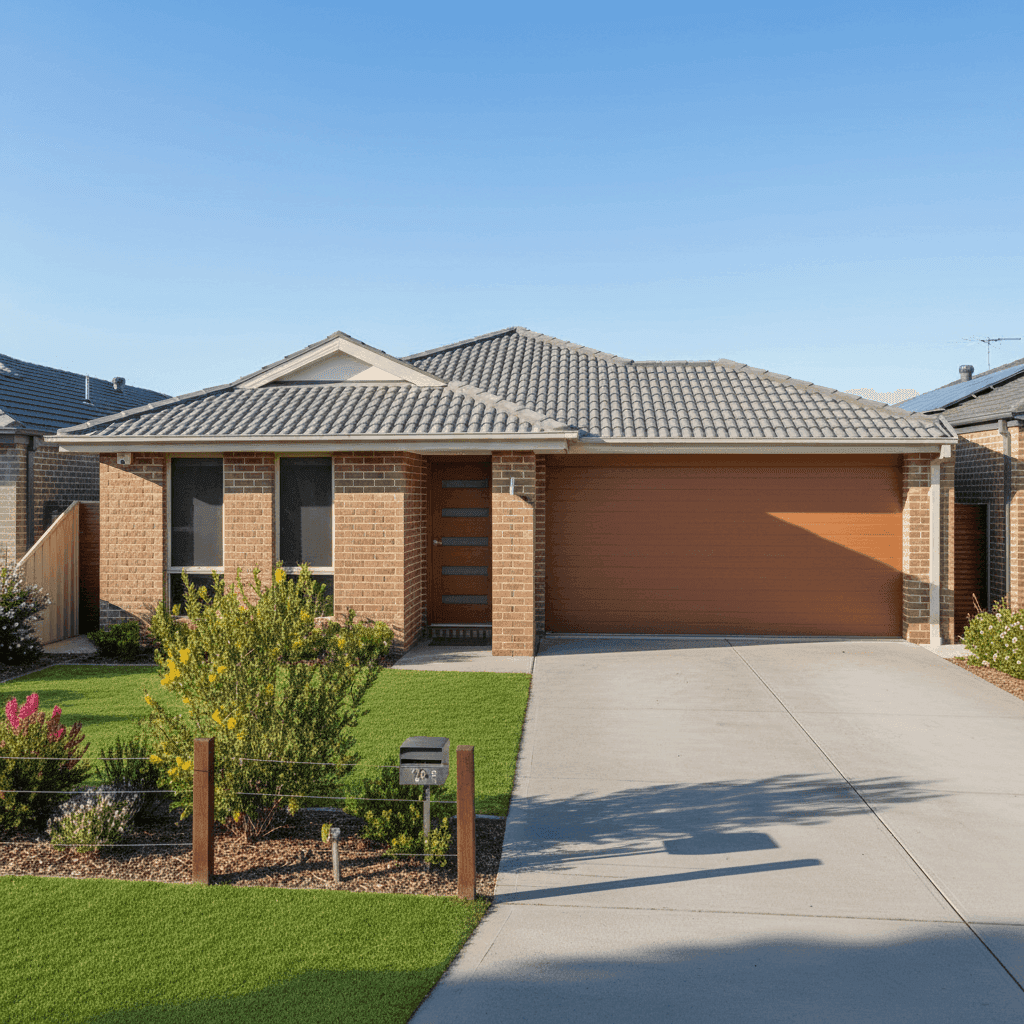
Hoppers Crossing is one of Melbourne's well-established western suburbs, offering families a mix of affordable housing, good local amenities, and easy freeway access to the CBD. It's also a suburb where home insurance pricing can vary quite significantly — making it all the more important to understand what you're actually paying for. This article breaks down a real home and contents insurance quote for a three-bedroom, two-bathroom free standing home in Hoppers Crossing (VIC 3029), and puts the numbers in context against suburb, state, and national benchmarks.
---
Is This Quote Fair?
The short answer: yes — this is an excellent result. The quote comes in at $1,159 per year (or around $110 per month), which earns a "Cheap" price rating based on CoverClub's pricing data. That means it sits well below the average for comparable properties in the area.
To put that in perspective, the suburb average for Hoppers Crossing home insurance is $2,252 per year, and the median sits even higher at $2,383. This quote is roughly 49% below the suburb average — a substantial saving of over $1,000 annually.
Even the 25th percentile — meaning the cheapest quarter of quotes collected in the suburb — sits at $1,456 per year. This quote undercuts even that threshold, placing it among the most competitively priced policies seen in the area.
For a policy covering a $494,000 building sum insured and $85,000 in contents, with a $2,000 building excess and $1,000 contents excess, this represents strong value. The higher excess levels do contribute to bringing the premium down, which is worth factoring in when assessing the overall deal — but for homeowners who are financially comfortable absorbing those excesses in the event of a claim, the ongoing savings are meaningful.
---
How Hoppers Crossing Compares
Zooming out to the broader picture, the pricing data tells an interesting story about where Hoppers Crossing sits in the national landscape.
| Benchmark | Average Premium |
|---|---|
| This quote | $1,159/yr |
| Hoppers Crossing (suburb avg) | $2,252/yr |
| Hoppers Crossing (median) | $2,383/yr |
| Melton LGA average | $1,803/yr |
| Victoria average | $2,921/yr |
| Victoria median | $2,694/yr |
| National average | $2,965/yr |
| National median | $2,716/yr |
Hoppers Crossing itself is already a relatively affordable suburb to insure compared to the broader Victorian and national picture — the suburb average of $2,252 is notably lower than the Victorian state average of $2,921 and the national average of $2,965. This likely reflects the suburb's relatively low exposure to natural hazards such as flooding or bushfire, combined with its stable, established housing stock.
Within the Melton LGA, the average premium of $1,803 per year is also below both state and national norms — suggesting the broader region benefits from a more favourable risk profile compared to many other parts of Australia.
Based on 60 quotes collected in the suburb, there's clear evidence that premiums in Hoppers Crossing can vary widely — from the 25th percentile of $1,456 up to the 75th percentile of $2,894. That's a spread of nearly $1,440, which underscores just how much the choice of insurer and policy structure can influence what you pay.
---
Property Features That Affect Your Premium
Several characteristics of this particular property work in the homeowner's favour from a risk and pricing perspective.
Brick veneer construction is generally well-regarded by insurers. It offers solid fire resistance and durability compared to weatherboard or lightweight cladding, which can translate into lower rebuild risk assessments. Combined with a tiled roof, which is considered one of the more resilient roofing materials, the property presents a relatively low-risk profile structurally.
The slab foundation is standard for homes built in Melbourne's western suburbs during the 1990s and is typically unproblematic from an insurer's perspective — though it's worth noting that reactive clay soils in parts of the west can occasionally cause subsidence issues over time.
At 139 square metres, this is a modest but practical home footprint. Building size directly influences the sum insured calculation, and at $494,000, the building cover appears well-calibrated for a home of this size and construction type in the current market.
The 1995 construction year places this home in a sweet spot — old enough to be fully settled and free of new-build teething issues, but modern enough to meet building codes that pre-date some of the more significant regulatory updates. Homes from this era tend to have predictable maintenance profiles.
The absence of a pool and solar panels simplifies the risk profile further. Ducted climate control is present, which adds some contents or fixture value to consider, but is a common inclusion in homes of this type and generally doesn't significantly inflate premiums.
---
Tips for Homeowners in Hoppers Crossing
1. Don't set and forget your sum insured. Building costs have risen sharply in Victoria over recent years. It's worth reviewing your building sum insured annually to ensure it reflects current construction costs — being underinsured at claim time can be a costly mistake. Tools like the Cordell Sum Sure calculator can help you estimate an appropriate figure.
2. Shop around — the data proves it pays. With a $1,440 spread between the 25th and 75th percentile premiums in Hoppers Crossing, the insurer you choose matters enormously. Comparing multiple quotes through a platform like CoverClub takes minutes and could save you hundreds each year.
3. Consider your excess strategically. This quote carries a $2,000 building excess and $1,000 contents excess, which are on the higher side. If you have an emergency fund that could comfortably cover these amounts, opting for a higher excess is a smart way to reduce your ongoing premium. If not, it may be worth adjusting the excess and accepting a slightly higher annual cost for greater peace of mind.
4. Review your contents sum insured regularly. $85,000 in contents cover is a reasonable starting point for a three-bedroom home, but it's easy to underestimate how much your belongings are actually worth. Conduct a room-by-room inventory every year or two — especially after major purchases — to make sure your cover keeps pace with reality.
---
Ready to Compare Home Insurance in Hoppers Crossing?
Whether you're a long-time Hoppers Crossing resident or you've recently purchased in the area, it's always worth checking whether your current policy is competitive. CoverClub makes it easy to compare home and contents insurance quotes from multiple insurers in one place — so you can see exactly where you stand against the suburb average.
Get a home insurance quote for your Hoppers Crossing property →