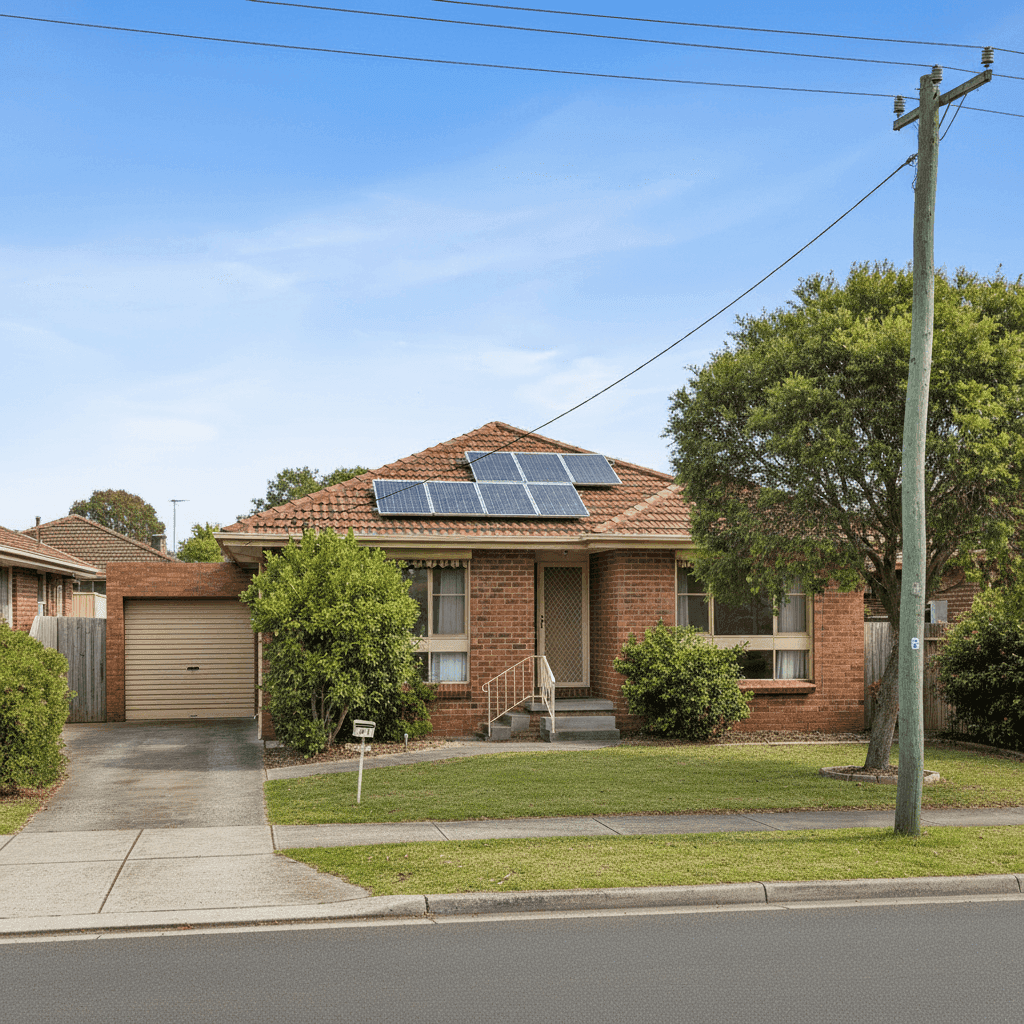
If you own a free standing home in Hoppers Crossing, VIC 3029, you're probably wondering whether you're paying a fair price for home and contents insurance — or whether there's a better deal out there. This article breaks down a real quote for a 3-bedroom, 1-bathroom brick veneer home in the suburb, and puts it into context using suburb, state, and national benchmarks.
---
Is This Quote Fair?
The quote in question comes in at $1,280 per year (or roughly $123/month) for combined home and contents cover, with a building sum insured of $366,000 and contents valued at $125,000. Both the building and contents excess are set at $1,000 each.
Our price rating for this quote is FAIR — Around Average.
That assessment holds up well under scrutiny. The suburb average for Hoppers Crossing sits at $1,531/year, and the median is $1,462/year, meaning this quote comes in noticeably below both benchmarks. At the same time, it's above the 25th percentile of $1,052/year, which means roughly a quarter of comparable properties in the area are insured for less. The 75th percentile reaches $1,894/year, so there's plenty of room for premiums to be significantly higher.
In short: this isn't a bargain-basement price, but it's comfortably below what many Hoppers Crossing homeowners are paying. For a property of this size and construction type, it represents reasonable value.
---
How Hoppers Crossing Compares
To really appreciate this quote, it helps to zoom out and look at the broader picture. Here's how Hoppers Crossing's insurance costs stack up against the rest of Victoria and the country:
| Benchmark | Average Premium | Median Premium |
|---|---|---|
| Hoppers Crossing (suburb) | $1,531/yr | $1,462/yr |
| Victoria (state) | $3,000/yr | $2,718/yr |
| Australia (national) | $5,347/yr | $2,764/yr |
| Melton LGA | $2,509/yr | — |
The contrast is striking. Victoria's state average of $3,000/year is nearly double what most Hoppers Crossing homeowners pay, and the national average of $5,347/year is driven upward by high-risk areas — particularly in Queensland and Western Australia, where cyclone and flood exposure sends premiums soaring.
Even within the Melton LGA, Hoppers Crossing residents tend to fare better, with the LGA average sitting at $2,509/year — well above the suburb's own median. This suggests Hoppers Crossing is one of the more affordable pockets within its local government area when it comes to insurance costs.
For homeowners here, the takeaway is clear: you're in a relatively low-risk, affordable insurance market. That said, "affordable" doesn't mean you should accept any quote without shopping around.
---
Property Features That Affect Your Premium
Every property is different, and insurers weigh up a range of factors when calculating your premium. Here's how the specific features of this home influence its cost:
Brick Veneer Construction Brick veneer is one of the most common wall types in Australian suburbia, and insurers generally view it favourably. It offers solid fire resistance and structural durability compared to timber-framed or clad homes, which can translate to lower premiums.
Tiled Roof Terracotta or concrete tiles are considered a resilient roofing material. They hold up well in most weather conditions and are less susceptible to fire than Colorbond or older iron roofing in some risk scenarios — another tick in the box for this property.
Stump Foundation The home sits on stumps, which is common for properties built in the 1980s across Melbourne's outer western suburbs. Stumped homes can be more vulnerable to subsidence and movement over time, which some insurers factor into their risk assessment. It's worth ensuring your policy covers gradual movement or subsidence if this is a concern.
1985 Construction Year At roughly 40 years old, this home is well past its newbuild phase. Older homes can attract slightly higher premiums due to ageing plumbing, wiring, and roofing — though a well-maintained property in this era is generally still insurable at competitive rates.
Solar Panels Solar panels are a valuable addition and should always be explicitly covered in your policy. Many standard home insurance policies include them as part of the building sum insured, but it's worth confirming this with your insurer to avoid any gaps in cover.
Ducted Climate Control Ducted heating and cooling systems are a significant fixed asset. They're typically covered under building insurance, but given their replacement cost, it's wise to ensure your building sum insured accounts for them adequately.
No Pool, No Cyclone Risk The absence of a pool removes a common liability concern, and being outside a cyclone-prone region means this property avoids one of the biggest premium drivers in Australia. Both factors contribute to the relatively modest premium.
---
Tips for Homeowners in Hoppers Crossing
1. Review your building sum insured regularly Construction costs have risen sharply in recent years. A sum insured of $366,000 for 130 sqm may be appropriate today, but it's worth recalculating every year — ideally using a building cost estimator — to ensure you're not underinsured if you ever need to rebuild.
2. Confirm solar panel coverage With solar panels installed, double-check your policy wording. Some insurers cover panels as part of the building, others require them to be listed separately. Knowing this now prevents a nasty surprise at claim time.
3. Shop around at renewal Even though this quote is below the suburb average, it pays to compare at renewal time. Insurers frequently adjust their pricing models, and a competitor may offer better value — especially if your circumstances haven't changed.
4. Consider your excess carefully Both the building and contents excess are set at $1,000. Opting for a higher excess (say, $2,000) can reduce your annual premium, which makes sense if you have the savings to cover a larger out-of-pocket cost in the event of a claim. Conversely, a lower excess gives you more predictable claim costs.
---
Ready to Compare?
Whether you're reviewing your current policy or shopping for cover on a new property, it pays to see what's available. Get a home insurance quote at CoverClub and compare options side by side — it only takes a few minutes, and you might be surprised at the difference in pricing across providers.