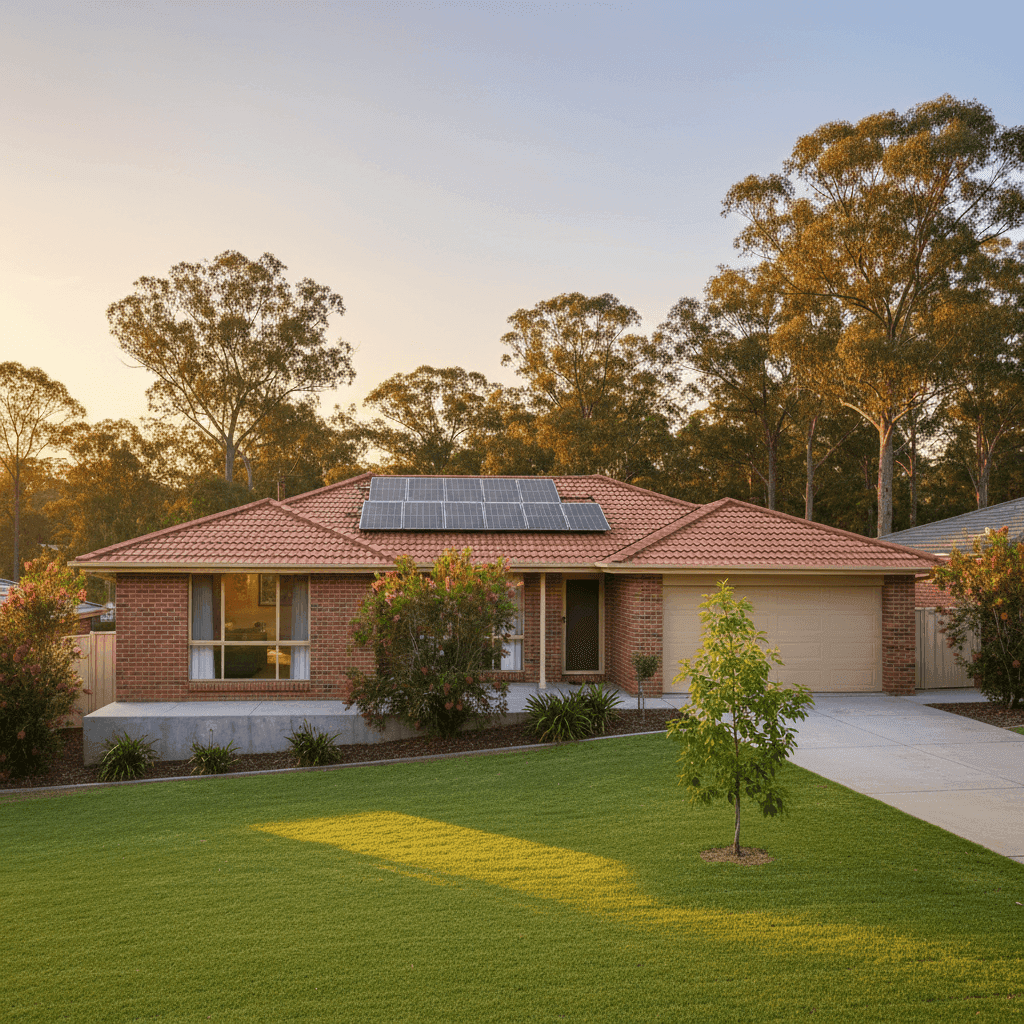
If you own a free standing home in Hornsby Heights, NSW 2077, you've probably wondered whether you're paying too much — or too little — for home and contents insurance. Premiums can vary enormously depending on your property's characteristics, your chosen insurer, and the specific risks associated with your suburb. To help cut through the noise, we've analysed a real insurance quote for a four-bedroom, two-bathroom brick veneer home in Hornsby Heights, and stacked it up against local, state, and national benchmarks.
---
Is This Quote Fair?
The quote in question comes in at $2,578 per year (or $263/month) for combined home and contents cover, with a building sum insured of $750,000 and contents valued at $50,000. The building excess is $3,000 and the contents excess is $1,000.
Our pricing analysis rates this quote as CHEAP — below average for the area. In plain terms, this homeowner is getting a genuinely competitive deal. It sits well below the suburb average of $4,779/yr and even undercuts the suburb's 25th percentile of $3,529/yr — meaning it's cheaper than at least 75% of comparable quotes collected in the area.
That's a meaningful saving. Compared to the suburb average alone, this quote represents a potential saving of over $2,200 per year. Over a five-year period, that's more than $11,000 back in your pocket.
Of course, price isn't everything. It's worth ensuring the policy covers what matters — from storm and fire damage through to accidental breakage and temporary accommodation. But all else being equal, a below-average premium for a well-constructed home in a stable suburb is a strong outcome.
---
How Hornsby Heights Compares
Understanding where your premium sits relative to broader benchmarks gives you a much clearer picture of value. Here's how Hornsby Heights stacks up:
| Benchmark | Premium |
|---|---|
| This Quote | $2,578/yr |
| Suburb Average (Hornsby Heights) | $4,779/yr |
| Suburb Median | $4,112/yr |
| Suburb 25th Percentile | $3,529/yr |
| LGA Average (Hornsby Council) | $3,958/yr |
| NSW State Average | $9,528/yr |
| NSW State Median | $3,770/yr |
| National Average | $5,347/yr |
| National Median | $2,764/yr |
(Based on a sample of 11 quotes collected for the Hornsby Heights postcode. [View full suburb stats →](https://coverclub.com.au/stats/NSW/2077/hornsby-heights))
A few things stand out here. The NSW state average of $9,528/yr is dramatically higher than the median of $3,770/yr — a clear sign that a small number of very high-risk or high-value properties are pulling the average upward. This is common in a state as geographically diverse as New South Wales, where coastal flood zones, bushfire-prone regions, and densely built urban areas all sit under the same statistical umbrella. For a more reliable comparison, the median is usually the better yardstick.
Against the NSW state median of $3,770/yr, this quote still comes in cheaper. And compared to the national median of $2,764/yr, it's only marginally higher — impressive for a property with a $750,000 building sum insured.
---
Property Features That Affect Your Premium
Insurance premiums aren't pulled from thin air — they're calculated based on a detailed risk profile of your property. Here's how the features of this particular home influence what you pay:
Brick Veneer Walls & Tiled Roof Brick veneer is one of the most common and insurer-friendly wall types in Australia. It offers solid fire resistance and structural durability, which generally attracts lower premiums compared to timber or weatherboard construction. A tiled roof similarly signals longevity and resistance to ember attack — a relevant consideration in parts of greater Sydney.
Slab Foundation A concrete slab foundation is considered low-risk by most insurers. It's less susceptible to subsidence, termite damage, and moisture-related issues than older stumped or suspended timber floors, all of which can contribute to higher premiums.
Construction Year: 1997 Homes built in the mid-to-late 1990s benefit from modern building codes without the maintenance concerns of much older stock. This era of construction typically included improved waterproofing, electrical standards, and structural requirements — all factors that reduce insurer risk.
Solar Panels The presence of solar panels adds some complexity to a home insurance policy. Panels are generally covered under building insurance, but it's worth confirming your policy explicitly includes them — both for damage to the panels themselves and for any liability arising from installation or electrical faults.
Ducted Climate Control Ducted air conditioning systems are a fixed building feature and are typically covered under the building sum insured. They do add to the replacement cost of the home, so ensuring your $750,000 sum insured adequately accounts for this (and other fixed inclusions) is important.
Above Average Fittings Above-average fittings — think stone benchtops, quality cabinetry, premium fixtures — increase the cost to rebuild or repair. This is factored into the building sum insured and is one reason why underinsurance is such a common problem in Australia. Always ensure your sum insured reflects true replacement cost, not market value.
Elevated Less Than 1 Metre A slight elevation can assist with drainage and reduce the risk of water ingress during heavy rainfall — a modest but positive factor for insurers assessing flood and storm risk.
---
Tips for Homeowners in Hornsby Heights
1. Review your sum insured annually Building costs have risen sharply across Australia in recent years. A sum insured that was adequate in 2020 may fall well short today. Use a building cost calculator or speak with a quantity surveyor to ensure $750,000 genuinely reflects what it would cost to rebuild your home from scratch — including demolition, professional fees, and fitout.
2. Confirm your solar panels are covered Ask your insurer directly whether your solar system is included under the building policy, and for how much. Some policies cap coverage for solar installations or exclude damage caused by inverter failure. If you've upgraded your system recently, make sure the sum insured has been updated accordingly.
3. Consider your excess strategically This policy carries a $3,000 building excess — on the higher end. A higher excess typically reduces your premium, but it also means more out-of-pocket cost when you do make a claim. Think about whether that trade-off suits your financial situation, particularly for smaller claims like storm damage to gutters or fencing.
4. Compare quotes at renewal time Even if you're happy with your current insurer, it pays to shop around every year. The insurance market is competitive, and loyalty doesn't always translate to the best price. A quote that's cheap today may drift upward at renewal — particularly if your insurer quietly adjusts their risk appetite for your postcode.
---
Ready to Find a Better Deal?
Whether you're a first-time buyer or a long-term Hornsby Heights resident, comparing home insurance quotes is one of the simplest ways to save money without sacrificing cover. At CoverClub, we make it easy to see what's available for your property in minutes.
Get a home insurance quote for your Hornsby Heights property →
You can also explore detailed premium data for your area on our Hornsby Heights suburb stats page or browse NSW-wide insurance trends to see how your suburb compares across the state.