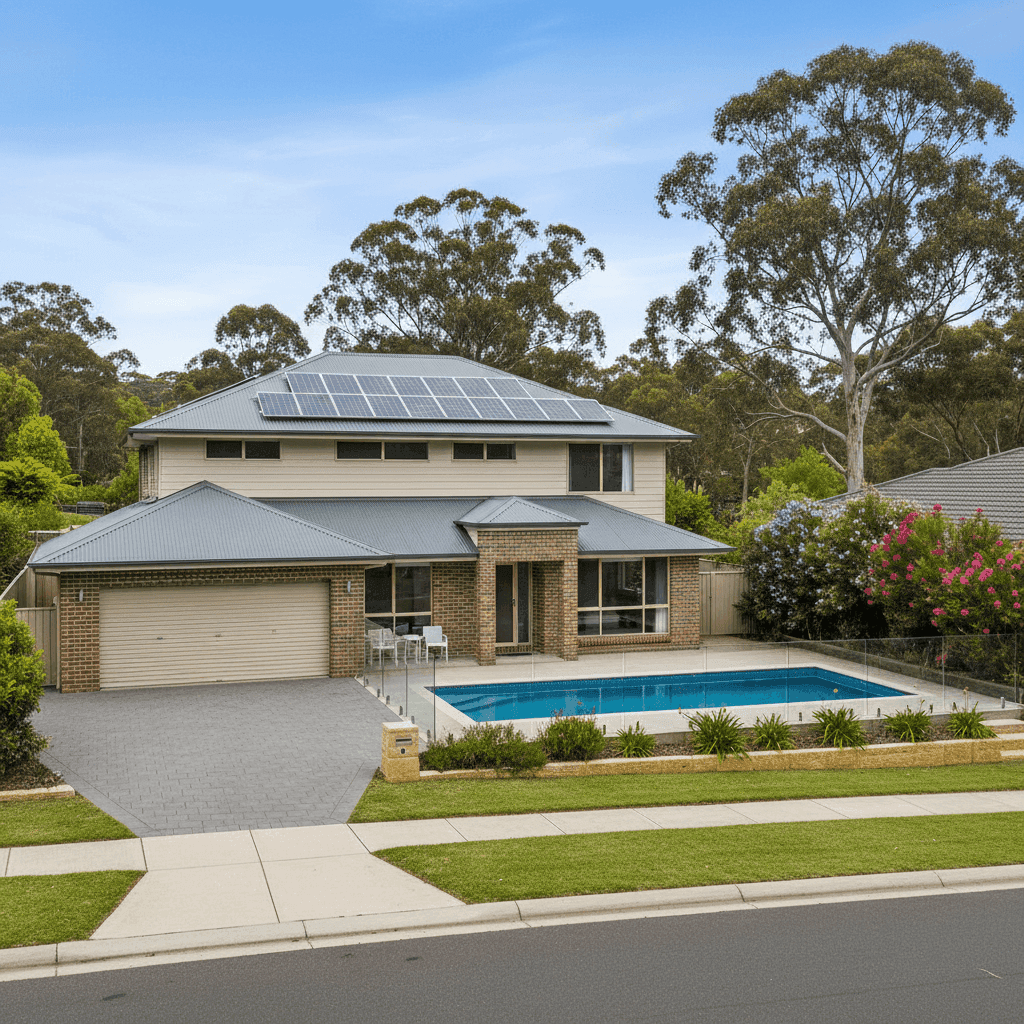
Hornsby Heights is a leafy, elevated suburb on Sydney's Upper North Shore — known for its bushland setting, family-friendly streets, and a solid mix of established brick homes. If you own a free standing home here, you've likely noticed that home insurance doesn't come cheap. This article breaks down a real home and contents insurance quote for a four-bedroom property in the area, compares it against local, state, and national benchmarks, and offers practical advice for getting better value on your cover.
---
Is This Quote Fair?
The quote in question comes to $5,434 per year (or $532/month) for a combined home and contents policy, covering a building sum insured of $700,000 and contents valued at $50,000. The building excess is $2,000 and the contents excess is $1,000.
Our price rating for this quote is Expensive — above average for the area.
To put that in perspective: the suburb average premium in Hornsby Heights sits at $3,264/year, and the median is a notably lower $2,588/year. This quote lands well above both figures, and even clears the 75th percentile for the suburb ($4,965/year) — meaning it's pricier than roughly three-quarters of comparable quotes we've seen in the postcode.
That said, context matters. A $700,000 building sum insured is on the higher end, and the property has a number of features — including a pool, solar panels, and a stump foundation — that can each push premiums upward. So while the quote is expensive relative to local norms, it's not entirely without explanation.
---
How Hornsby Heights Compares
Understanding where your premium sits relative to broader benchmarks helps you gauge whether you're being quoted fairly — or whether it's time to shop around.
| Benchmark | Average Premium | Median Premium |
|---|---|---|
| Hornsby Heights (2077) | $3,264/yr | $2,588/yr |
| Hornsby LGA | $3,666/yr | — |
| NSW | $3,801/yr | $3,410/yr |
| National | $2,965/yr | $2,716/yr |
You can explore the full data for this postcode at our Hornsby Heights insurance stats page, or compare it against NSW-wide figures and national averages.
A few things stand out here. First, Hornsby Heights premiums are actually below the NSW state average — which reflects the suburb's relatively low flood risk and non-cyclone-zone status. Second, the national median of $2,716/year is a useful anchor: it shows that Australian homeowners broadly pay less than what's being quoted here, though direct comparisons are tricky given the variation in property size, sum insured, and local risk factors.
It's also worth noting that our suburb sample for 2077 is based on 14 quotes — a reasonable snapshot, but not enormous. As more data comes in, these averages will continue to refine.
---
Property Features That Affect Your Premium
Several characteristics of this property are likely influencing the premium, some upward and some in a more neutral direction.
Brick veneer construction is generally viewed favourably by insurers. It's durable, fire-resistant, and widely understood — so it typically attracts more competitive rates than, say, timber-clad homes in high-bushfire-risk areas.
Steel/Colorbond roofing is another tick in the right direction. Colorbond is lightweight, resistant to corrosion, and performs well in storms — all of which reduce the likelihood of a roof-related claim.
Stump foundations, however, are a different story. Homes on stumps (also called pier or post foundations) can be more vulnerable to certain types of damage, including subsidence and underfloor moisture issues. Some insurers price this risk into the premium.
Timber and laminate flooring is generally straightforward to insure, though it can be costlier to replace than concrete or tiles in a claim scenario — particularly for a 214 sqm home.
The swimming pool adds to the insured risk. Pool-related liability, equipment damage, and the potential for water-related incidents all contribute to a slightly higher base premium.
Solar panels are increasingly common on Australian homes, but they do add replacement value to the building and can be a source of claims (storm damage, hail, electrical faults). Ensuring your building sum insured accounts for the panels is important — and it may also nudge the premium upward.
Finally, the $700,000 building sum insured is a significant factor. This isn't the market value of the home — it's the estimated cost to rebuild it from scratch, including labour, materials, and professional fees. For a 214 sqm brick home built in 1981 with standard fittings, this figure is on the higher side, and a building sum insured review might be worthwhile.
---
Tips for Homeowners in Hornsby Heights
1. Review your building sum insured Make sure your sum insured reflects the actual rebuild cost of your home — not its market value, and not a round number you've held onto for years. Overinsuring can mean unnecessarily high premiums, while underinsuring leaves you exposed. Use a building cost calculator or ask your insurer how they've arrived at the figure.
2. Increase your excess to reduce your premium The building excess on this policy is $2,000. If you could comfortably absorb a higher out-of-pocket cost in a claim scenario, opting for a higher excess (say, $2,500 or $3,000) can meaningfully reduce your annual premium. Just make sure the savings justify the added risk.
3. Bundle and ask about discounts Many insurers offer discounts when you combine home and contents cover — which this policy already does. But it's also worth asking about loyalty discounts, security system discounts, or discounts for paying annually rather than monthly (monthly premiums often carry a loading).
4. Compare quotes annually The insurance market shifts constantly, and loyalty doesn't always pay. Comparing quotes at renewal — even if you end up staying with your current insurer — puts you in a stronger negotiating position and ensures you're not quietly paying above-market rates year after year.
---
Ready to Compare?
If this quote has you wondering whether you're getting value for money, the best move is to see what else is out there. At CoverClub, you can compare home insurance quotes for your Hornsby Heights property in minutes — with transparent pricing data and no obligation to buy. Don't let inertia cost you hundreds of dollars a year.