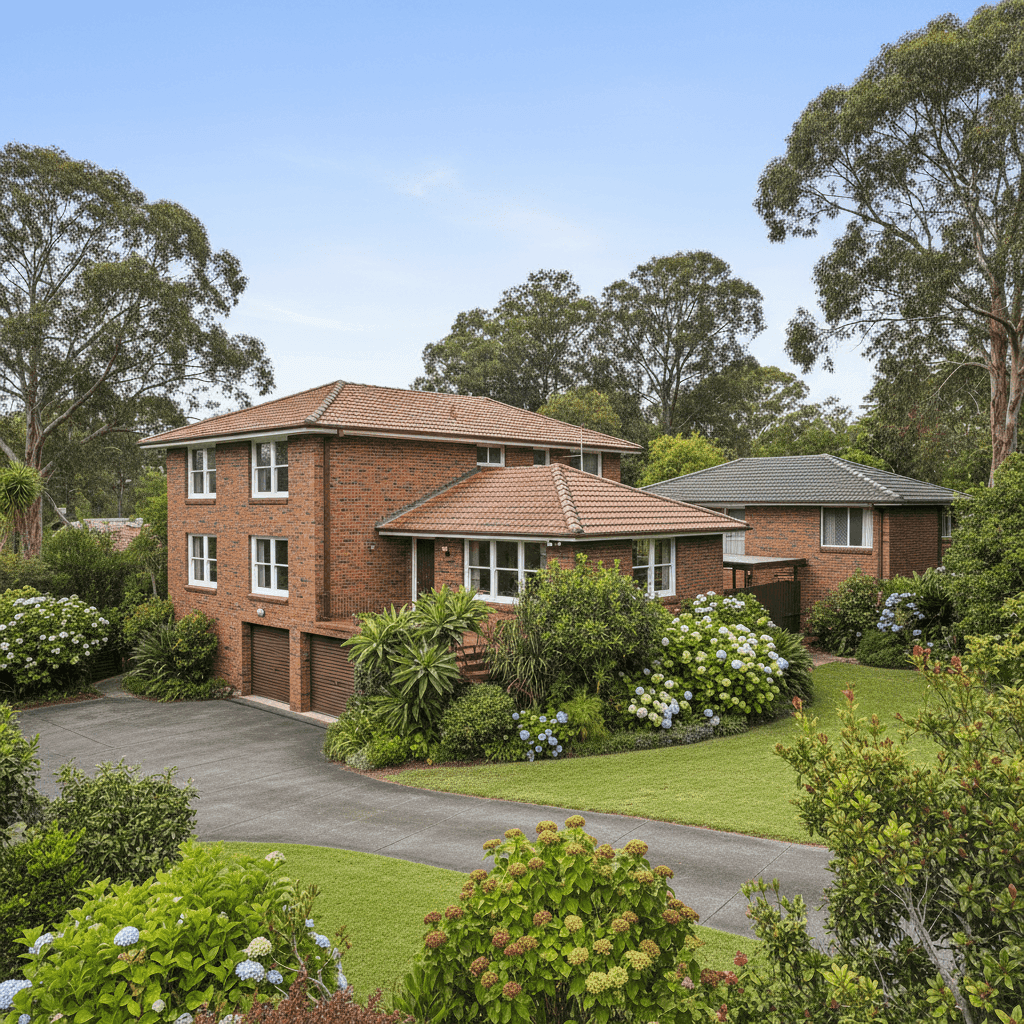
Hornsby is one of Sydney's most established northern suburbs — a leafy, family-friendly area that blends urban convenience with a relaxed bushland feel. For owners of free standing homes in the area, understanding what you should be paying for home and contents insurance is an important part of protecting one of your biggest assets. This article breaks down a real insurance quote for a 4-bedroom, 2-bathroom free standing home in Hornsby NSW 2077, and puts it in context against local, state, and national benchmarks.
---
Is This Quote Fair?
The annual premium for this property came in at $1,384 per year (or roughly $131 per month), covering both building and contents. The building is insured for $611,000 and contents for $50,000, with a $2,000 excess applying to both.
Our pricing engine rates this quote as CHEAP — below average for the area. That's a meaningful finding. Based on 22 quotes collected for Hornsby (postcode 2077), the suburb average sits at $2,790 per year and the median at $2,560 per year. This quote lands well below even the 25th percentile of $2,014 — meaning it's cheaper than at least 75% of comparable quotes in the suburb.
Compared to the broader NSW average of $3,801 per year, this premium is less than 37% of what many NSW homeowners are paying. That's a significant saving, and well worth understanding in context.
---
How Hornsby Compares
To appreciate just how competitive this quote is, it helps to zoom out and look at the full pricing landscape:
| Benchmark | Annual Premium |
|---|---|
| This Quote | $1,384 |
| Hornsby Suburb Average | $2,790 |
| Hornsby Suburb Median | $2,560 |
| Hornsby 25th Percentile | $2,014 |
| Hornsby 75th Percentile | $4,008 |
| Hornsby LGA Average | $3,666 |
| NSW Average | $3,801 |
| NSW Median | $3,410 |
| National Average | $2,965 |
| National Median | $2,716 |
Hornsby's suburb average of $2,790 is actually below the NSW state average of $3,801 — suggesting the postcode carries a relatively moderate risk profile compared to many other parts of New South Wales. However, premiums across the suburb still vary widely, with the 75th percentile reaching $4,008. That spread highlights just how much individual property characteristics, insurer pricing models, and cover levels can influence what you end up paying.
For a broader view of how premiums stack up across the country, visit our national home insurance statistics page.
---
Property Features That Affect Your Premium
Several characteristics of this property are likely contributing to its competitive premium:
Brick Veneer Construction Brick veneer is one of the most common wall types in Australian suburban homes, and insurers generally view it favourably. It offers solid fire resistance compared to timber-framed cladding, which can help keep premiums in check.
Tiled Roof Terracotta or concrete tile roofs are considered durable and low-risk by most underwriters. They hold up well in storms and hail compared to older corrugated iron or fibrous cement alternatives, which can reduce the likelihood of weather-related claims.
Slab Foundation A concrete slab foundation is typically seen as structurally sound and resistant to subsidence or movement — a positive signal for insurers assessing long-term structural risk.
Timber and Laminate Flooring While attractive and popular in family homes, timber and laminate floors can be more susceptible to water damage than tiles. This is a minor risk factor that some insurers may price into contents or building cover, particularly for ground-floor areas.
Built in 1981 A home built in the early 1980s sits in an interesting middle ground — old enough that some building components (wiring, plumbing) may be approaching end-of-life, but typically constructed to solid standards. Keeping up with maintenance is important for both insurance validity and claim outcomes.
Granny Flat on Site The presence of a granny flat is worth noting. Depending on the insurer and policy wording, a secondary dwelling on the same property may or may not be automatically covered under a standard home and contents policy. It's essential to confirm with your insurer whether the granny flat structure and any contents within it are included in your sum insured — or whether a separate policy or endorsement is required.
No Pool, Solar Panels, or Ducted Climate Control The absence of a pool removes a notable liability risk. No solar panels means no concerns around inverter or panel damage claims. And without ducted climate control, there's one less complex mechanical system that could generate a claim. These omissions collectively simplify the risk profile of the property.
---
Tips for Homeowners in Hornsby
1. Review Your Sum Insured Regularly Building costs in Greater Sydney have risen sharply over recent years. A sum insured of $611,000 for a 214 sqm home may be appropriate today, but it's worth recalculating your replacement cost annually — ideally using a professional building cost estimator — to make sure you're not underinsured.
2. Clarify Granny Flat Coverage As mentioned above, don't assume your granny flat is automatically covered. Contact your insurer directly and ask for written confirmation of what structures are included in your policy. If the flat is rented out, you may also need landlord insurance for that portion of the property.
3. Shop Around at Renewal Time This quote is already well below the suburb average, but insurance markets shift. Insurers reprice risk constantly, and the best deal today may not be the best deal next year. Use a comparison tool like CoverClub at each renewal to make sure you're still getting a competitive rate.
4. Consider Your Excess Strategy Both the building and contents excess on this policy sit at $2,000. A higher excess generally reduces your premium, while a lower excess gives you more protection on smaller claims. Think about your financial buffer — if you could comfortably cover a $2,000 out-of-pocket expense in an emergency, this excess level is reasonable. If not, it may be worth exploring lower excess options.
---
Compare Your Own Quote
Whether you're a long-time Hornsby homeowner or new to the area, it pays to know what others are paying. CoverClub makes it easy to benchmark your current premium and explore competitive options from a range of Australian insurers. Get a home insurance quote today and see how your property stacks up against the suburb, state, and national averages.