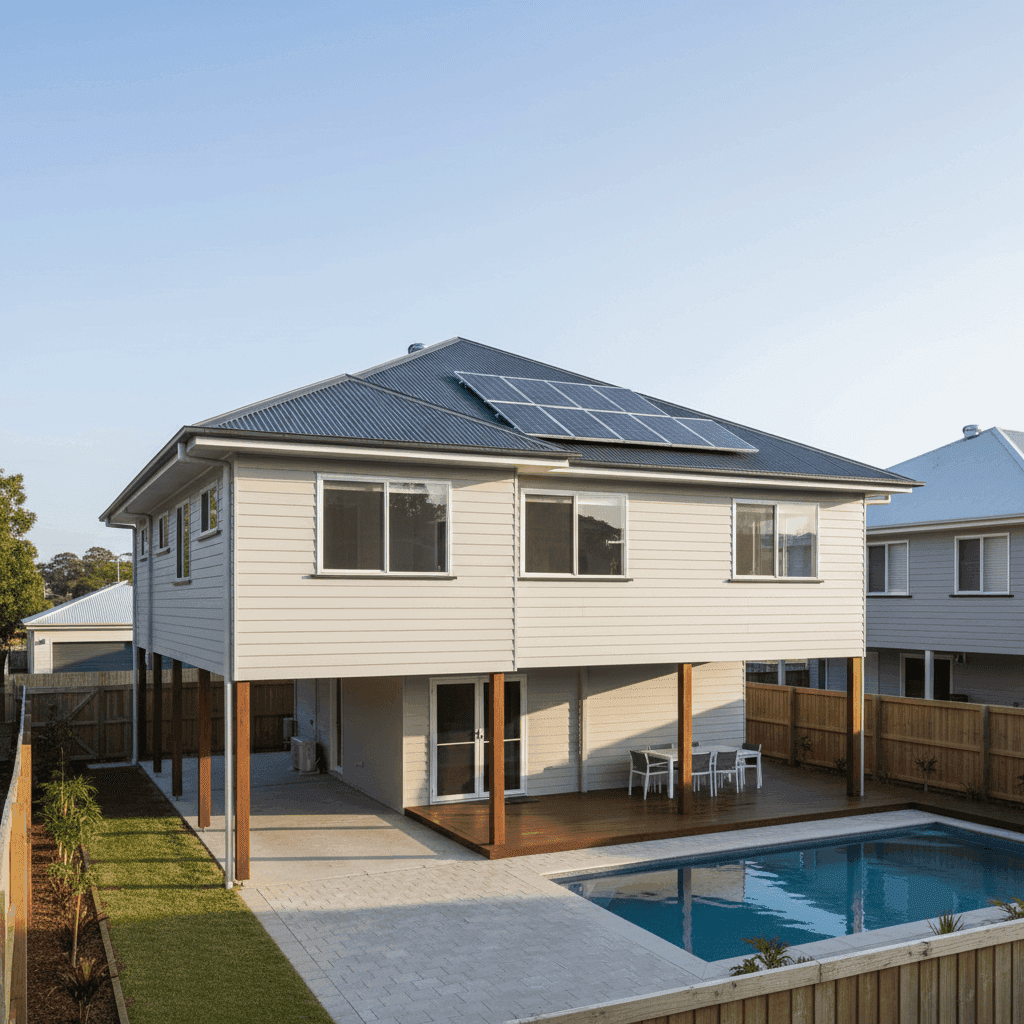
If you own a free standing home in Horse Camp, QLD 4671, you're likely no stranger to the balancing act of protecting your property without overpaying for cover. Horse Camp is a small rural locality in the North Burnett region of Queensland — an area characterised by wide open spaces, modest housing stock, and the kind of community feel that's increasingly rare. For homeowners here, getting the right home and contents insurance at a fair price matters. This article breaks down a real quote for a 3-bedroom, 1-bathroom free standing home in the area, compares it against local, state, and national benchmarks, and offers practical advice to help you make the most of your cover.
---
Is This Quote Fair?
The annual premium for this property came in at $1,974 per year (or roughly $197/month), covering both building and contents. The building is insured for $560,000 with a $2,000 excess, and contents are covered for $50,000 with a $1,000 excess.
Our price rating for this quote is FAIR — Around Average.
What does that mean in practice? It means the premium sits comfortably within the normal range for this suburb — not a bargain, but certainly not overpriced either. Given the property's characteristics (more on those below), a "fair" rating is a reasonable outcome. Homeowners who receive a quote in this range shouldn't feel compelled to accept it without shopping around, but they also shouldn't assume something is wrong with their cover or their insurer's pricing.
It's worth noting that "fair" in the context of Horse Camp still represents solid value compared to broader Queensland pricing, which tends to skew significantly higher due to the state's exposure to extreme weather events.
---
How Horse Camp Compares
To understand whether $1,974 is genuinely competitive, it helps to look at the numbers in context. Based on data from Horse Camp's suburb insurance stats (drawn from 29 quotes in the area):
| Benchmark | Premium |
|---|---|
| This Quote | $1,974/yr |
| Suburb 25th Percentile | $1,800/yr |
| Suburb Median | $2,290/yr |
| Suburb Average | $2,603/yr |
| Suburb 75th Percentile | $3,597/yr |
| LGA (North Burnett) Average | $3,499/yr |
| QLD State Median | $3,903/yr |
| QLD State Average | $9,129/yr |
| National Median | $2,764/yr |
| National Average | $5,347/yr |
This quote sits below the suburb median of $2,290 and well below the suburb average of $2,603 — placing it closer to the cheaper end of the local market. It's also notably lower than the North Burnett LGA average of $3,499, which suggests this property is attracting better-than-typical pricing for the region.
When compared to Queensland's broader insurance landscape, the contrast is stark. The state average of $9,129 is heavily influenced by high-risk coastal and cyclone-prone areas in Far North Queensland, which dramatically pull the mean upward. The state median of $3,903 is a more useful comparison — and this quote comes in at roughly half that figure.
Against national benchmarks, the quote also fares well, sitting below both the national median ($2,764) and well below the national average ($5,347). For a Queensland property, that's a genuinely positive result.
---
Property Features That Affect Your Premium
Several characteristics of this home play a meaningful role in how insurers calculate the premium.
Elevated Construction (Pole Home)
This property is elevated by at least 1 metre on a pole foundation — a common design in Queensland that offers real advantages when it comes to flood risk. Elevated homes are less susceptible to inundation from surface water, which insurers tend to view favourably. It's one of the reasons this premium is lower than many comparable Queensland properties.
Hardiplank / Hardiflex External Walls
Fibre cement cladding like Hardiplank and Hardiflex is a popular choice in regional Queensland. It's durable, low-maintenance, and performs well in terms of fire resistance. Insurers generally price fibre cement homes more competitively than, say, weatherboard or other timber-clad properties.
Steel / Colorbond Roof
A Colorbond steel roof is one of the more insurer-friendly roofing materials available. It's resistant to fire, doesn't rot, and holds up well in high-wind conditions. This is a positive factor in the premium calculation.
Swimming Pool
The presence of a pool adds a small degree of liability risk and replacement cost, which can nudge premiums slightly higher. Ensuring your policy explicitly covers pool-related structures and equipment is important.
Solar Panels
Solar panels are an increasingly common feature on Australian homes, but they're not always automatically covered under standard building policies. It's worth confirming with your insurer that your panels — and any associated inverter or battery storage — are included in your sum insured.
Timber / Laminate Flooring
Timber and laminate floors can be more costly to repair or replace than tiles, particularly in elevated homes where subfloor access is a factor. This is reflected in the contents and building valuations.
Construction Year (2000)
A home built in 2000 sits in a sweet spot for insurers — modern enough to meet contemporary building standards but old enough that depreciation has settled. Queensland introduced significantly improved building codes after cyclone events in the late 1990s, so a 2000-build benefits from those updated requirements.
---
Tips for Homeowners in Horse Camp
1. Review Your Sum Insured Annually
Building costs in regional Queensland have risen sharply in recent years. With a sum insured of $560,000 for a 130 sqm home, it's worth cross-checking this figure against current construction costs in the North Burnett area. Underinsurance is one of the most common — and costly — mistakes homeowners make.
2. Confirm Solar Panel Coverage
If your solar panels aren't explicitly listed in your policy schedule, raise it with your insurer. Some policies include them as part of the building sum insured automatically; others require a specific endorsement. Given the cost of replacement, this is worth a five-minute phone call.
3. Don't Overlook Your Pool
Your pool and its associated equipment (pump, filter, heating, fencing) should be factored into your building sum insured. If your pool is an older fibreglass or concrete structure, get a current replacement quote and make sure your cover reflects it.
4. Compare Before You Renew
Even a "fair" quote can be beaten. Insurers price risk differently, and the same property can attract meaningfully different premiums across providers. Use a comparison tool like CoverClub before your renewal date to ensure you're not leaving money on the table.
---
Ready to Compare?
Whether you're reviewing your current policy or shopping for cover for the first time, comparing quotes is the single most effective way to make sure you're getting fair value. At CoverClub, we make it easy to see how your premium stacks up against real data from your suburb and beyond. Get a quote today and find out where you really stand.