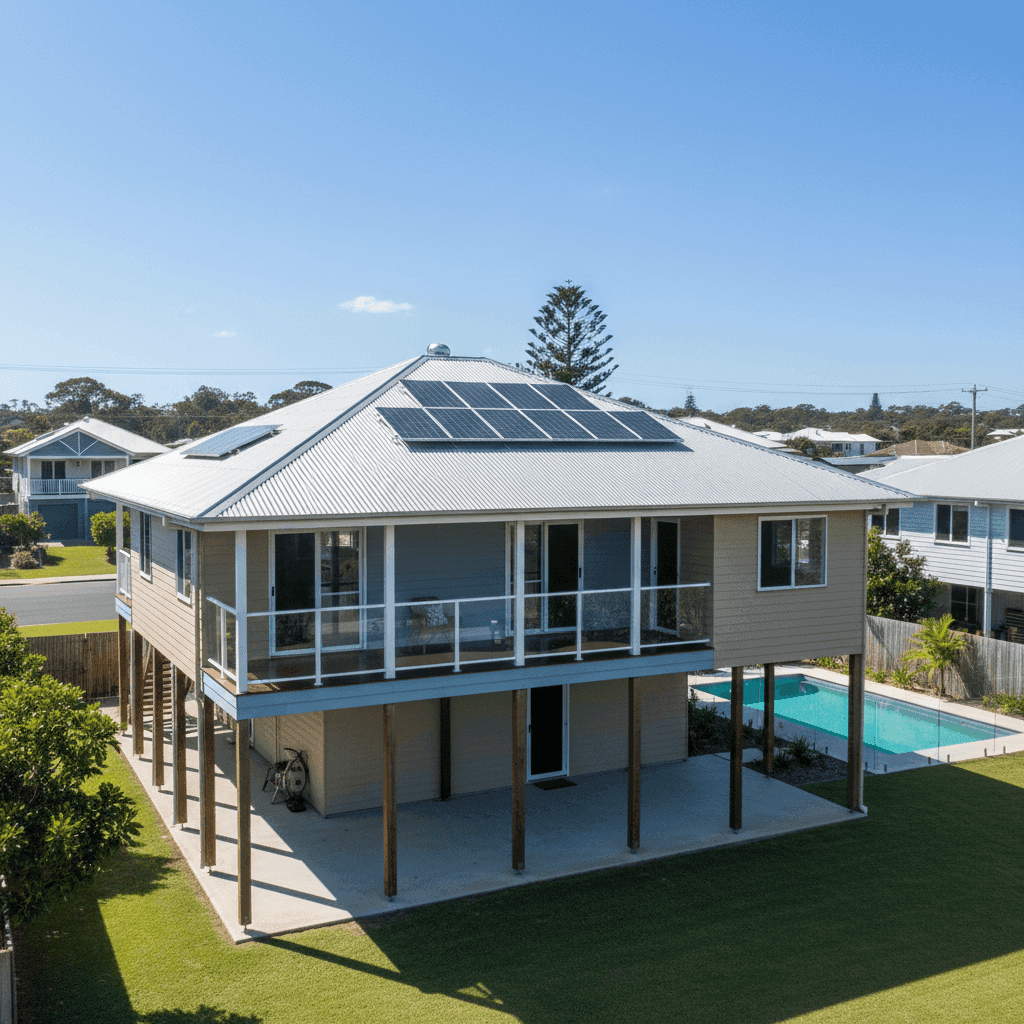
Horseshoe Bay is one of Magnetic Island's most sought-after pockets — a relaxed coastal community with stunning bay views, a strong holiday-let market, and a lifestyle that many Australians dream about. But owning property here comes with its own set of insurance considerations. This article takes a close look at a real home and contents insurance quote for a three-bedroom free standing home in Horseshoe Bay (QLD 4819), rated Expensive (Above Average), and unpacks exactly why that premium sits where it does.
---
Is This Quote Fair?
The quote in question comes in at $6,249 per year (or $599 per month) for combined home and contents cover, with a $1,000 excess on both building and contents. The building is insured for $1,464,000 and contents for $107,000.
Our price rating for this quote is Expensive — Above Average, and the data backs that up. The suburb average for Horseshoe Bay sits at $5,108 per year, meaning this quote runs roughly $1,141 above what most locals are paying. It also clears the 75th percentile benchmark of $5,709 per year, placing it in the more expensive quarter of quotes we've seen for this postcode.
That said, "expensive" doesn't automatically mean "wrong." This property carries a number of features — cyclone exposure, elevated construction, a pool, solar panels, and above-average fittings — that genuinely push premiums higher. Insurers price for risk, and Horseshoe Bay's geography means that risk is real. The question isn't just whether the premium is high, but whether it's appropriately high for what's being covered.
---
How Horseshoe Bay Compares
To put this quote in context, here's how it stacks up across different benchmarks:
| Benchmark | Annual Premium |
|---|---|
| This Quote | $6,249 |
| Horseshoe Bay Suburb Average | $5,108 |
| Horseshoe Bay Suburb Median | $4,776 |
| Horseshoe Bay 25th Percentile | $3,949 |
| Horseshoe Bay 75th Percentile | $5,709 |
| QLD State Average | $4,547 |
| QLD State Median | $3,931 |
| National Average | $2,965 |
| National Median | $2,716 |
| Townsville LGA Average | $7,258 |
A few things stand out here. First, Horseshoe Bay's suburb average of $5,108 is already well above both the Queensland state average of $4,547 and the national average of $2,965 — a clear signal that this is a premium-risk postcode regardless of individual property features.
Second, while this quote exceeds the suburb average, it's actually well below the Townsville LGA average of $7,258. This suggests the quote, while on the higher end for Horseshoe Bay specifically, is not out of step with the broader regional pricing environment. Insurers operating in the Townsville region factor in cyclone risk across the board, and that cost is baked into every policy.
It's also worth noting that the suburb sample size of 24 quotes is relatively small, which means the averages here can shift meaningfully with just a handful of new data points. If you're a homeowner in the area, checking the latest suburb stats regularly is a smart habit.
---
Property Features That Affect Your Premium
Several characteristics of this property have a direct bearing on the premium — some pushing it up, others potentially keeping it in check.
Cyclone Risk Zone
This is the single biggest driver. Horseshoe Bay falls within a designated cyclone risk area, and insurers price this heavily. Cyclone cover typically includes wind, storm surge, and associated water damage — all of which are statistically more likely in this part of North Queensland. Expect cyclone risk to account for a significant portion of any premium in this postcode.
Elevated Construction (At Least 1 Metre)
The home sits on stumps and is elevated by at least one metre. In flood-prone or storm-surge areas, elevation is generally a positive risk factor — it reduces the likelihood of water ingress during heavy rain events. However, elevated homes also present additional engineering complexity, and some insurers price the structural exposure of subfloor areas into their calculations.
Hardiplank/Hardiflex Walls & Colorbond Roof
These are considered durable, modern materials. Fibre cement cladding like Hardiplank and steel Colorbond roofing are generally well-regarded by insurers for their resistance to fire and rot. Compared to older timber weatherboard homes, this construction profile is relatively favourable from a risk perspective.
Pool and Solar Panels
Both add to the replacement cost of the property and introduce additional liability and equipment considerations. A pool increases public liability exposure, while solar panels — particularly inverters and associated electrical systems — can be costly to replace and are a common source of claims after severe weather events.
Above-Average Fittings
The property is noted as having above-average fittings quality. This directly influences the building sum insured ($1,464,000 for a 139 sqm home reflects high-end finishes) and means any claim settlement will need to account for premium materials, fixtures, and appliances. Higher rebuild costs mean higher premiums.
Timber and Laminate Flooring
While aesthetically appealing, timber and laminate floors can be susceptible to water damage and may be more expensive to replace than tiles. This is a minor factor but relevant in a coastal, high-humidity environment like Magnetic Island.
---
Tips for Homeowners in Horseshoe Bay
1. Don't underinsure — but don't over-insure either. With a building sum insured of $1,464,000, it's critical this figure accurately reflects your rebuild cost — not your market value. Get a professional quantity surveyor assessment every few years, particularly after renovations or when building costs rise sharply (as they have in recent years). Underinsurance is a real risk in this market.
2. Shop around at renewal time. Our data shows a wide spread between the 25th percentile ($3,949) and 75th percentile ($5,709) in Horseshoe Bay. That's a $1,760 gap between cheaper and more expensive quotes for similar properties. Loyalty doesn't always pay — use a comparison tool like CoverClub to benchmark your renewal quote before accepting it.
3. Cyclone-proof your home where possible. Many insurers offer premium discounts for homes that meet or exceed cyclone construction standards. If your home has cyclone shutters, reinforced roof connections, or has been assessed under the Queensland Development Code, make sure your insurer knows. These features can translate into meaningful savings.
4. Review your contents sum insured annually. At $107,000, contents cover needs to reflect the actual replacement value of everything inside your home — furniture, electronics, appliances, clothing, and valuables. It's easy to underestimate. Do a room-by-room inventory once a year and adjust accordingly, especially if you've made significant purchases.
---
Compare Your Quote with CoverClub
Whether you're renewing your existing policy or insuring a new property in Horseshoe Bay, it pays to compare. CoverClub makes it easy to benchmark your premium against real data from your suburb, state, and across Australia. Get a quote today and find out whether you're getting a fair deal — or paying more than you need to.