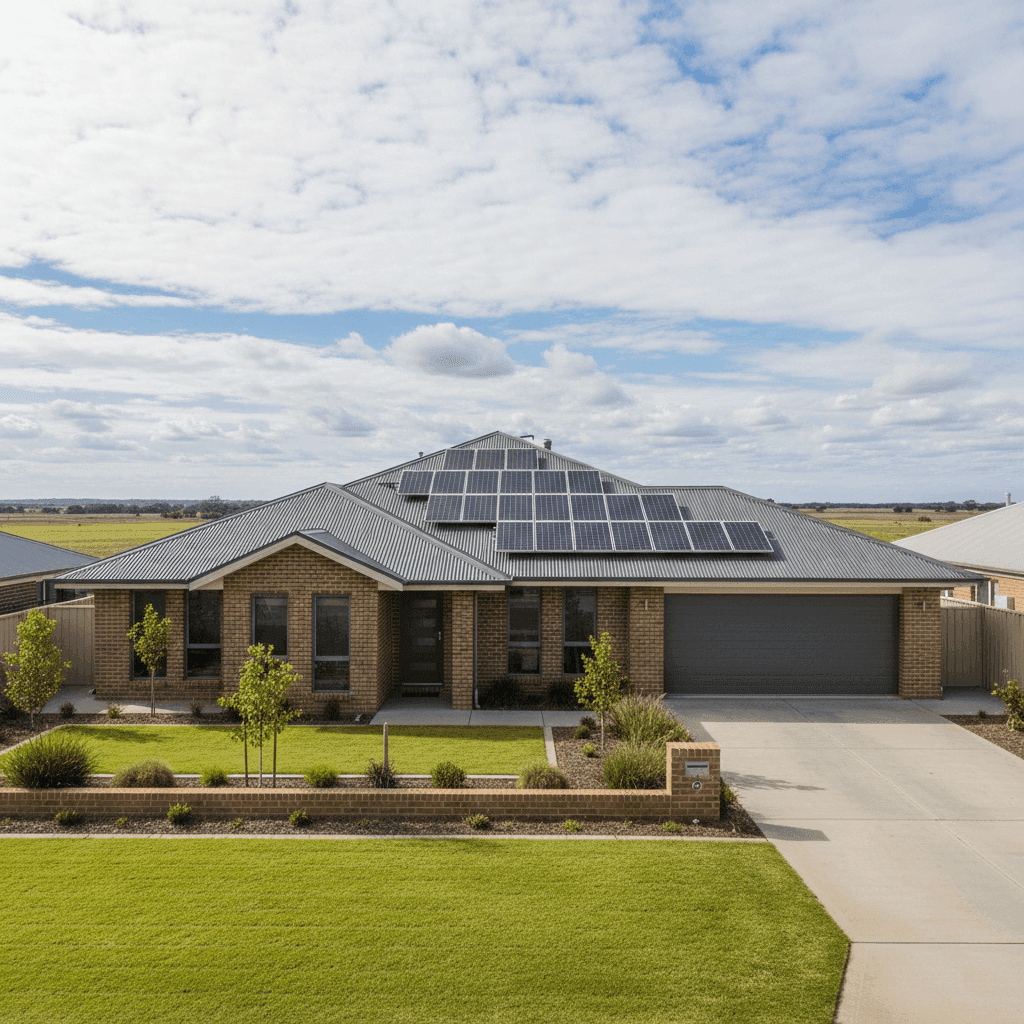
If you own a free standing home in Horsham, VIC 3400, you've probably wondered whether you're paying a fair price for home and contents insurance — or whether there's room to do better. Horsham is a thriving regional hub in Victoria's Wimmera region, and like many country towns, insurance premiums here can vary quite a bit depending on your property's size, construction, and the level of cover you choose. In this article, we break down a real home and contents insurance quote for a five-bedroom, three-bathroom brick veneer home in Horsham, and put it in context against local, state, and national benchmarks.
---
Is This Quote Fair?
The quote in question comes in at $3,606 per year (or $359/month), covering a building sum insured of $1,323,000 and $200,000 worth of contents. The building excess is $3,000 and the contents excess is $1,000.
Our price rating for this quote is Expensive (Above Average).
To understand why, it helps to look at the numbers in context. The suburb average for home insurance in Horsham sits at $2,268 per year, and the median is even lower at $1,674 per year. This quote is roughly 59% above the suburb average and more than double the suburb median — a significant gap that warrants a closer look.
That said, it's important not to compare apples with oranges. This is a large, well-appointed home with a high building sum insured of $1.32 million. Many homes in Horsham will be smaller, older, or insured for considerably less. The elevated sum insured alone goes a long way toward explaining the premium difference. Still, if you're paying this rate, it's worth shopping around to ensure you're getting competitive value.
---
How Horsham Compares
Looking at the broader picture, here's how this quote stacks up against Horsham suburb averages, Victorian state figures, and national benchmarks:
| Benchmark | Average Premium | Median Premium |
|---|---|---|
| Horsham (3400) | $2,268/yr | $1,674/yr |
| Victoria (VIC) | $3,000/yr | $2,718/yr |
| National | $5,347/yr | $2,764/yr |
| Horsham LGA | $2,226/yr | — |
| This Quote | $3,606/yr | — |
A few things stand out here. First, Horsham's suburb average of $2,268 is actually well below the Victorian state average of $3,000 — suggesting that Horsham is generally considered a relatively lower-risk area for insurers. Second, the national average of $5,347 is dramatically higher, largely driven by high-premium regions like coastal Queensland, cyclone-prone northern Australia, and flood-affected areas in NSW. Horsham's inland location, away from cyclone corridors and major flood plains, keeps its baseline risk profile relatively modest.
This quote, at $3,606, sits above the Victorian average but well below the national average. For a property of this size and insured value, that's not unreasonable — but it does suggest there may be room to negotiate or find a more competitive offer.
Based on 52 quotes collected for the Horsham area, the 25th percentile sits at $1,214/yr and the 75th percentile at $2,532/yr. This quote falls above the 75th percentile, reinforcing the "expensive" rating.
---
Property Features That Affect Your Premium
Several characteristics of this home have a direct bearing on the premium quoted. Here's what's at play:
Size and Sum Insured
At 334 square metres, this is a substantial home. Rebuilding a five-bedroom, three-bathroom property of this size to modern standards in regional Victoria doesn't come cheap — hence the $1,323,000 building sum insured. A higher sum insured means a higher premium, full stop.
Brick Veneer Construction
Brick veneer walls are generally viewed favourably by insurers. They offer solid fire resistance and durability compared to timber-framed cladding options, which can translate to slightly lower premiums than equivalent homes with less robust external materials.
Steel/Colorbond Roof
Colorbond roofing is another tick in the right column. It's lightweight, highly durable, resistant to fire and corrosion, and performs well in extreme weather. Insurers typically regard it as a lower-risk roofing choice compared to terracotta tiles or older materials.
Slab Foundation
A concrete slab foundation is the standard for homes of this era and generally presents minimal risk from the insurer's perspective — no subfloor cavity means less exposure to moisture, pests, and structural movement.
Solar Panels
This property has solar panels, which are increasingly common across regional Victoria. Solar systems add value to the property but also add a small degree of risk — panels can be damaged by hail, high winds, or falling debris. Importantly, make sure your policy explicitly covers solar panels as part of the building sum insured, as some policies treat them as an optional add-on.
Ducted Climate Control
Ducted heating and cooling systems represent a significant capital investment and are generally included under building cover. Their presence contributes to the overall rebuild cost, supporting the higher sum insured figure.
Timber and Laminate Flooring
Timber and laminate floors are attractive but can be costly to repair or replace after water damage or fire. This is worth keeping in mind when setting your contents and building cover levels.
No Pool, No Cyclone Risk
The absence of a swimming pool removes a liability and maintenance risk that some insurers price into premiums. And being well inland, Horsham falls outside any cyclone risk zone — a meaningful factor that keeps premiums lower than they'd be in northern or coastal Queensland.
---
Tips for Homeowners in Horsham
1. Review Your Sum Insured Regularly
Building costs have risen sharply in recent years. Make sure your $1,323,000 sum insured reflects current rebuild costs — not the value you set three or four years ago. Underinsurance is one of the most common and costly mistakes homeowners make.
2. Confirm Solar Panel Coverage
Ask your insurer explicitly whether your solar panel system is covered under the building policy, and for how much. Some policies cap solar cover or exclude it altogether unless declared separately.
3. Compare Quotes Before Renewal
With this quote sitting above the suburb's 75th percentile, it's worth getting at least two or three competing quotes before renewing. Premiums for the same property can vary by hundreds — sometimes thousands — of dollars between insurers.
4. Consider Your Excess Levels
This policy carries a $3,000 building excess. A higher excess typically lowers your annual premium, but make sure you could comfortably cover that amount out of pocket in the event of a claim. If cash flow is a concern, a lower excess with a slightly higher premium may be the smarter trade-off.
---
Ready to Compare?
Whether you think your current quote is fair or suspect you might be overpaying, the smartest move is to compare. At CoverClub, we make it easy to see how quotes for your home stack up against real data from your suburb, your state, and across Australia. Get a home insurance quote now and find out if you could be paying less — without sacrificing the cover you need.