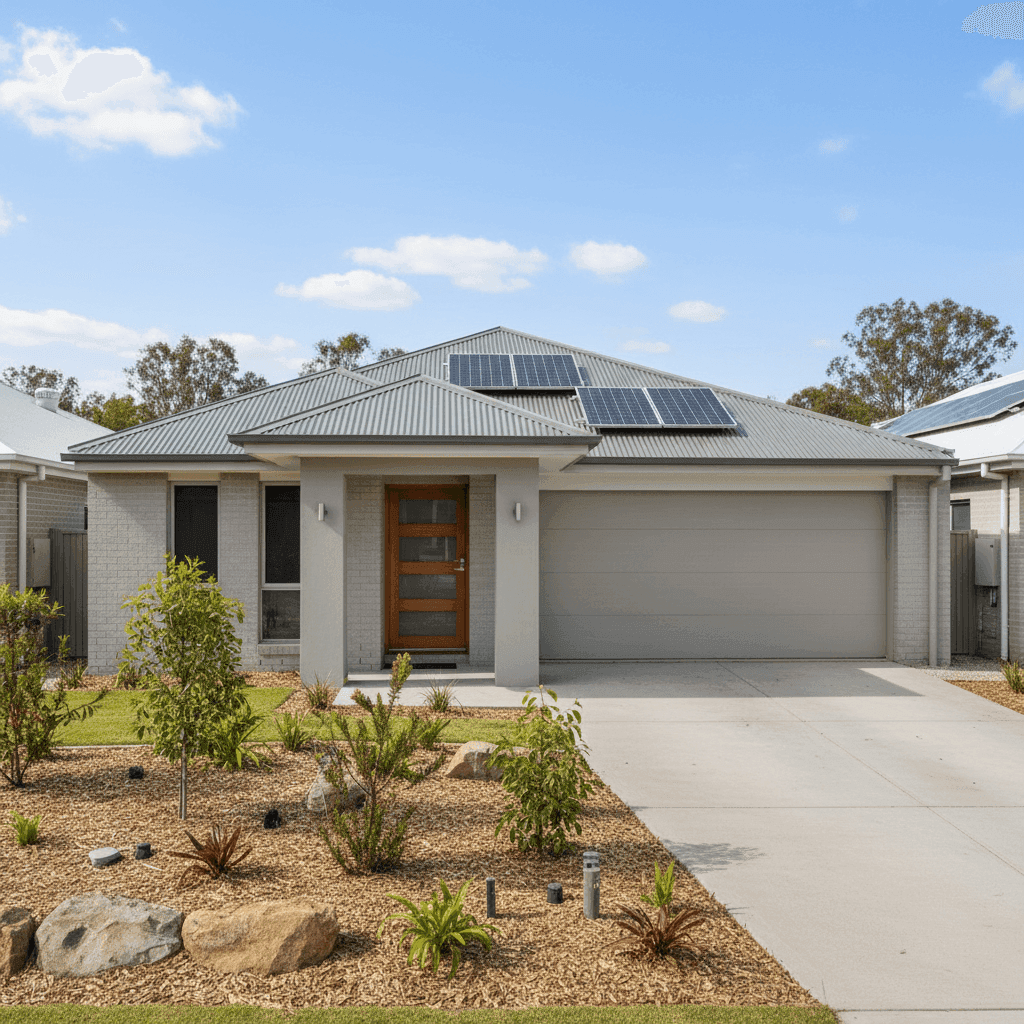
If you own a free standing home in Idalia, QLD 4811, you already know that insurance isn't a simple line item. Located in Townsville's south-eastern suburbs, Idalia sits in a region where weather risk, construction type, and local market dynamics all play a significant role in what you'll pay to protect your most valuable asset. This article breaks down a real building insurance quote for a four-bedroom, two-bathroom brick veneer home in Idalia — and puts the numbers in context so you can decide whether your own premium is working hard enough for you.
---
Is This Quote Fair?
The quote in question comes in at $3,700 per year (or roughly $355 per month) for building-only cover, with a $1,000 building excess and a sum insured of $548,000. Based on CoverClub's pricing data, this quote is rated CHEAP — meaning it sits below the suburb average, which is a genuinely strong result for a property in this part of Queensland.
To put that in perspective: the suburb average premium in Idalia is $6,515 per year, and the median sits at $5,328. This quote comes in well beneath even the 25th percentile of $4,437 — meaning it's cheaper than at least three-quarters of comparable quotes collected in the area. For a homeowner in a cyclone-risk zone, landing a premium this far below the local average is a meaningful financial win.
Of course, "cheap" doesn't automatically mean "right" — the adequacy of cover matters just as much as the price. But from a pure cost standpoint, this is a competitive result worth noting.
---
How Idalia Compares
Understanding where Idalia sits in the broader insurance landscape helps frame just how significant local risk factors are — and why premiums here tend to run higher than in many other parts of Australia.
| Benchmark | Average Premium | Median Premium |
|---|---|---|
| Idalia (suburb) | $6,515/yr | $5,328/yr |
| Townsville LGA | $7,340/yr | — |
| Queensland (state) | $9,129/yr | $3,903/yr |
| National | $5,347/yr | $2,764/yr |
A few things stand out here. First, the Queensland state average of $9,129 is strikingly high compared to the national average of $5,347 — a reflection of the outsized weather risk carried by much of the Sunshine State, particularly in the north. Second, the wide gap between Queensland's average ($9,129) and its median ($3,903) tells an important story: a relatively small number of very high-risk properties are pulling the average upward considerably.
Idalia's suburb average of $6,515 is above the national average but below the broader Townsville LGA average of $7,340, suggesting that while the area carries real risk, it's not among the most expensive pockets in the region. You can explore the full breakdown of local pricing data on the Idalia suburb stats page, or compare it against all Queensland suburbs and the national picture.
---
Property Features That Affect Your Premium
Every property tells its own risk story, and this one has several characteristics worth unpacking.
Cyclone Risk Area
This is the single biggest factor shaping premiums in Idalia. Townsville sits within a designated cyclone risk zone, and insurers price accordingly. Cyclone cover typically adds a substantial loading to premiums across the region, which is why even a "cheap" quote here might look expensive compared to, say, a similar home in Brisbane or Melbourne.
Brick Veneer Walls & Colorbond Roof
This combination is generally well-regarded by insurers. Brick veneer offers solid structural integrity and reasonable fire resistance, while a steel Colorbond roof is durable, lightweight, and performs well in high-wind events — a genuine advantage in cyclone-prone areas. Compared to older roofing materials or timber-framed construction, this setup can attract more favourable underwriting.
Slab Foundation
A concrete slab foundation is a positive from an insurance perspective. It eliminates the risk of subfloor flooding or pest damage that can affect homes on stumps or piers, and it's a stable base in the event of ground movement.
Solar Panels
The property includes solar panels, which are worth noting. Most standard building policies cover solar panels as part of the structure, but it's always worth confirming this with your insurer — particularly around cyclone damage, which can dislodge or destroy panels. Make sure your sum insured accounts for the replacement cost of your system.
Construction Year (2003) & Standard Fittings
A home built in 2003 benefits from building codes that were already incorporating improved cyclone-resistant construction standards in Queensland — particularly post-1996 revisions. Standard fittings quality means no premium loading for high-end fixtures, keeping the quote leaner.
Tiled Flooring
Tiles are a practical and insurance-friendly choice in Queensland's climate. They're resistant to water damage and don't carry the same flood or moisture risk as carpet or timber flooring — a minor but relevant factor in storm-prone regions.
---
Tips for Homeowners in Idalia
1. Review Your Sum Insured Regularly
Building costs have risen sharply across Australia in recent years. A sum insured of $548,000 for a 214 sqm home works out to approximately $2,561 per square metre — broadly in line with current construction costs in regional Queensland, but worth reviewing annually. Underinsurance is one of the most common and costly mistakes homeowners make.
2. Confirm Your Cyclone Cover Details
Not all policies treat cyclone the same way. Some apply a separate, higher cyclone excess (often $2,500–$5,000 or more), while others bundle it into the standard excess. Read your Product Disclosure Statement carefully and ask your insurer directly about how cyclone events are handled.
3. Check That Solar Panels Are Explicitly Covered
As mentioned above, solar panels can be a grey area in some policies. Confirm in writing that your system is covered under your building policy, and check whether storm or cyclone damage to the panels is included without additional exclusions.
4. Compare Quotes at Renewal — Every Year
The fact that this quote sits well below the suburb average is a reminder that premiums vary significantly between insurers for the same property. Don't assume your renewal price is competitive. Shopping around at each renewal cycle is one of the simplest ways to avoid paying more than you need to.
---
Ready to Compare?
Whether you're reviewing your current policy or shopping for the first time, CoverClub makes it easy to see what the market looks like for your specific property. Get a building insurance quote today and find out where your premium sits relative to your neighbours.