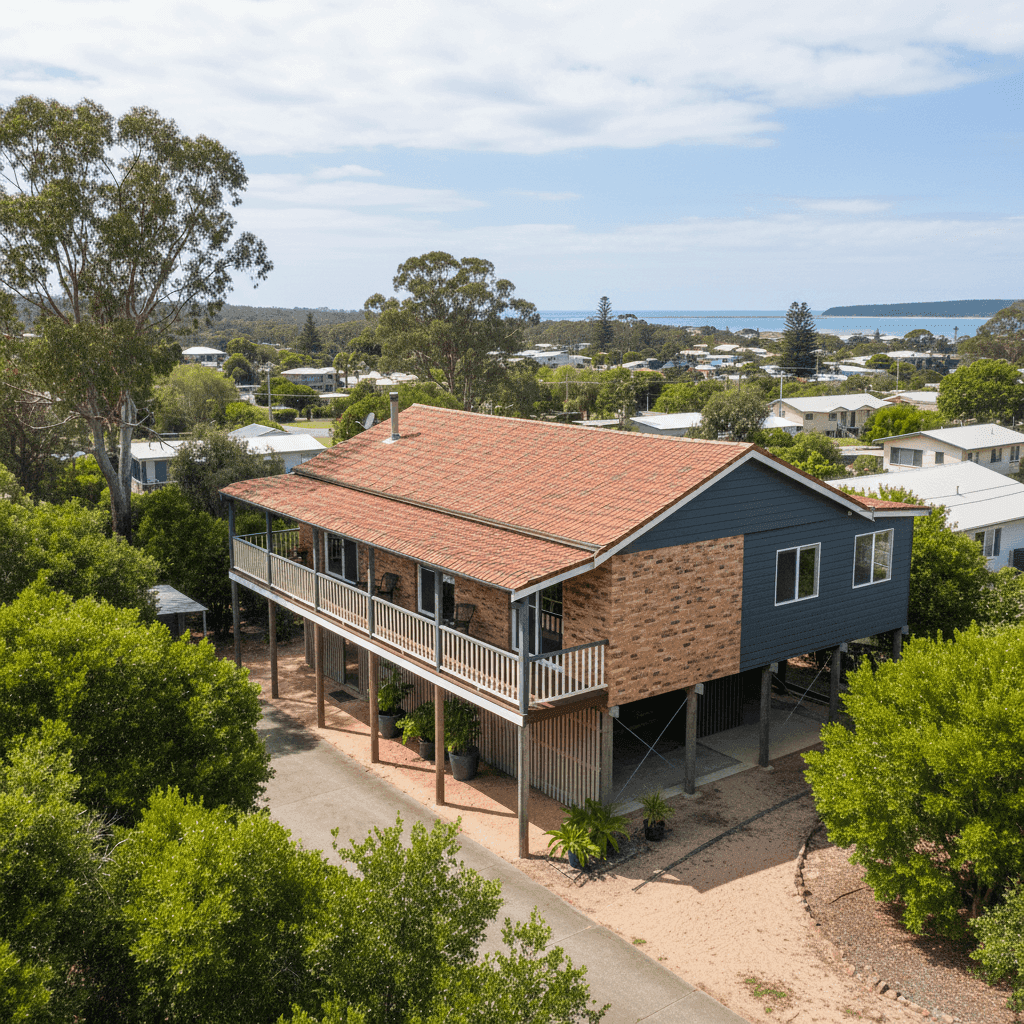
If you own a free standing home in Iluka, NSW 2466, you already know this coastal town on the Clarence River offers a relaxed lifestyle — but that doesn't mean your home insurance should be relaxed about protecting it. This article breaks down a real building insurance quote for a 3-bedroom, 1-bathroom free standing home in Iluka, compares it against suburb, state, and national benchmarks, and offers practical tips to help you get the best value cover.
---
Is This Quote Fair?
The quote in question comes in at $3,780 per year (or $362/month) for building-only cover, with a sum insured of $392,000 and a building excess of $5,000. Our analysis rates this as CHEAP — below average for the area.
That's a strong result. Given Iluka's coastal location and the elevated insurance costs that typically come with waterfront and near-coastal properties in northern NSW, landing a premium well below the suburb average is genuinely noteworthy. The $5,000 building excess is on the higher side and is likely one of the key levers keeping the annual premium down — a trade-off worth understanding before you commit.
In practical terms, a higher excess means you'll pay more out of pocket before your insurer steps in after a claim. For homeowners who are confident in their property's condition and unlikely to make small claims, this can be a smart way to reduce premiums. For others, it may be worth requesting a quote with a lower excess to see how the premium changes.
---
How Iluka Compares
The pricing context here is striking. According to data from CoverClub's Iluka suburb stats, based on a sample of 62 quotes:
| Benchmark | Annual Premium |
|---|---|
| This quote | $3,780 |
| Suburb 25th percentile | $3,938 |
| Suburb median | $5,093 |
| Suburb 75th percentile | $9,095 |
| Suburb average | $37,438 |
| LGA (Clarence Valley) average | $31,244 |
| NSW average | $9,528 |
| NSW median | $3,770 |
| National average | $5,347 |
| National median | $2,764 |
A few things stand out immediately. The suburb average of $37,438 is extraordinarily high — more than ten times this quote — which signals that some properties in the 2466 postcode are attracting very steep premiums, likely due to flood exposure, proximity to the coastline, or other high-risk characteristics. The suburb average is heavily skewed by these outliers, which is why the median of $5,093 is a far more useful comparison point.
Against the median, this quote sits comfortably below — a positive outcome. It also sits below the NSW state average of $9,528 and is broadly in line with the NSW median of $3,770. Compared to the national average of $5,347, this quote is competitive, though it does sit above the national median of $2,764 — reflecting the real cost premium of insuring property in coastal northern NSW.
The Clarence Valley LGA average of $31,244 reinforces just how expensive insurance can be in this region for higher-risk properties, making this quote look even more favourable by comparison.
---
Property Features That Affect Your Premium
Several characteristics of this property directly influence the premium calculation:
Brick Veneer Walls Brick veneer is generally viewed favourably by insurers. It offers solid fire resistance and durability compared to timber or fibre cement cladding, which can translate to lower premiums. It's not as robust as full double-brick construction, but it strikes a good balance between cost and resilience.
Tiled Roof Terracotta or concrete tiles are considered a low-to-moderate risk roofing material. They're durable, fire-resistant, and long-lasting — all factors that work in your favour when insurers assess risk. Had the property featured a Colorbond or corrugated iron roof, the assessment might differ slightly.
Stump Foundation A home on stumps (also called a raised or elevated foundation) can be a double-edged sword in insurance terms. On one hand, it can reduce flood damage to the main living areas compared to a slab-on-ground home. On the other, stumps can introduce additional structural complexity. In a town like Iluka — situated near the Clarence River and the coast — the elevated foundation may actually be working in this property's favour from a flood risk perspective.
Timber/Laminate Flooring Flooring type can affect the cost of a building claim, particularly in flood or water damage scenarios. Timber and laminate floors are more susceptible to water damage than tiles, which may slightly elevate the assessed risk for water-related events.
1985 Construction Year At roughly 40 years old, this home is mature but not ancient. Properties of this era are generally well-built, though insurers may factor in the age of plumbing, electrical systems, and roofing materials when pricing risk. Keeping maintenance up to date is important both for safety and for ensuring claims aren't disputed on the basis of wear and tear.
Ducted Climate Control The presence of a ducted climate control system adds to the overall replacement value of the building, which is reflected in the sum insured. It's a feature that needs to be correctly captured in your building sum insured to avoid underinsurance.
No Pool, No Solar The absence of a pool and solar panels simplifies the risk profile and removes two common sources of additional premium loading or liability exposure.
---
Tips for Homeowners in Iluka
1. Review your sum insured regularly At $392,000 for a 130 sqm home, the sum insured here works out to approximately $3,015 per square metre — a reasonable figure for a standard-quality home in regional NSW. However, construction costs have risen significantly in recent years. It's worth checking your sum insured annually to ensure it reflects current rebuild costs, not the figure you set several years ago.
2. Understand your flood risk Iluka sits at the mouth of the Clarence River, and flood risk is a defining factor for insurance pricing across the 2466 postcode. If your property has a favourable flood classification, make sure your insurer has that information correct — an incorrect flood zone designation could be costing you unnecessarily. Conversely, if your property is in a flood-prone area, check that flood cover is actually included in your policy, as it's not always standard.
3. Consider the excess trade-off carefully The $5,000 building excess on this quote is high. Before renewing or switching policies, model out what a $1,000 or $2,500 excess would cost in annual premium terms. If the difference is modest, a lower excess may offer better peace of mind — especially for a coastal property where storm or water damage events are a real possibility.
4. Compare quotes at renewal time The wide spread of premiums in Iluka — from under $4,000 to well above $37,000 — shows that insurers price this area very differently. What one insurer considers high-risk, another may assess more favourably based on their own claims data and risk models. Shopping around at renewal is one of the most effective ways to avoid overpaying.
---
Compare Your Home Insurance with CoverClub
Whether you're renewing your policy or insuring a new property in Iluka, it pays to see what the market has to offer. CoverClub makes it easy to compare building and contents insurance quotes side by side, so you can make a confident, informed decision. Get a quote today at CoverClub and find out if you're paying a fair price for your home insurance.