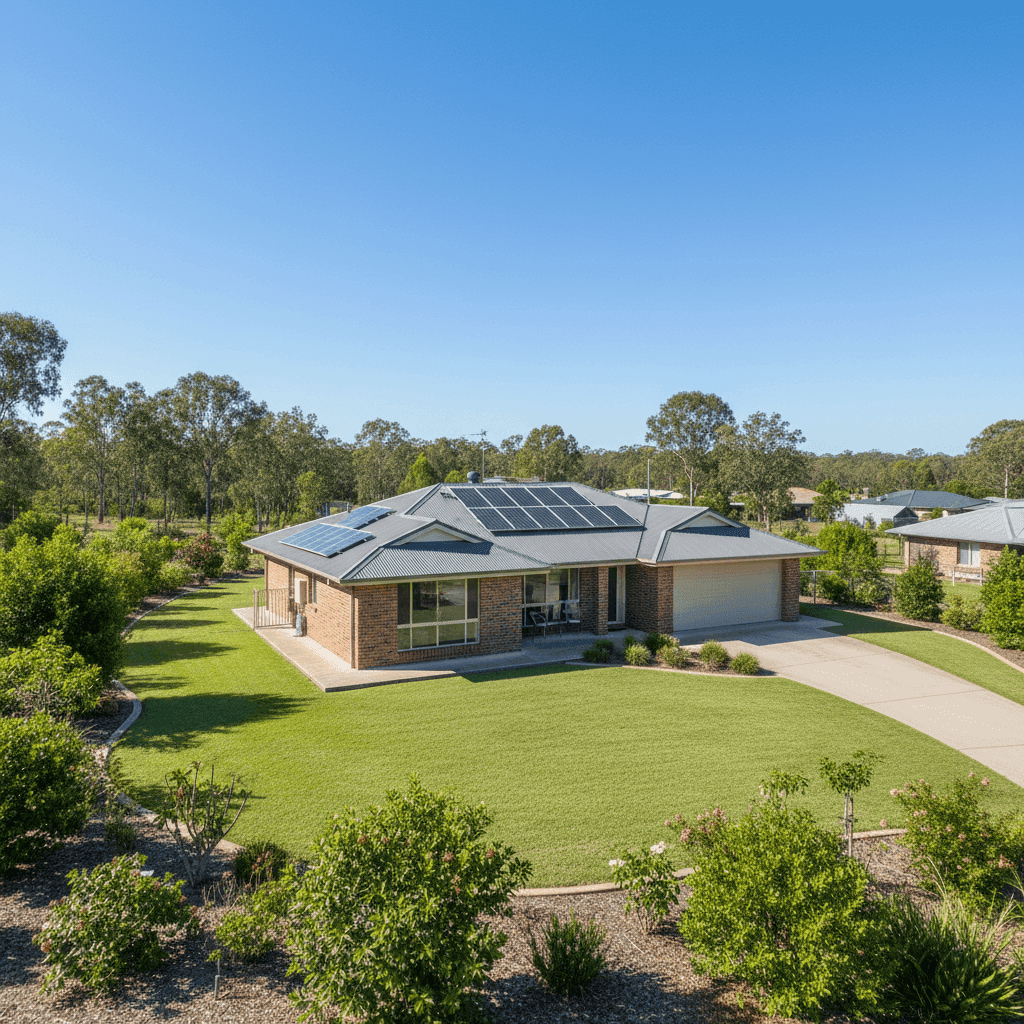
Home insurance pricing in regional Queensland can vary enormously — even between neighbouring streets. This article breaks down a real home and contents insurance quote for a four-bedroom, free-standing home in Imbil, QLD 4570, examining how the premium stacks up against local, state, and national benchmarks, and what property features are likely driving the cost.
---
Is This Quote Fair?
The annual premium on this quote comes in at $1,761 per year (or $175 per month), covering both building (sum insured: $481,000) and contents ($83,000). CoverClub's pricing engine rates this as CHEAP — below average for the area.
To put that in perspective, the 25th percentile of quotes in the Imbil suburb sits at $1,841 per year, meaning this quote is actually priced below even the cheapest quarter of local results. For homeowners who've grown accustomed to eye-watering Queensland insurance bills, that's a genuinely encouraging figure.
The building excess is set at $3,000, with a separate contents excess of $1,000. Opting for a higher excess is one of the most reliable ways to bring a premium down, and it's worth noting that this excess structure is likely contributing to the competitive pricing here. Before locking in, it's worth asking yourself whether you could comfortably cover a $3,000 out-of-pocket cost in the event of a claim — if so, this trade-off makes good sense.
---
How Imbil Compares
The numbers tell a compelling story when you line them up side by side. Based on 29 quotes collected for the Imbil suburb:
| Benchmark | Annual Premium |
|---|---|
| This quote | $1,761 |
| Suburb 25th percentile | $1,841 |
| Suburb median | $4,372 |
| Suburb average | $4,985 |
| Suburb 75th percentile | $6,621 |
| LGA (Fraser Coast) average | $3,385 |
| QLD state average | $4,547 |
| QLD state median | $3,931 |
| National average | $2,965 |
| National median | $2,716 |
The spread within Imbil itself is striking — from $1,841 at the 25th percentile all the way to $6,621 at the 75th. That's a difference of nearly $4,800 per year for homes in the same postcode. This kind of variance is typical in regional Queensland, where insurers assess flood exposure, bushfire risk, and storm history very differently from one another.
This quote sits well below the Fraser Coast LGA average of $3,385, the Queensland state average of $4,547, and even the national average of $2,965. In short, it represents strong value by any measure.
---
Property Features That Affect Your Premium
Several characteristics of this property work in the homeowner's favour from a risk-pricing perspective:
Brick Veneer Walls Brick veneer is generally viewed favourably by insurers. It offers solid resistance to wind damage and fire spread compared to timber weatherboard, which is common in older Queensland homes. This likely contributes to a lower risk rating.
Steel/Colorbond Roof Colorbond roofing is durable, resistant to corrosion, and performs well in storm conditions. It's a popular choice across Queensland and tends to attract more competitive premiums than older tile or fibrous cement roofing materials.
Concrete Slab Foundation A slab foundation reduces exposure to underfloor flooding and pest-related structural damage. Combined with the brick veneer construction, this home presents a relatively low structural risk profile.
Built in 1985 At around 40 years old, this home sits in a middle ground — old enough that some insurers apply age loadings, but not so old that it predates modern building standards. Homes of this era in Queensland were typically built to reasonable cyclone and storm standards, though some insurers will look closely at the condition of electrical wiring and plumbing.
Solar Panels The presence of solar panels adds a modest layer of complexity to the insurance picture. Panels themselves can be damaged by hail or severe storms, and not all policies automatically cover them as part of the building sum insured. It's worth confirming with your insurer exactly how the solar system is covered — whether it falls under the building, contents, or requires a separate endorsement.
No Pool, No Ducted Climate Control The absence of a pool removes a common liability risk factor, and no ducted climate control means one less mechanical system that could fail or cause water damage. Both keep the risk profile clean.
130 sqm Building Size At 130 square metres, this is a modestly sized four-bedroom home. The $481,000 building sum insured equates to roughly $3,700 per square metre — broadly in line with current Queensland rebuild costs, though it's always worth reviewing this figure annually as construction costs continue to rise.
---
Tips for Homeowners in Imbil
1. Review your sum insured annually Construction costs in Queensland have risen significantly in recent years. The cost to rebuild a home today can be meaningfully higher than it was even two or three years ago. Use a building cost calculator each year to make sure your sum insured keeps pace — being underinsured at claim time can be a costly mistake.
2. Confirm how your solar panels are covered As noted above, solar panels aren't always automatically included in standard building cover. Ask your insurer directly: are the panels, inverter, and associated wiring covered? Under which section of the policy? What's the sub-limit, if any?
3. Understand your flood exposure Imbil sits in the Mary River catchment, a region with a documented history of flooding. Not all home insurance policies include flood cover by default — some offer it as an optional add-on, others exclude it entirely. Check your Product Disclosure Statement carefully and, if in doubt, consult the Queensland government's flood mapping tools to understand your property's specific risk.
4. Compare quotes at renewal time The wide pricing spread within Imbil — nearly $5,000 between the 25th and 75th percentiles — is a reminder that loyalty doesn't always pay. Insurers price risk differently, and the best deal one year may not be the best deal the next. Make it a habit to compare at least two or three quotes before renewing.
---
Ready to Compare?
Whether you're a first-time buyer or a long-term Imbil resident, it pays to know what the market looks like before you commit to a policy. CoverClub makes it easy to compare home and contents insurance quotes side by side, with transparent pricing data drawn from real quotes in your area.
Get a quote today at CoverClub and see how your current premium stacks up — you might be surprised at what's available.