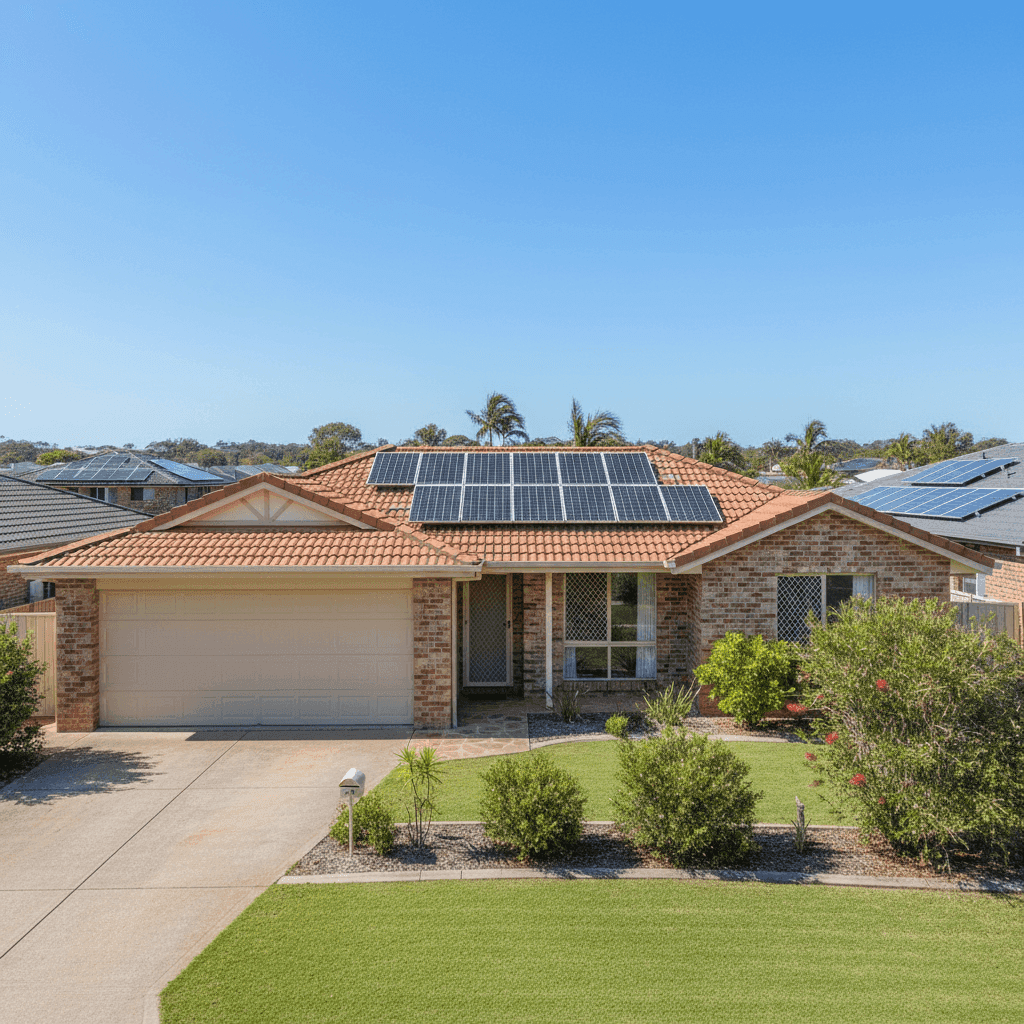
Home and contents insurance is one of those expenses that can feel like a black box — you pay the bill each year without really knowing whether you're getting a fair deal. If you own a free standing home in Innes Park, QLD 4670, this article breaks down exactly what a typical quote looks like, how it stacks up against local and national benchmarks, and what you can do to keep your premium in check.
---
Is This Quote Fair?
The quote in question comes in at $3,090 per year (or $282/month) for combined home and contents cover, with a building sum insured of $689,000 and contents valued at $350,000. Both the building and contents excess are set at $1,000.
Our price rating for this quote is FAIR — Around Average, and the data backs that up. Based on 77 quotes collected for Innes Park, the suburb average sits at $3,124/year, meaning this quote comes in just $34 below what most local homeowners are paying. That's a reassuring sign that the premium is competitively priced without being an outlier in either direction.
It's worth noting that "fair" doesn't necessarily mean "the best available." It means this quote is broadly in line with what the market is offering for similar properties in the area. Whether you can do better depends on your insurer, your property's risk profile, and how actively you shop around.
---
How Innes Park Compares
To put this quote in proper context, it helps to zoom out and look at the bigger picture across Queensland and nationally.
| Benchmark | Average Premium | Median Premium |
|---|---|---|
| Innes Park (suburb) | $3,124/yr | $2,726/yr |
| Queensland (state) | $9,129/yr | $3,903/yr |
| Australia (national) | $5,347/yr | $2,764/yr |
A few things stand out here. First, the Queensland state average of $9,129/year is extraordinarily high — driven largely by premiums in cyclone-prone coastal and far-north Queensland regions, where insurers price in significant catastrophe risk. Innes Park, while located on the Queensland coast near Bundaberg, sits outside the designated cyclone risk zone, which is a meaningful factor keeping local premiums more moderate.
Second, the suburb's median premium of $2,726/year is notably lower than the average of $3,124/year, suggesting a skewed distribution — a handful of higher-risk or higher-value properties are pulling the average up. At $3,090/year, this quote sits between the suburb median and average, which is a reasonable position.
The 25th percentile for Innes Park is $2,104/year and the 75th percentile is $3,448/year. This quote falls comfortably within the middle range of the market, confirming the "fair" rating.
Compared to the national average of $5,347/year, Innes Park homeowners are actually faring quite well — paying roughly 42% less than the typical Australian home insurance customer.
---
Property Features That Affect Your Premium
Several characteristics of this property influence how insurers assess its risk — and therefore its premium.
Brick veneer construction is generally viewed favourably by insurers. It offers solid fire resistance and durability compared to timber or clad weatherboard homes, and typically attracts lower premiums as a result.
Tiled roofing is another positive factor. Tiles are durable and perform well in most weather conditions, and are considered lower risk than corrugated iron or older roofing materials in standard (non-cyclone) zones.
Slab foundation is the norm for homes of this era and construction type in Queensland, and presents no particular risk concern for insurers in a non-flood-designated area.
Tile flooring throughout the home is a practical choice for Queensland's climate and doesn't significantly affect the insurance premium either way, though it does contribute to the overall rebuild cost assessment.
Solar panels are worth a mention. While they add value to the property and are generally covered under a building policy, they do add to the total insured value of the home. Homeowners should confirm with their insurer that solar panels — including inverters and mounting hardware — are explicitly included in the building sum insured.
No pool and no ducted climate control keeps the risk profile straightforward. Pools can introduce liability considerations, and ducted systems add to the complexity (and cost) of a rebuild. Their absence here simplifies the policy and helps keep the premium reasonable.
The 1996 construction year places this home in a mature but not aging bracket. Properties built in the mid-1990s typically comply with building codes that predate some modern standards, but are generally well-regarded by insurers compared to homes built before the 1980s.
At 214 square metres, this is a mid-sized family home, and the building sum insured of $689,000 reflects a reasonable per-square-metre rebuild cost for a brick veneer home with standard fittings in regional Queensland.
---
Tips for Homeowners in Innes Park
1. Review your sum insured annually. Building costs in regional Queensland have risen significantly in recent years due to labour shortages and material costs. Make sure your $689,000 building sum insured still reflects what it would actually cost to rebuild your home today — not what it cost five years ago. Underinsurance is one of the most common and costly mistakes homeowners make.
2. Shop around at renewal time. A "fair" rating means you're not being gouged, but it doesn't mean you can't do better. Insurers adjust their pricing models regularly, and the best deal for your property last year may not be the best deal this year. Use a comparison tool like CoverClub to benchmark your renewal quote before you pay.
3. Confirm solar panel coverage with your insurer. Given that this property has solar panels, it's worth a quick call to your insurer to confirm exactly how they're covered — including storm damage, inverter failure, and any liability associated with the system. Some policies treat solar as a standard inclusion; others may require an endorsement.
4. Consider your excess level strategically. Both the building and contents excess on this quote are set at $1,000. Increasing your excess — say, to $2,000 — can meaningfully reduce your annual premium. If you have a solid emergency fund and are unlikely to make small claims (which can affect your claims history), a higher excess may save you money over time.
---
Compare Your Own Quote
Whether you're renewing your existing policy or shopping for cover on a new purchase, it pays to know where your premium sits relative to the market. CoverClub makes it easy to benchmark your home insurance quote against real data from your suburb, state, and across Australia. Get a quote or compare your current premium today — it only takes a few minutes and could save you hundreds.