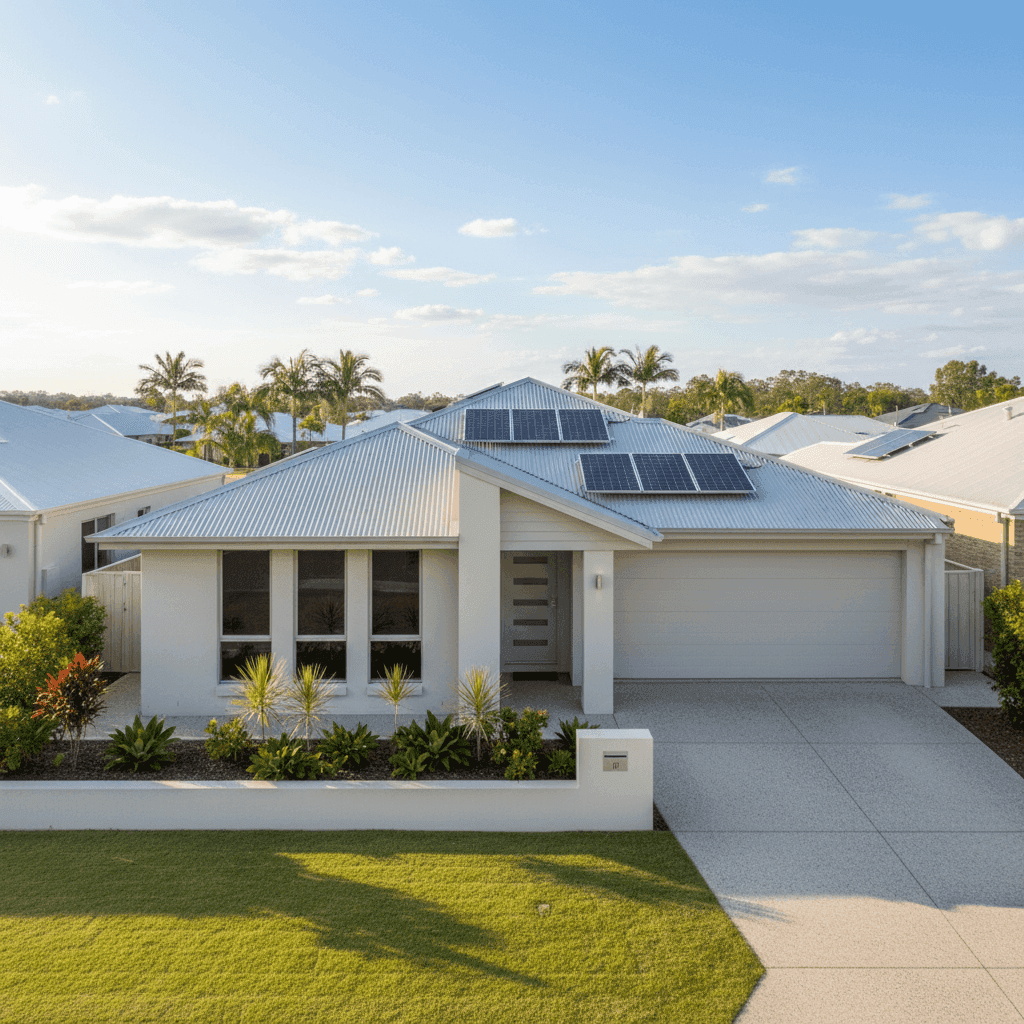
If you own a free standing home in Innes Park, QLD 4670, you've probably noticed that home insurance can be a significant line item in your household budget — especially in Queensland, where premiums tend to run well above the national average. This article breaks down a real home and contents insurance quote for a modern three-bedroom, two-bathroom property in the suburb, compares it against local, state, and national benchmarks, and offers practical advice for keeping your cover competitive.
---
Is This Quote Fair?
The short answer: yes — and then some. This property received an annual premium of $1,939 per year (or roughly $194 per month) for combined home and contents cover, with a building sum insured of $525,000 and contents valued at $50,000.
CoverClub rates this quote as CHEAP — Below Average, meaning it sits well beneath what most comparable properties in the area are paying. To put that in perspective:
- The suburb average for Innes Park is $3,124/yr
- The suburb median sits at $2,726/yr
- Even the 25th percentile — the cheapest quarter of quotes — comes in at $2,104/yr
This quote beats even the cheapest quartile of local prices, landing around 38% below the suburb median. For a homeowner with a $525,000 building sum insured, that's a meaningful saving — potentially over $1,000 per year compared to what a neighbour might be paying for similar cover.
The building excess is set at $3,000 and the contents excess at $1,000, which are on the higher side and contribute to keeping the premium low. It's worth weighing whether those excess levels suit your financial situation before locking in.
---
How Innes Park Compares
Innes Park sits within the Bundaberg region and, like much of coastal Queensland, carries inherent risks that push insurance costs higher than in many other parts of Australia. However, this suburb's figures are notably more moderate than the broader Queensland picture.
| Benchmark | Annual Premium |
|---|---|
| This Quote | $1,939 |
| Innes Park Suburb Average | $3,124 |
| Innes Park Suburb Median | $2,726 |
| QLD State Average | $9,129 |
| QLD State Median | $3,903 |
| National Average | $5,347 |
| National Median | $2,764 |
Queensland's state average of $9,129/yr is dramatically inflated by high-risk postcodes — think Far North Queensland cyclone zones, flood-prone river towns, and areas with significant bushfire exposure. Innes Park's median of $2,726 is far more palatable, sitting just below the national median of $2,764, which suggests the suburb carries a relatively moderate risk profile compared to much of the state.
You can explore more local data on the Innes Park insurance stats page, compare it against the Queensland state overview, or see where it sits in the national picture.
---
Property Features That Affect Your Premium
Several characteristics of this particular property work in the homeowner's favour when it comes to pricing.
New Construction (Built 2023)
A 2023 build is about as new as it gets. Insurers view newer homes favourably because modern construction must comply with current building codes, which typically means better structural integrity, improved weatherproofing, and up-to-date electrical and plumbing systems. This significantly reduces the likelihood of claims related to wear and deterioration.
Hebel External Walls
Hebel (autoclaved aerated concrete panels) is a premium, fire-resistant wall material increasingly popular in Australian residential construction. Its non-combustible nature is a genuine advantage in the eyes of underwriters, and it also offers excellent thermal performance — a bonus for livability in Queensland's warm climate.
Steel / Colorbond Roof
Colorbond steel roofing is one of the most insurer-friendly roof types available. It's durable, resistant to corrosion, handles heavy rain well, and has a long service life. Compared to older materials like terracotta tiles or fibrous cement sheeting, a Colorbond roof generally attracts lower premiums.
Concrete Slab Foundation
Slab-on-ground foundations are considered low risk by most insurers — there's no subfloor cavity to harbour moisture, pests, or structural movement. Combined with the new build date, this makes for a very solid risk profile.
Solar Panels
The property includes solar panels, which are typically covered under the building sum insured. It's worth confirming with your insurer that the panels and associated inverter equipment are explicitly included in your policy wording, as coverage can vary between providers.
Standard Fittings & Moderate Size
At 139 sqm with standard-quality fittings, this home doesn't carry the premium loading that comes with high-end finishes or a large footprint. The $525,000 building sum insured reflects a realistic replacement cost for a well-built but unpretentious modern home.
No Pool, No Cyclone Zone
The absence of a pool removes a common liability and maintenance risk factor. Importantly, Innes Park is not classified as a cyclone risk area, which is a significant premium driver in many parts of Queensland — and its absence here helps keep costs down considerably.
---
Tips for Homeowners in Innes Park
1. Don't Underinsure — But Don't Overinsure Either
With a building sum insured of $525,000, it's important to ensure that figure reflects the true rebuild cost of your home (not its market value). Use a professional quantity surveyor or your insurer's building calculator to validate the figure periodically, especially as construction costs have risen sharply in recent years.
2. Review Your Excess Levels Annually
The $3,000 building excess on this policy is relatively high. If your financial buffer has grown, keeping a higher excess in exchange for a lower premium makes sense. But if you'd struggle to cover a $3,000 outlay after a claim, consider whether a lower excess — even at a slightly higher premium — gives you better peace of mind.
3. Confirm Solar Panel Coverage
Solar panels are a meaningful asset. Before renewal, ask your insurer specifically whether your panels, inverter, and associated wiring are covered under your building policy, and for what events (storm, hail, fire, etc.). Some policies exclude panels or cap the covered amount.
4. Compare at Renewal — Every Time
The insurance market shifts regularly, and loyalty doesn't always pay. The fact that this quote came in well below the suburb average shows that significant variation exists between providers. Use a comparison service like CoverClub at every renewal to ensure you're not quietly drifting into the expensive end of the market.
---
Get Your Own Quote
Whether you're a first-time buyer in Innes Park or a long-term homeowner due for renewal, it pays to know where your premium stands. CoverClub makes it easy to compare home and contents insurance quotes tailored to your specific property — so you can see exactly how your price stacks up against the suburb, state, and national benchmarks. Start comparing quotes today and find out if you're getting a fair deal.